SUBSCRIBE


Conscious Luxury: What Lab-Grown Diamonds Mean for Fine Jewelry Today
Luxury has always been about desire. But what we desire — and why — doesn’t stay fixed. For most of the last century, the language of fine jewelry was built around rarity, prestige, and tradition. A diamond was valuable because it came from the earth, because getting it there required effort and sacrifice, because owning one communicated something about who you were.
That story hasn’t gone away. But it’s no longer the only story being told. And for a lot of the most thoughtful buyers in the market right now, it’s not even the most interesting one.
What a Lab-grown Diamond Actually Is
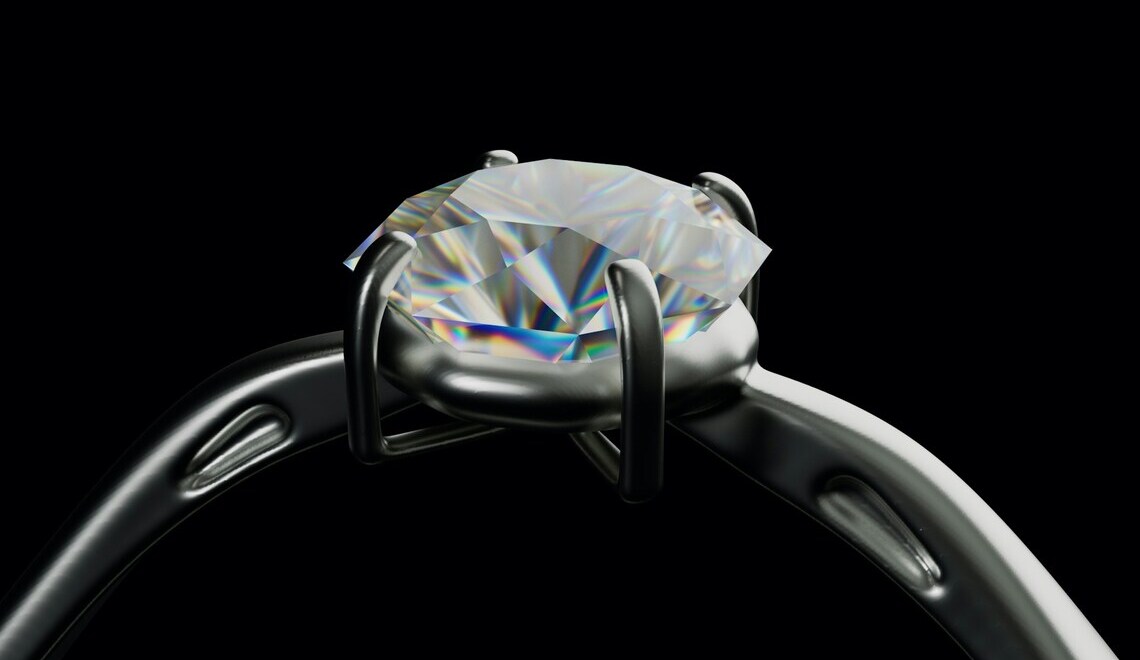
The term “lab-grown” gets misread sometimes as meaning synthetic or fake. It’s neither. A lab-grown diamond is a real diamond — chemically, physically, and optically identical to one pulled from the ground. The only meaningful difference is where it formed.
Natural diamonds grow over billions of years under conditions of extreme heat and pressure deep in the earth. Lab-grown diamonds recreate those conditions in a controlled environment, either through High Pressure High Temperature (HPHT) — which mimics what happens underground — or Chemical Vapor Deposition (CVD), which builds the crystal up layer by layer from a carbon-rich gas. Either way, the result is the same carbon crystal structure, the same hardness of 10 on the Mohs scale, the same optical behavior as a mined stone.
Put one next to the other and a gemologist with a standard loupe couldn’t tell you which is which. Neither could you, wearing it every day for the next twenty years.
Why the Conversation Around Them Has Changed
For a long time, lab-grown diamonds were stuck in an awkward position. They were marketed almost entirely on price, treated by much of the traditional jewelry world as a lesser option, and bought mainly by people who wanted a diamond but had a tighter budget. That did the stone — and the category — real harm.
What’s changed is the buyer. The person choosing a lab-grown diamond today is often not doing so because they can’t afford the alternative. They’ve thought about what they want this purchase to actually mean, and lab-grown lines up more honestly with their values than mined does.
That makes sense when you look at the supply chain. Mined diamonds have faced genuine criticism for decades — over environmental damage, labor conditions, and the near-impossibility of knowing exactly where a specific stone came from. Lab-grown sidesteps most of that. No mining, no displaced earth, a traceable origin. For a buyer who has taken the time to think about any of this, that’s not a compromise. It’s the point.
The numbers tell their own story. Lab-grown diamonds now represent around 31% of diamond engagement ring sales in the United States, up from just 8% in 2020. That kind of shift doesn’t happen by accident, and it doesn’t reverse easily.
The Quality Question, Answered Honestly
The question people ask most often is whether lab-grown diamonds hold up the same way over time. They do — because they are the same stone. Hardness, brilliance, fire, and the way light scatters through the facets are all properties of the crystal structure and the cut. Neither of those things has anything to do with whether the diamond grew underground or in a laboratory.
If anything, the consistency advantage runs in the opposite direction to what you might expect. Because lab-grown stones can be produced under controlled conditions, a higher proportion fall into the colorless and near-colorless grading range, and in higher clarity grades, compared to the natural diamond supply. What that means practically is that a buyer can often get a larger, better-graded stone for the same budget — which is a big part of why the category has grown so quickly.
Cut still matters most. It’s what determines how the stone actually handles light — whether it catches the sun from across a dinner table or goes quietly unnoticed. That’s true regardless of origin, and it’s the one variable worth spending the most time on when choosing any diamond.

What Conscious Luxury Looks Like In Practice
The phrase “conscious luxury” gets used so often it risks losing its meaning — but it’s pointing at something real. It’s the idea that the most valuable version of luxury isn’t just about what something costs or how rare it is, but about the full picture: how it was made, what acquiring it required of the world, and whether it actually reflects who you are.
For fine jewelry, that way of thinking has quietly changed the conversation. Couples who once felt the engagement ring decision was largely scripted for them — diamond, traditional setting, done — are now approaching it differently. They’re asking whether the stone fits their values, not just their taste. Whether the process behind it aligns with what they believe. Whether there’s a version of this choice that feels genuinely theirs.
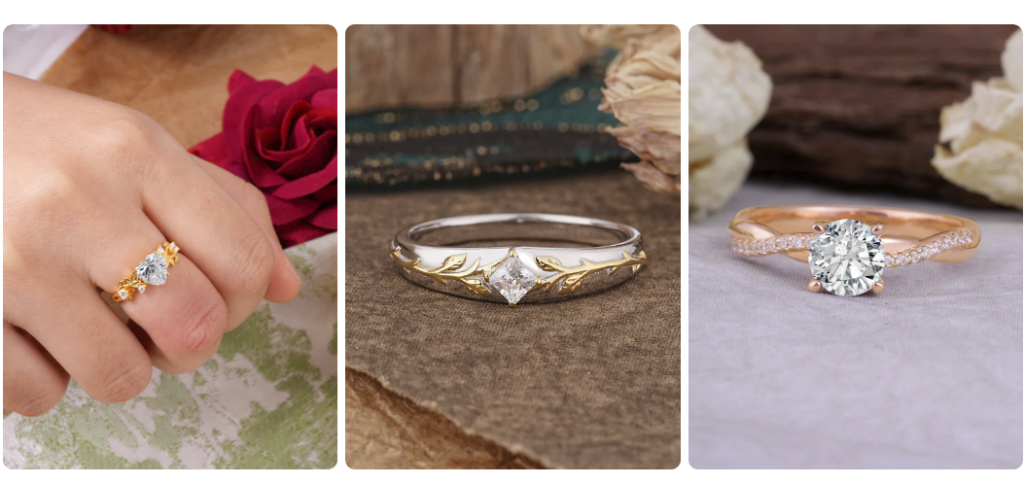
Lab-grown diamonds give them a real answer to those questions. Independent jewelers like Romalar Jewelry have developed dedicated collections of lab-grown diamond rings that treat the stone as a serious design material in its own right — with cuts, settings, and metal choices that reflect a first-choice commitment to the stone, not a compromise.
Design Possibilities That Have Opened Up
Something that doesn’t get talked about enough is what lab-grown diamonds have done to design thinking. When the stone doesn’t absorb the entire budget, the whole ring becomes a more interesting conversation.
A couple who might once have stretched to afford a 1-carat mined diamond can now consider a 2-carat lab-grown and still have budget left over for a setting that actually excites them — a distinctive band, an unusual metal choice, a design detail that makes the ring feel entirely their own. That’s a meaningful shift. It means more of the decision-making goes toward aesthetics and meaning, and less of it is simply about how much diamond you can afford.
For the reader who approaches jewelry as a form of personal expression rather than a status signal, that’s a genuinely appealing development. It rewards considered choices over conventional ones.
A Note on Value
One thing worth being straightforward about: resale value. It comes up in every honest conversation about lab-grown diamonds, and it deserves a direct answer. The secondary market for lab-grown stones is less established than for mined diamonds, and prices have dropped considerably as production has scaled up. If you’re thinking about jewelry as a long-term financial asset, that matters.
But most people aren’t buying a ring as an investment. They’re buying it to wear, to mean something, to mark a moment. Looked at that way, the resale question shrinks considerably. A lab-grown diamond that brings genuine joy every day is doing exactly what it was bought to do — and that’s not a lesser version of the thing. It’s the whole point.
Where Fine Jewelry Goes from Here
Fine jewelry is in the middle of a real renegotiation right now — not just over which stones are fashionable, but over what fine jewelry is actually for. Whether it’s about signaling something to the world, or whether it’s about owning something that genuinely reflects who you are and what you care about.
More and more, the most considered buyers are landing on the second. Lab-grown diamonds — alongside moss agate, moissanite, and the other stones rewriting the traditional hierarchy — are part of what makes that possible.
The question isn’t really whether lab-grown diamonds are real. They are. The more interesting question is what kind of real you’re after.
More to Love!
The Prospects of Lab-Grown Diamonds Are Promising
The 15 Best Places to Buy Lab-Grown Diamond Rings According to Experts