SUBSCRIBE


The Secret to Jaw-Dropping Mansion Landscaping
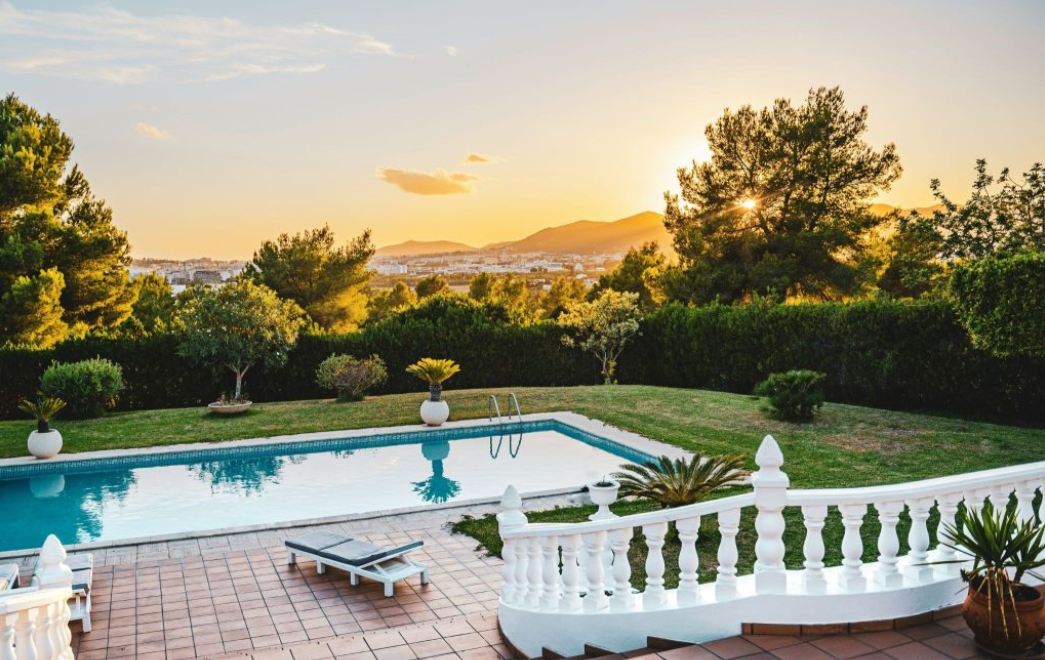
Grand landscaping is not just about scale. Some of the most impressive private grounds achieve their impact through precision and consistency rather than sheer size: hedges that look as though they were cut with a laser level, tree lines maintained with a clarity of form that makes the property feel both designed and effortless. Behind that effortlessness is a toolkit taken seriously. An electric chainsaw for managing the mature trees that define a large property’s canopy, combined with the right approach to every other layer of the landscape, is what separates grounds that photograph beautifully and age well from ones that always look slightly behind. This guide covers the principles and the practices that produce landscaping at the level of a well-maintained estate, and how to apply them at scale.
Structure Before Everything Else
The foundation of any impressive landscape is its structural layer: the permanent elements that define the bones of the garden and hold their form across all seasons. On a large property this means the tree canopy, the formal hedge lines, the lawn geometry and the hard landscaping of paths, walls and terraces. Everything else, the perennial planting, the seasonal colour, the furniture and lighting, sits within this structure and depends on it for its effect.
The mistake made most often on large properties is investing heavily in planting before the structure is right. Spectacular specimen planting within an ill-defined layout will never produce the impression of a great estate garden. A restrained planting scheme within a beautifully resolved structural framework consistently will. This is why the great landscape designers have always said that the hardest work happens before a single plant goes in the ground: resolving the geometry, establishing the axes and sight lines, deciding where the eye should travel and why.
Structure also determines maintenance. A landscape with a clear structural logic is easier to maintain to a high standard because the intention of each element is legible. The hedge that defines the boundary of a formal lawn has a job: to provide a clean edge. The tree avenue that runs from the gate to the house has a job: to frame the approach. When the function of each element is clear, maintaining it well is a matter of executing that function rather than making aesthetic judgements every time.
Managing the Tree Canopy
Mature trees are the most architecturally significant element of any large garden and the one that most powerfully signals age and permanence. A property with well-maintained mature trees reads as established in a way that cannot be faked or fast-tracked. Managing that canopy well, which means removing dead wood, shaping for form where appropriate, and dealing promptly with storm damage and dangerous limbs, is one of the highest-return investments of time on a large property.
A quality battery chainsaw handles the majority of residential and estate-scale tree work that does not require professional arborists. Firewood processing from felled trees, reducing fallen branches to manageable lengths after storms, cutting back encroaching limbs from hedges and borders, and general woodland management on properties with established native trees: all of these are within the practical range of a modern battery saw used by a competent operator. The absence of exhaust fumes and the reduced noise of an electric saw are genuine advantages when working near the house or in enclosed courtyards where petrol fumes and vibration are significant.
The upper threshold of what should be handled independently is real and worth respecting. Trees that require climbing, work adjacent to structures, or that have structural faults that make their response to cutting unpredictable belong to a qualified arborist. The distinction between what a property owner should handle and what requires professional engagement is not a limitation but a sensible division of labour that protects both the trees and the person doing the work.
Formal Hedging and the Geometry of Enclosure
No element of a large formal garden communicates quality more immediately than well-maintained hedging. The precision of a topiary feature, the clean verticals of a yew or hornbeam hedge clipped to a perfectly even top line, the geometric solidity of a box-edged parterre: these are the elements that appear in the photography of every great private garden, and for good reason. They provide the visual architecture within which everything else is set.
Maintaining hedging at this level requires a combination of good tools, correct timing and consistent attention to the reference points that define the intended shape. A spirit level or a taut string line as a clipping guide, a quality hedge trimmer with enough blade length for the job, and two or three clipping sessions per year timed to the growth cycle of the specific plant: this is the complete method, and it produces results that look professional precisely because it is the method professionals use.
The most commonly neglected aspect of formal hedge maintenance is the base. A hedge whose top and sides are immaculate but whose base is ragged or uneven undermines the whole impression. Cutting to a slight taper, wider at the base than the top, ensures the lower growth receives adequate light and the base stays dense. A sharp grass shear or a line trimmer used carefully along the base produces the clean finish that elevates the whole hedge.

Lawn at Scale: Precision and Proportion
A well-maintained lawn is the visual anchor of most large formal gardens. It is the element against which everything else is read, and its condition communicates the overall standard of the property’s upkeep more directly than any other single surface. A lawn that is well-edged, at a consistent mow height, free of bare patches and moss, and a deep even green provides the perfect foil for formal planting and topiary. The same garden with a rough, patchy lawn looks considerably less impressive regardless of the quality of its other elements.
On a large property, the investment in commercial or semi-commercial mowing equipment is generally justified by the time it saves and the quality of cut it produces. Ride-on mowers with appropriate deck widths for the area being cut, reel mowers for formal lawns where a fine, striped finish is the intention, and rotary mowers for rougher areas and orchard grass: matching the tool to the area produces a better result than applying one machine to all conditions.
Lawn edges define the geometry of the garden as much as the lawn surface itself. A clean edge where lawn meets border, path or paved area is the finishing detail that makes the difference between a lawn that looks managed and one that looks tended at an extraordinary level. Long-handled edging shears or a half-moon edging iron used after each mow maintains this line and adds perhaps five minutes to the task.
Planting for Scale and Seasonal Interest
In a large garden, planting needs to work at a distance as well as close up. Single plants and small groups that read beautifully in a domestic border are visually lost in a large estate context. The principle of planting in significant repetition, the same species or combination used in groups large enough to register from thirty or forty metres, is what gives large gardens their sense of coherence and rhythm.
The most successful large garden planting schemes use a limited palette with confidence: three or four key species planted in large masses, punctuated by specimen trees or topiary, rather than a wide variety of plants each in small quantities. This approach is both visually stronger and considerably easier to maintain, because the gardener is working with a familiar set of plants and their requirements rather than managing a large and complex collection.
Seasonal structure matters at estate scale in a way it can be managed around in smaller gardens. A garden that looks spectacular in summer but collapses in winter reveals itself as having been planted for summer photography rather than for year-round inhabitation. Evergreen structure, winter stem colour, the architectural presence of bare trees against winter sky: a garden designed to be experienced in all seasons rather than photographed in one is the distinguishing mark of landscaping at the highest level.
Lighting and Water Features
Two elements that most elevate a large garden beyond its daytime character are landscape lighting and water. Both are investments that, when done well, change the entire quality of the property after dark and create a garden experience that is genuinely exceptional.
Landscape lighting at estate scale is a design discipline in itself. The principles that produce beautiful results are consistent: light the feature, not the fitting; use warm rather than cool colour temperatures; layer the light sources between high, mid and low levels; and light paths for navigation with the minimum intensity required rather than flooding them. A garden lit according to these principles photographs dramatically and, more importantly, is a pleasure to inhabit on warm evenings in a way that a garden without lighting simply is not.
Water features in large gardens range from formal reflecting pools and fountains to naturalistic streams and ponds. The most effective are those that serve the geometry of the garden rather than appearing to have been dropped into it: a formal pool on the axis of the main terrace, a rill running along the edge of a pleached lime walk, a pond whose informal shape echoes the naturalistic planting around it. Water in motion also adds a sound dimension to the garden experience that static elements cannot provide, and in a large property where wind and birdsong are part of the ambient environment, a fountain or gentle cascade fits naturally rather than intruding.
The Standard Worth Aiming For
The gardens that genuinely impress are almost never the ones with the most expensive plants or the largest expenditure on construction. They are the ones where every element has been thought through and maintained to its best possible standard: where the hedge is as straight as it can be, the lawn as even as it can be, the trees as well-formed as their species allows and the whole composition as coherent as the best possible version of the original design intent. That standard is achievable at any scale with the right tools, the right knowledge and the discipline of consistent attention. Everything else follows from those three things.
More to Love!
The Time-Saving Trick: How a Landscape 3D Rendering Cuts Down on Materials Waste and Expense
How to Design a Warm and Welcoming Home Entrance