SUBSCRIBE


The Poetry of Light: Styling Luxury Interiors with Crystal Art Glass
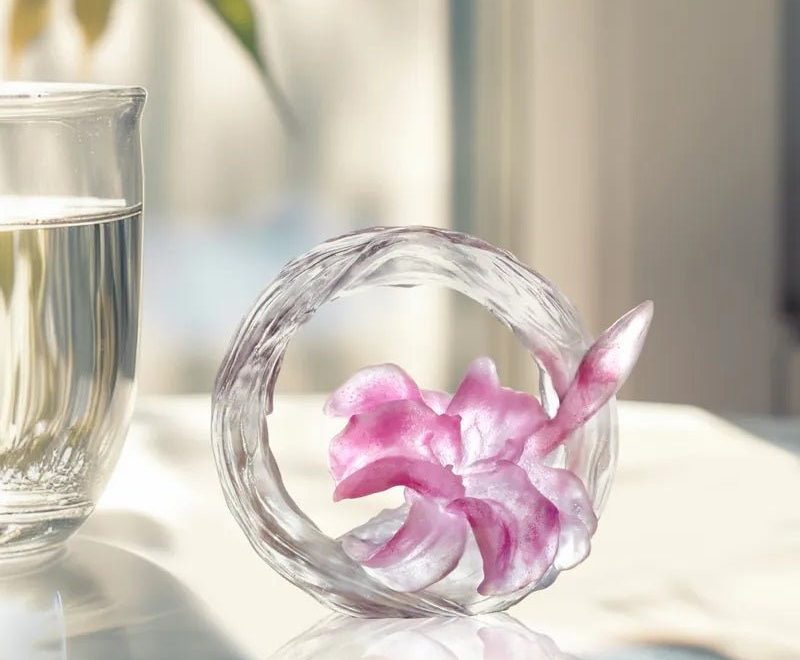
Something has shifted in the way designers are thinking about luxury spaces. The cool, spare rooms that defined a decade of high-end interiors are giving way to something warmer. Objects are being chosen not just for how they look, but for what they do in a room: how they hold light, cast shadow, and give a space a sense of quiet life. Among the materials finding their way into this new approach, fine crystal art glass stands out for its particular ability to do all three.
Place a well-made crystal sculpture near a window in the morning and come back in the afternoon. The room will feel different. That responsiveness to natural light is not something you can achieve with ceramics or bronze or stone. It is specific to glass, and to the hands that made it. For designers working in the warmer, more considered aesthetic that has been gaining ground lately, it is also one of the few materials that adds genuine presence without adding visual noise. A room with one well-chosen crystal object reads as curated. A room without one can feel, in retrospect, like something was missing.
This is not about maximalism. It is not about filling shelves or clustering objects on a sideboard. The designers who are using crystal art glass most successfully are using it the way they would use a piece of sculpture: one object, the right position, and the patience to let it do its work over the course of a day. This restraint allows the architectural lines of a home to converse with the decorative elements, establishing a visual rhythm that feels both intentional and effortlessly relaxed.
The Craft Behind the Object
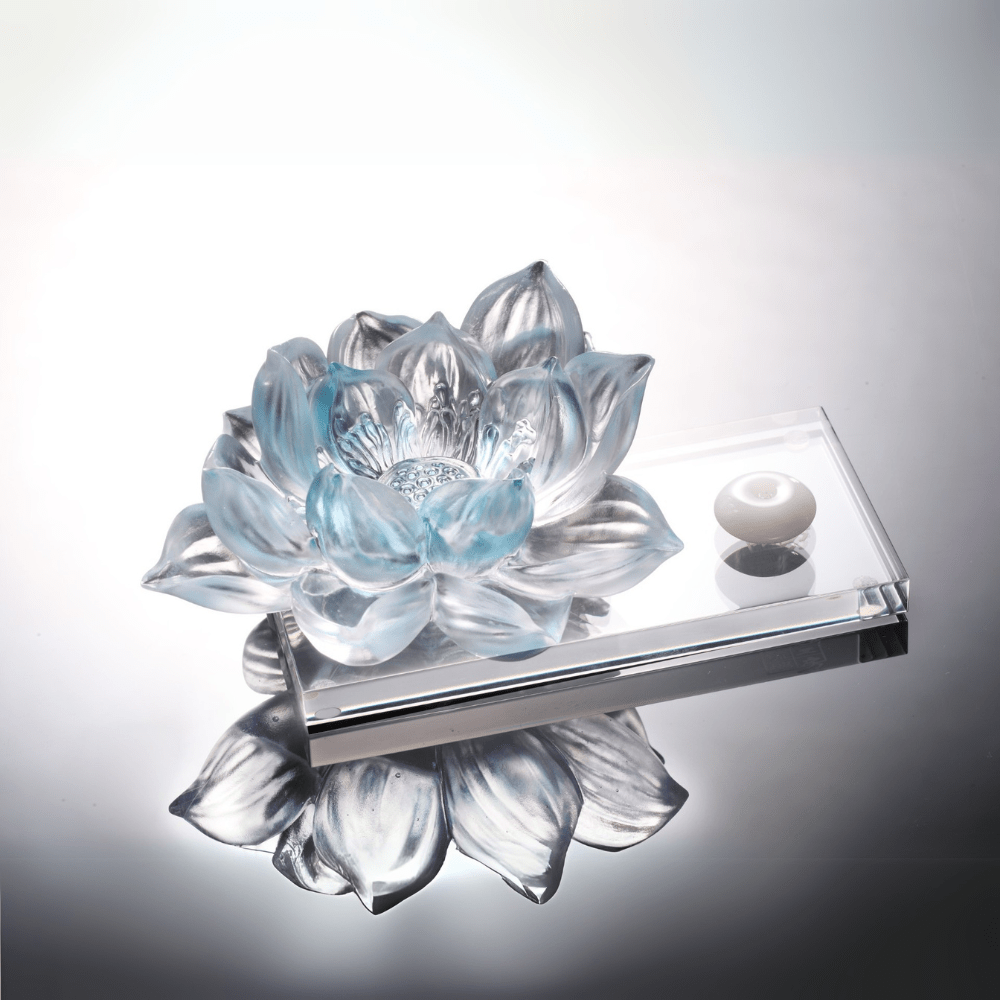
Not all crystal art glass is equal, and the difference tends to show in how a piece handles light. The technique worth knowing is pâte de verre, an ancient glasscasting method with roots in Tang Dynasty China that produces a density and depth that blown or pressed glass cannot replicate. The process involves twelve distinct steps and kiln temperatures above 1,000 degrees Celsius. A single sculpture can spend three months or longer in production before it is finished. The result is an object with genuine weight, not just visual presence.
What makes pâte de verre difficult to source is that very few studios still practice it at a high level. The technique fell out of common use for most of the twentieth century, surviving mainly in academic and fine art contexts. Reviving it requires not just the technical knowledge but the infrastructure: specialized kilns, trained hands, and the willingness to absorb the cost of a process where the outcome is never entirely predictable. Because glass powders melt and move differently under extreme heat, no two pieces emerge from the kiln quite the same way. The variations are not flaws. They are part of what makes each object singular.
One of the few studios working in this tradition at a serious level is LIULI Crystal Art, founded in 1987 in Taiwan by artist and co-founder Loretta H. Yang. Works from the studio have entered the permanent collections of the Smithsonian Institution, the British Museum, and the Corning Museum of Glass, which gives some indication of where this work sits relative to the broader decorative arts world. Each piece is released as a limited edition with an engraved edition number, which matters if you are sourcing for clients who care about provenance, or for hospitality and corporate environments where the story behind an object is part of its value.

Light, Color, and Reading a Room
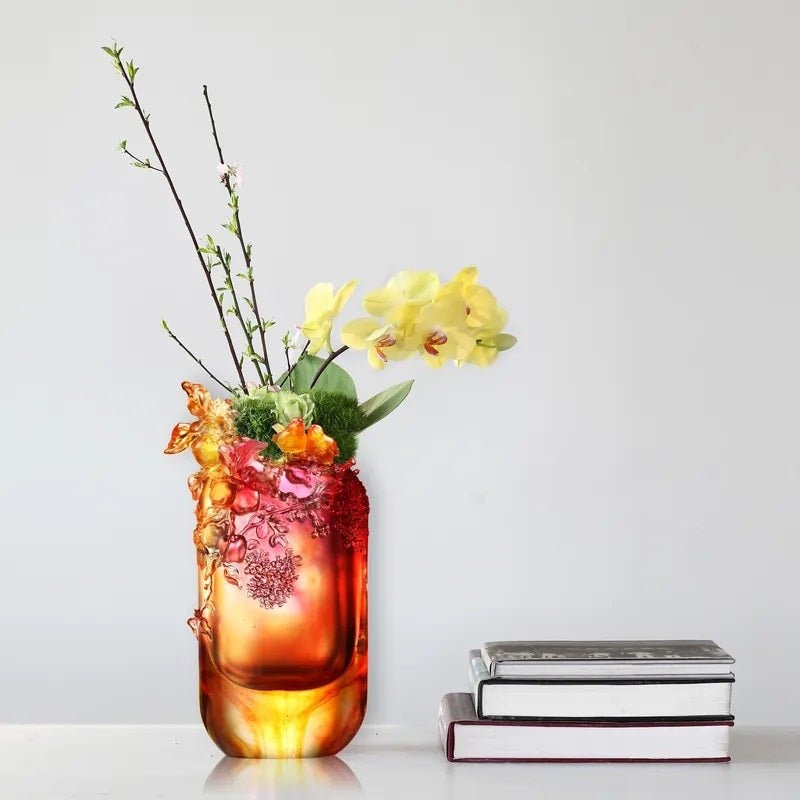
One of the things that makes crystal art glass genuinely useful as a design tool, rather than just a decorative addition, is how much the same object can change depending on placement and finish. Amber and cognac tones absorb and warm the light around them, making them well-suited to studies, reading rooms, and spaces where the goal is to feel settled. Clearer pieces and those with blue or green tones push light outward and work well in rooms designed around openness and calm. Rooms with a lot of natural stone or plaster benefit from the organic variation in color that good pâte de verre carries: the slight gradients, the internal frost, the sense that the material is still moving even when it is still.
For interiors with a strong botanical thread, the luxury crystal flower sculptures collection is worth exploring in depth. The sculptural flower and botanical pieces range from intimate objects that work on a bedside table or desk to larger centerpiece works designed for consoles and dining tables. They do not read as decorative in the way that a vase of cut flowers does. They read as art that happens to carry a floral subject, which is a meaningful distinction when you are sourcing for clients who want beauty without sentimentality.
For entryways and formal dining rooms, the larger mythological and cultural sculptures carry enough presence to anchor a space on their own. The studio’s zodiac series has proven particularly versatile in this regard, traveling well across different design traditions and resonating with a wide range of clients, particularly those with connections to Chinese culture and history.
Sourcing Considerations
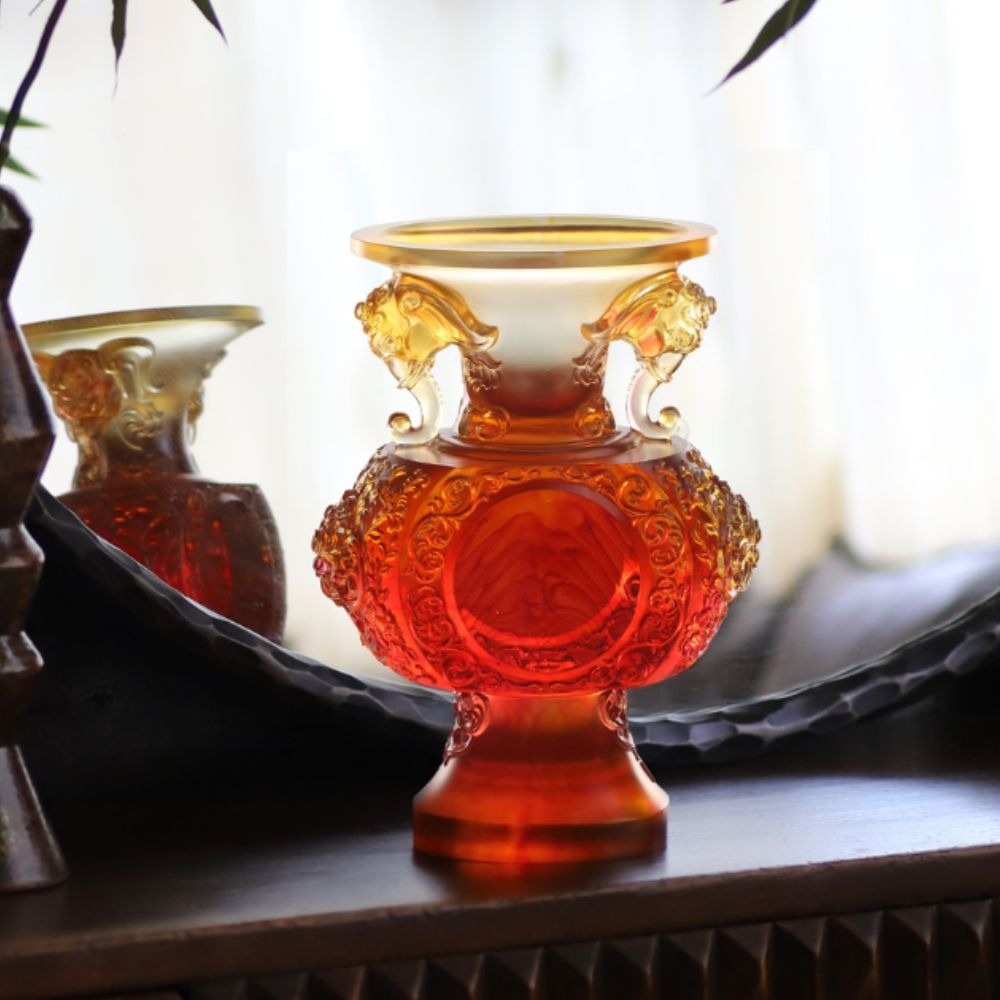
A few practical notes for designers sourcing crystal art glass for the first time.
Think about light before you think about color. The finish matters less than where the piece will live in the room. A sculpture that looks one way in a showroom will behave entirely differently in a north-facing drawing room versus a south-facing garden room. When possible, request images of pieces in situ, or test with a sample in the actual space before committing.
Consider provenance and documentation as part of the brief. For high-end residential clients, the limited edition number and the studio’s institutional recognition are details worth surfacing. For corporate clients and hospitality projects, the custom design program offers bespoke commissions for awards, architectural installations, and branded gift programs. The studio has a long track record in this space and can work to brief.
Finally, resist the impulse to group. Crystal art glass at this level works best when it has room. One piece placed with intention will outperform three pieces arranged for effect every time. These are collected objects, not decorative accessories. Treat them as you would a work on paper. They want natural light, a considered setting, and room to be seen. Giving these masterworks space to breathe ensures they retain their meditative power, allowing their complex histories to unfold naturally within the modern home.
More to Love!
Waterford Crystal: Timeless Glassware Worth the Investment
The Full Guide to Choosing Glittering Crystals for Any Project