SUBSCRIBE


How Modern Brides Are Preserving Their Wedding Dresses for Future Generations
A wedding dress is rarely just a dress. It carries the weight of a day, a feeling, a beginning — and for many women, it holds a kind of emotional value that very few other objects ever come close to matching.
What has changed in recent years is how intentionally modern brides are approaching the care of that dress after the wedding ends. Preservation has moved from an afterthought to a considered decision — especially among women who understand that the things we keep say something about what we value.
This is the story of a quiet shift in how brides are thinking about legacy, craftsmanship, and the art of holding onto something beautiful.
Preservation Has Become Part of the Wedding Vision
For today’s bride — particularly one who invests in a couture or designer gown — luxury wedding dress preservation is becoming as much a part of the wedding plan as the florist or the photographer. It is the final act of care in a season defined by careful choices.
This is not preservation out of obligation. It is preservation as intention. Brides are treating their gowns the way collectors treat art — with the understanding that a beautiful, well-made thing deserves to be protected with the same level of thought that went into acquiring it.
The conversation has matured well beyond simply keeping the dress in a box. It now involves specialist knowledge, archival materials, and methods that mirror the world of museum textile conservation.
Why the First Few Weeks Matter Most
What many brides do not realize until too late is that the window between the wedding and the cleaning is one of the most critical factors in how well the dress holds up over time.
Body oils, invisible sugar residues from champagne and cake, and environmental exposure all begin working on the fabric the moment the evening ends. These agents are often undetectable at first glance but oxidize over months and years into the kind of deep yellowing that no cleaning service can fully reverse.
Acting within the first two to three weeks after the wedding — ideally sooner — is the single most important thing a bride can do to protect her gown for the long term.

The Shift Toward Specialist Care
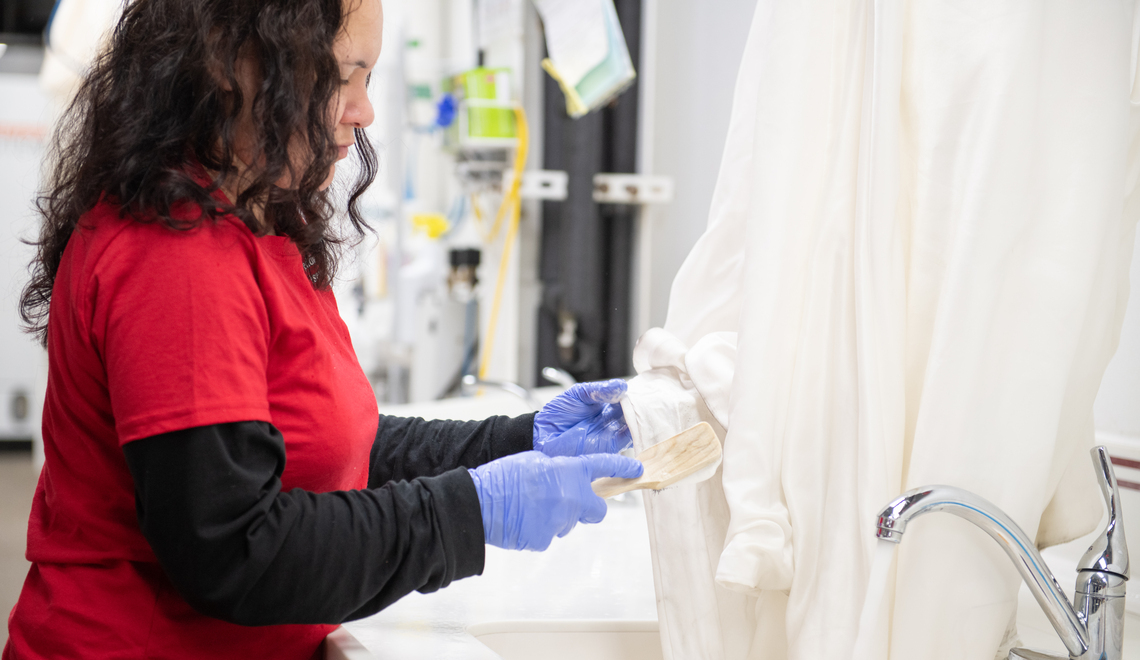
A growing number of brides are moving away from general dry cleaners and toward specialists who work exclusively with bridal and formalwear. The distinction matters significantly when the garment in question involves silk, hand-applied beading, heirloom lace, or hand-embroidered detail.
Specialists understand how different fabric types respond to different cleaning methods, how to handle embellishments without loosening them, and how to treat areas like the hemline and inner lining — often the most heavily soiled parts of the dress — with the right approach for each material.
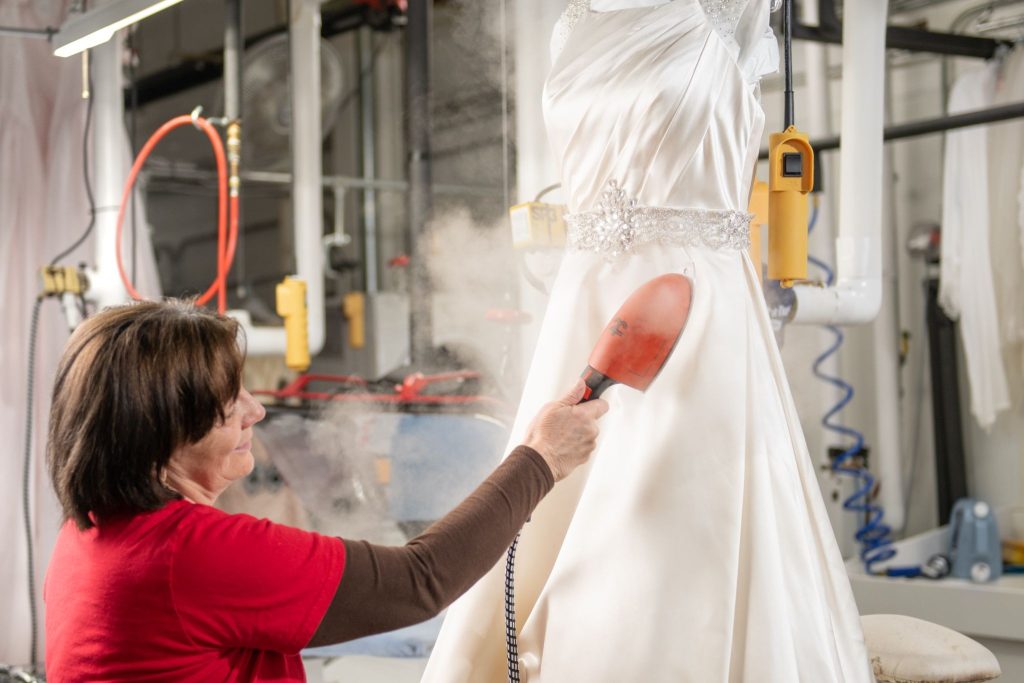
The result is a gown that emerges from the process looking as close to wedding-day condition as possible, and one that is properly prepared for decades of storage.
Archival Packaging — Where Science Meets Sentiment
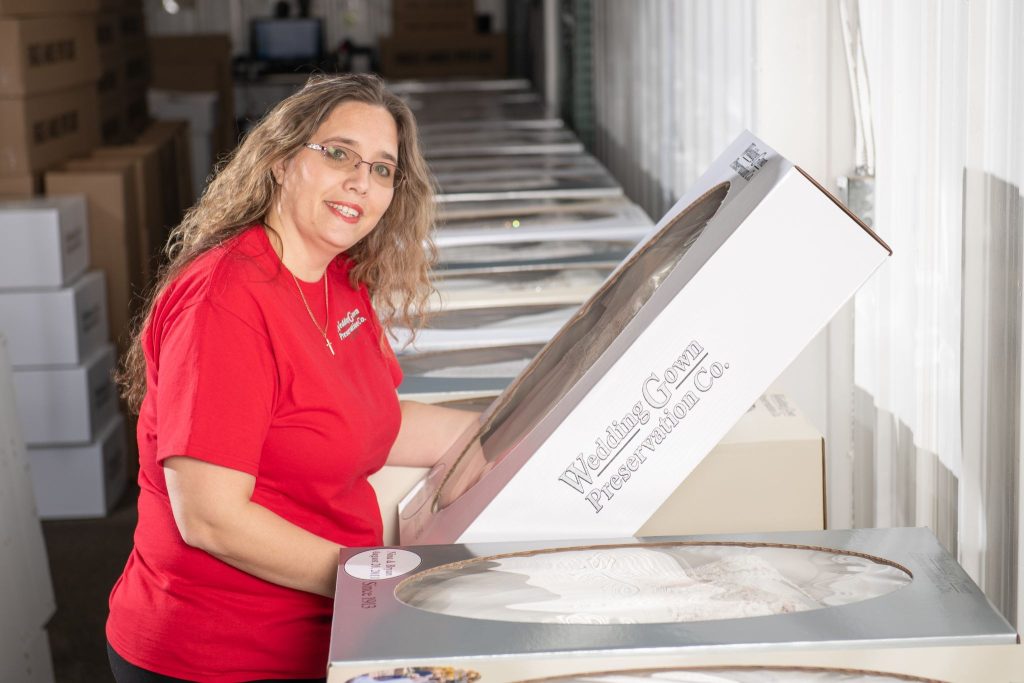
Once cleaned, how a gown is stored is just as important as how it was cleaned. Museum-quality preservation uses acid-free tissue, archival boxes, and UV-resistant materials that protect against the environmental factors most responsible for fabric deterioration — light, humidity, and air pollutants.
Silk and lace are especially vulnerable over time. Even stored in what appears to be a safe environment, contact with acidic materials — including most standard tissue paper and cardboard — will cause these fabrics to break down in ways that become visible within years, not decades.
The best preservation services now offer packaging that is as considered as the gown itself — a reflection of how seriously this generation of brides is approaching the idea of long-term care.
Passing It Forward — The Heirloom Intention
Perhaps the most meaningful shift in how modern brides think about preservation is the explicit intention to pass the dress on. For many women, keeping the gown is not about nostalgia alone — it is about creating something with a future.
Whether for a daughter, a niece, or simply the idea that the dress could be worn again in a different chapter of its story, the heirloom intention changes everything about how preservation is approached. A gown kept with this in mind is one that is cleaned with more care, stored with more precision, and handled with more reverence.
There is something quietly powerful about a dress that outlives its original occasion and finds its way into another one.
What to Look for in a Preservation Service
For the discerning bride, choosing a preservation service is not simply a matter of convenience — it is a matter of trust. The company handling your gown should be able to speak clearly about their cleaning process, the materials they use, what their guarantee actually covers, and how the dress will be returned to you.
Look for services that offer fabric-specific cleaning rather than a one-size-fits-all approach, that use certified acid-free materials, and that provide a long-term guarantee against yellowing and deterioration. A company that cannot explain its process in detail is one worth walking away from.
The investment in proper preservation is modest when held against the value — emotional and otherwise — of the dress itself.
A Final Thought on Keeping Beautiful Things
There is an elegance in the decision to preserve something carefully. It reflects a woman who understands that the most meaningful things in life deserve to be treated with intention — not set aside and forgotten, but protected and honored.
A wedding dress preserved with care is not just a garment in a box. It is a record of a moment, a piece of craft, and if handled well, a gift to whoever comes next.
Modern brides are not just saving their dresses. They are deciding what gets carried forward — and that is a deeply beautiful thing to do.
More to Love!
Merging Tradition and Modernity in Wedding Dresses
How to Dress for a Summer Wedding Without Sacrificing Comfort