SUBSCRIBE


The Quiet Luxury of Pearl Engagement Rings: What Modern Couples Should Know
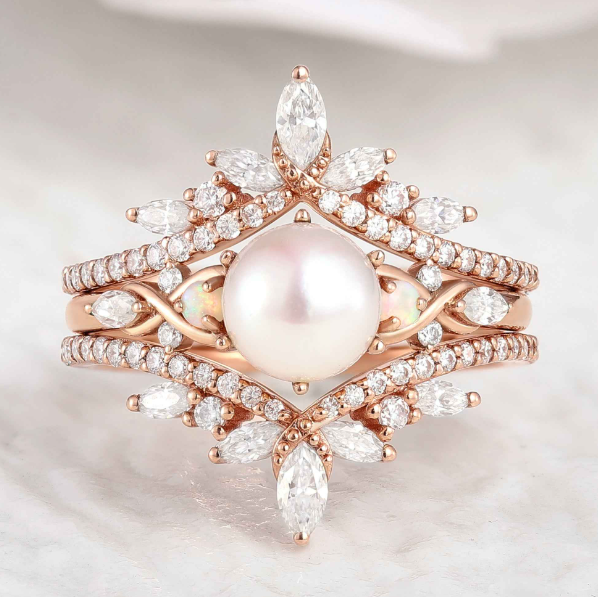
Engagement rings have become increasingly personal. Where once the choice was fairly straightforward — a diamond solitaire, a classic band — couples today approach the decision with a clearer sense of their own aesthetic. Not everyone wants sharp brilliance or the weight of tradition. Some want something softer, quieter, and more reflective of who they actually are.
Pearl engagement rings occupy that space. They carry a different kind of beauty — luminous rather than dazzling, understated rather than loud. This article covers what makes them special, which styles are worth considering, and what you should know about care and daily wear before committing.
Why Pearl Engagement Rings Feel So Romantic
There’s something about the glow of a pearl that no cut stone quite replicates. The light doesn’t bounce off the surface so much as it seems to come from within — a soft, warm luminosity that jewelers call orient. It’s a quality that reads differently depending on the setting, the metal, and even the wearer’s skin tone, giving pearl rings an almost personal quality before any symbolism is attached.
Pearls have long been connected to romance, water, and emotional depth — associations that feel less imposed and more genuinely fitting than most gemstone symbolism. For someone drawn to softness, luminosity, and old-world romance, Pearl engagement rings offer a distinctive alternative to more traditional diamond-centered designs — one that trades brilliance for something quieter and, for the right person, more compelling.
What Makes Pearls Different From Traditional Gemstones
Most engagement ring stones are minerals — formed under geological pressure, then cut and polished to maximize light return. Pearls are different. They’re organic, produced by mollusks and built up in layers of nacre that give them their characteristic glow and surface depth.
That origin makes them inherently softer. On the Mohs hardness scale, pearls sit around 2.5 to 4.5 — significantly below diamonds, sapphires, and moissanite, all of which handle daily wear with considerably less vulnerability. Pearls can scratch, lose luster, or be damaged by chemicals, heat, or everyday skincare products.
None of that makes them a poor choice. It makes them a different kind of choice — one that rewards care and intentionality.
Popular Pearl Engagement Ring Styles
Classic Pearl Solitaire Rings center a single pearl — often Akoya or freshwater — on a simple gold or platinum band, offering quiet refinement without any extra detail.
Pearl and Diamond Rings pair the softness of pearl with diamond accents, creating contrast that flatters both stones.
Vintage-inspired Pearl Rings feature filigree settings, milgrain detailing, or Art Deco geometry — designs that feel like heirlooms rather than contemporary purchases.
Baroque Pearl Rings use irregularly shaped pearls for something more sculptural and organic, with each stone genuinely one of a kind.
Cluster Pearl Rings group smaller pearls together for a fuller, more statement-making look while keeping the overall aesthetic soft.
Gold Pearl Rings — particularly in yellow or rose gold — have a warmth that suits the organic nature of the stone and reinforces the romantic quality that makes pearl rings so appealing.

Are Pearl Engagement Rings Practical for Everyday Wear?
The honest answer is: it depends on the person and how they wear their jewelry.
Pearls are softer than most traditional ring stones and benefit from more mindful handling — they can scratch against harder surfaces, react to perfumes and lotions, and lose luster if exposed to harsh products or cleaning chemicals. That said, many people wear pearl rings regularly and happily. The key is a little awareness: put the ring on after applying skincare, remove it before heavy-duty tasks, and store it separately from harder jewelry.
A protective setting helps considerably. Bezel settings that wrap around the pearl’s edges offer more security than prong settings for everyday wear. With the right setting and sensible habits, a pearl ring can be a perfectly wearable choice — just not a set-and-forget one.
How to Choose the Right Pearl Engagement Ring
Start with the pearl itself. Luster — the depth and quality of the glow — is the most important quality indicator. A high-luster pearl has a reflective, almost mirror-like surface; a lower-quality stone looks chalky or flat.
Pearl shape is partly personal preference. Round pearls feel classic. Baroque shapes feel more artistic. Teardrop or button pearls suit softer, more romantic settings.
For setting choice, bezel and half-bezel styles offer the most protection for daily wear. Higher-profile prong settings show more of the pearl but leave it more exposed.
Metal tone shapes the overall feel. Yellow gold reads warm and vintage. White gold and platinum feel cooler and more modern. Rose gold adds a romantic softness that complements the pearl’s natural warmth.
Finally, think honestly about how the ring will be worn. A pearl ring chosen with realistic expectations around care will bring far more satisfaction than one chosen on aesthetics alone.
Where to Explore Pearl Ring Designs
Comparing designs through well-photographed collections makes a real difference with pearl rings, since luster and surface quality are difficult to assess from brief descriptions alone. Look for clear imagery, information about pearl origin and quality, and guidance on care.
Collections from Lahela Jewelry are worth exploring for pearl shapes, accent stones, settings, and romantic ring styles — a helpful starting point for understanding what’s available before narrowing down to a final direction.
Wrapping Up
Pearl engagement rings suit a specific kind of buyer: someone who values softness over sparkle, romance over convention, and a ring that feels genuinely personal. They’re not the most low-maintenance choice, and they’re not trying to be.
What they offer instead is something harder to quantify — a luminosity, a history, and a quiet elegance that feels very different from more conventional stones. For the right person, wearing one every day feels less like a compromise and more like a considered, deeply personal statement.
With clear expectations around care and durability, a pearl ring can become exactly that.
More to Love!
How to Choose an Engagement Ring That Feels Personal
The Meaning Behind Different Engagement Ring Stones: Diamonds, Sapphires, and More