SUBSCRIBE


Organic Luxury: Why Nature-Inspired Engagement Rings Are Redefining Bridal Style
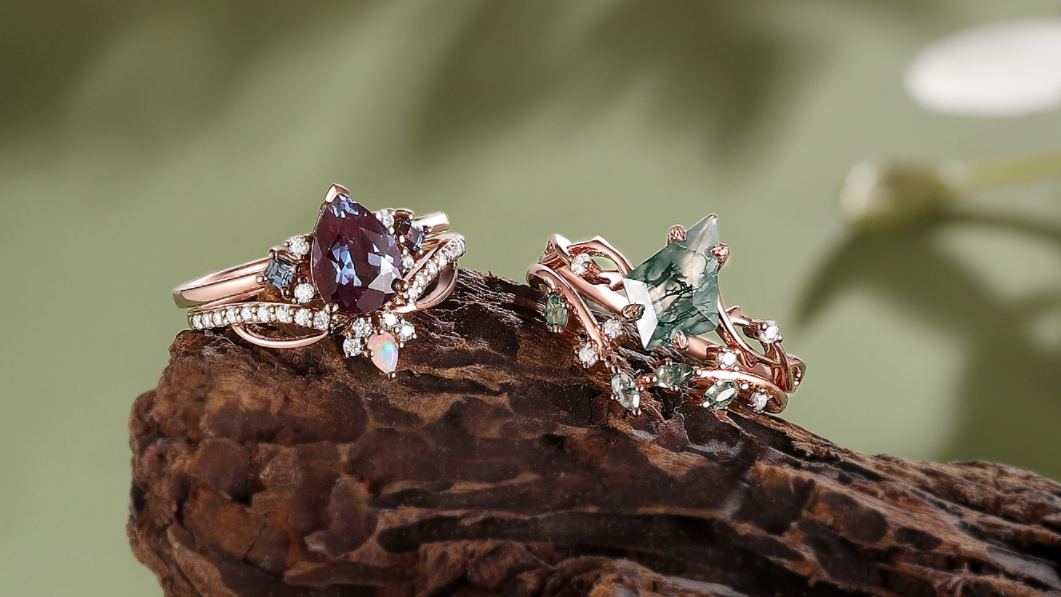
Bridal jewelry is no longer only about tradition. More couples are choosing rings that feel artistic, considered, and deeply connected to who they are — pieces that reflect not just a proposal, but a point of view. That shift has brought a new kind of design to the forefront: rings that draw from the natural world, with details that feel grown rather than manufactured.
This article covers what makes botanical and organic ring designs feel genuinely luxurious, which styles are worth knowing, how to match a gemstone to the setting, and what to think through before choosing a ring with more visual complexity than a classic solitaire.
What Makes Nature-Inspired Engagement Rings Feel Different?
The most obvious difference is silhouette. Where traditional settings tend toward symmetry and clean geometry, nature-drawn designs follow softer, less predictable lines. A vine curls where a vine would actually curl. Leaf shapes have dimension and movement. Petals overlap in ways that feel observed rather than engineered.
These rings can range from quietly detailed — a single leaf motif along the band — to fully sculptural, where the entire setting reads like wearable art. For brides who want softness, symbolism, and visual movement, nature inspired engagement rings offer something the clean geometry of a traditional solitaire simply can’t.
Why Organic Details Feel Luxurious
There’s a version of luxury that’s about size — a larger stone, a heavier band, a higher price. And then there’s the kind that comes from attention: the way a craftsperson has shaped a petal so it catches the light at a specific angle, or textured a band so it feels as though bark or moss has been translated into metal.
Nature-inspired designs tend to live in that second category. Asymmetry becomes intentional elegance when it’s done well. Hand-finished details, layered botanical elements, and settings that look as though they’ve been assembled by someone who studied the source material closely — these are the markers of craftsmanship that mass-produced jewelry rarely achieves.
For a bride who finds the standard options a little too predictable, that level of design intention is often exactly what she’s been looking for.
Popular Nature-Inspired Engagement Ring Styles
The category covers a wide range of design directions, which is part of what makes it so appealing.
Floral and Leaf Settings are the most recognized — petals framing a center stone, or layered leaves forming the band, ranging from romantic and vintage-inflected to fresh and contemporary.
Vine and Branch Designs tend to be more asymmetrical, wrapping naturally around the finger in a way that no two pieces look quite alike.
Moss Agate Rings have gained a devoted following for their earthy, landscape-like stone patterns — each one entirely unique.
Opal Settings bring soft color play and a dreamy quality that pairs beautifully with delicate metalwork.
Emerald and Sapphire Designs lean into the color palette of the natural world — rich botanical greens and deep blues that feel genuinely at home in an organic setting.
Celestial-inspired Details — crescent bands, star-set stones, moon motifs — share the same design sensibility: something that feels rooted in a larger world than the jewelry case.

Choosing the Right Gemstone for a Nature-Inspired Ring
The setting and stone need to work together, and in botanical designs, that relationship matters more than usual.
Moss agate suits anyone drawn to earthy aesthetics, though its softer composition benefits from a protective setting. Opal adds shifting color and a quality of movement, best suited to someone who’ll wear it mindfully. Emerald brings dense, saturated color that feels genuinely botanical against intricate gold metalwork, though it can be sensitive to impact. Sapphire offers both color and durability — one of the more practical choices for a detailed ring worn every day. Moissanite delivers serious brilliance and holds up exceptionally well to daily wear, a strong option for someone who doesn’t want to compromise on longevity. Alexandrite suits someone who wants something genuinely unusual: its color-change effect layers another dimension of personality onto an already distinctive ring.
Are Nature-Inspired Rings Practical for Daily Wear?
Many of them are — but the answer depends on the specific design, and it’s worth being honest about that before buying.
Intricate metalwork is beautiful, but it can catch on fabric and collect dust in fine grooves over time. High-set stones are more vulnerable to impact than lower, more protective settings. Some detailed designs may also make it harder to find a wedding band that sits flush without a custom or curved companion piece.
None of this is a reason to avoid these rings. It’s a reason to ask the right questions before choosing one: How high is the setting? How will it sit with a band? What does cleaning look like in practice? If you’re active with your hands, a simpler profile within the style will serve you better than the most elaborate option.
Where to Find Nature-Inspired Bridal Designs
It’s worth taking time to compare craftsmanship, gemstone sourcing, setting construction, and whether the brand offers customization or clear guidance on care — details that matter more with intricate designs than with simpler ones.
Collections from iver jewelry are worth exploring for botanical details, gemstone choices, and organic setting styles across a range of designs — a useful reference point whether you’re early in the process or already close to a decision.
Wrapping Up
The appeal of these rings isn’t just visual. It’s the sense that the ring carries something — a connection to the natural world, a design that required real skill to execute, a stone that looks like nothing else.
For the right bride, that combination of romance, craft, and symbolism is exactly what makes the search worthwhile. Think through your lifestyle, your daily habits, and which design details genuinely resonate with you. The ring that feels right usually shows itself once those questions are answered.
More to Love!
A Guide to Choosing an Engagement Ring Before You Propose
Engagement Ring Designs: Which One is for You?