SUBSCRIBE


Portugal Golden Visa 2026: What Changed and Why It Still Works for HNW Investors
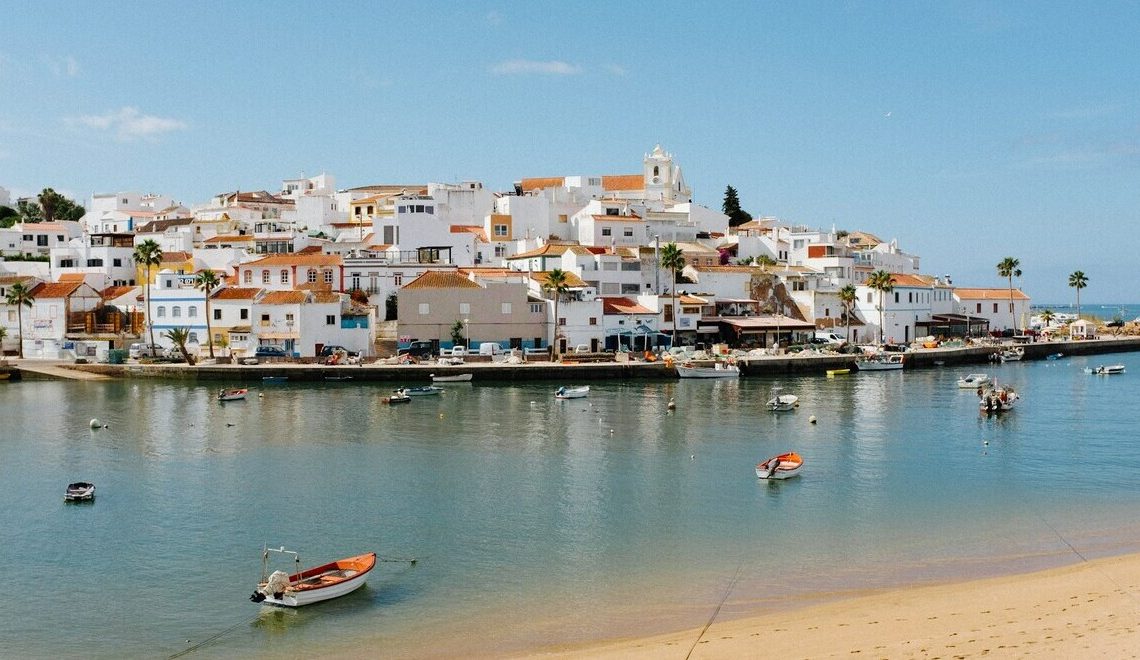
Real estate is gone. The €1.5 million capital transfer route is gone too. And yet Portugal’s Golden Visa program is arguably more interesting in 2026 than it was five years ago.
That statement might sound counterintuitive if you’ve been following the headlines since October 2023, when the Mais Habitação reform stripped out the routes that made this program famous in the first place. But the program didn’t die. It got redirected toward something more sustainable, and for high-net-worth applicants, that redirection has quietly opened doors that weren’t there before.
Here’s what the Portugal Golden Visa actually looks like today, what it costs, who qualifies, and why it still ranks among the most efficient paths to European residency and eventual citizenship.
What Changed: The End of Real Estate as a Qualifying Route
For over a decade, buying property was the default way into Portugal’s Golden Visa. Investors purchased apartments in Lisbon or villas in the Algarve, waited five years, and applied for citizenship. Simple, tangible, easy to explain at a dinner party.
Law 56/2023 ended that. Both the €500,000 residential/commercial property route and the €350,000 rehabilitation property route were removed entirely. The €1.5 million capital transfer option, which some investors used as a straightforward cash deposit route, was also revoked.
Portuguese lawmakers didn’t kill the program. They redirected it toward investments considered more productive for the actual economy, rather than ones that were inflating housing prices in Lisbon and Porto. The government kept four main pillars standing: regulated funds, scientific research, cultural patronage, and business or job-creation investment.
None of these categories permit indirect exposure to real estate either. Regulators were explicit about that. If a fund quietly holds property assets, it no longer qualifies, full stop.
The 2026 Qualifying Investment Routes
Applicants today have four realistic paths, each with its own minimum and its own profile of investor.
Regulated Investment Funds
A minimum of €500,000 into a non-real-estate collective investment vehicle, typically private equity or venture capital in structure. The fund needs to be registered in Portugal, carry a maturity of at least five years, and deploy at least 60% of its capital into Portuguese companies.
This has become the dominant route since 2023. It appeals to investors who already understand fund structures and want exposure to Portuguese growth sectors without picking individual companies themselves.
Scientific Research Contribution
A minimum of €500,000 donated to accredited institutions engaged in qualifying scientific or technological research. This route suits investors with a genuine interest in innovation funding, or those advised that their profile pairs well with Portugal’s broader push into R&D.
Cultural and Heritage Patronage
The lowest entry point in the program, at €250,000 (reduced to €200,000 in low-density areas). Funds go toward artistic production or preservation of cultural heritage. It’s a meaningful option for applicants who want the smallest possible capital commitment while still contributing to something tangible.

Business Investment and Job Creation
A minimum of €500,000 to incorporate or recapitalize a Portuguese company, paired with either creating five new jobs or maintaining ten jobs (five of them permanent) for three years. A separate route based purely on creating ten jobs also remains available, without a stated capital floor.
This table gives a quick side-by-side view:
- Cultural patronage: €250,000 (€200,000 in low-density areas)
- Investment funds, research, or business investment: €500,000 each
Who Actually Qualifies
The eligibility bar hasn’t moved much beyond the investment categories themselves. Applicants need to be non-EU, non-EEA, non-Swiss nationals, hold a clean criminal record, and demonstrate a clear, documented source of funds. AML and KYC checks have gotten noticeably stricter since AIMA took over immigration functions from the now-dissolved SEF, so applicants with messy or hard-to-trace capital sources should expect more friction than they might have a few years ago.
Family inclusion remains generous. Spouses, children under 18, financially dependent adult children in full-time education, and dependent parents can all be added to the application with derivative residence permits that mirror the main applicant’s timeline.
The Physical Presence Requirement Is Still the Big Draw
This is where Portugal continues to separate itself from almost every other residency-by-investment program in the world. The stay requirement is minimal by design.
During the first two-year permit, applicants need only spend seven days in Portugal. Each subsequent two-year renewal requires just fourteen days. That works out to an average of roughly seven days per year, a figure that’s almost laughable compared to the 183-day threshold that triggers tax residency in most countries, including Portugal itself.
That distinction matters enormously for structuring purposes. Holding a Golden Visa does not automatically make someone a Portuguese tax resident. Tax residency kicks in only if someone spends 183+ days in a 12-month period there, or establishes their main home and center of vital interests in the country. Many investors use the Golden Visa purely as a mobility and optionality tool, keeping their existing tax base intact until they decide, on their own timeline, whether to relocate more permanently.
Timelines, Approval Rates, and Where Applications Go Wrong
Processing has slowed since AIMA absorbed SEF’s responsibilities, and backlogs are a known reality of the current system. Recent figures show roughly 1,000 to 1,200 main applicant permits issued annually, alongside a comparable volume of family reunification permits. In 2024 alone, 2,081 ARI residence permits and 2,909 family permits were issued.
End-to-end timelines of 12 to 24 months from submission to card issuance are now fairly typical, depending on consulate load and how clean the application file is. Since the program launched in 2012, more than 12,700 main applicants have been approved, with over €6.6 billion invested in total. That’s a strong signal that well-prepared applications succeed at a high rate.
Where applications stumble almost never has to do with the investment category chosen. It’s nearly always documentation and source-of-funds issues, or applicants unknowingly selecting a fund with hidden real estate exposure that disqualifies the entire application. This is precisely the kind of risk that specialist advisory firms exist to catch before it becomes a costly rejection.
The Road to Citizenship
After five years of maintaining the investment and meeting the minimal stay requirement, investors can apply for permanent residency or Portuguese citizenship, provided they pass a basic A2 Portuguese language test and maintain a clean record. Authorities have started applying a somewhat stricter read on “effective ties,” so applicants who plan to lean purely on the seven-day minimum are well advised to still build some visible footprint in the country, a tax number, a bank account, a registered address.
Luxury Living Without the Golden Visa Property Route
It’s worth clarifying something that trips up a lot of prospective applicants: losing real estate as a qualifying investment route does not mean investors can’t buy property in Portugal. There’s no restriction on foreign property ownership at all. Investors simply can’t count that purchase toward the Golden Visa requirement anymore.
In practice, most Golden Visa families still end up buying a home for personal use, separate from their qualifying investment. Lisbon’s Príncipe Real and Chiado neighborhoods, the Cascais and Estoril coastline, and Algarve golf communities like Quinta do Lago remain the preferred addresses among this crowd, offering championship golf, marina access, Michelin-starred dining, and international schools, all at a lower entry cost than comparable luxury markets in France or Italy.
Portugal Against the Alternatives
Compared to Spain, Greece, or Italy, Portugal still wins on the physical presence front by a wide margin. Spain and Greece both traditionally leaned on real estate routes with far heavier stay expectations for citizenship tracks, and Italy’s flat-tax investor visa appeals to a different kind of applicant altogether. Portugal’s five-year path to an EU passport, paired with a seven-day annual commitment, remains difficult to match anywhere in Europe.
Getting the Structure Right From the Start
Choosing between a research contribution, a cultural donation, a fund subscription, or a business investment isn’t a decision to make casually, especially with AML scrutiny tightening and fund compliance rules getting stricter each year. For guidance tailored to the Portugal Golden Visa program, Global Residence Index works directly with clients to pre-screen applications, vet compliant funds, and coordinate legal and tax planning across jurisdictions, an approach that has helped maintain a strong approval track record even as the program’s rules have tightened. Vancis Capital, its parent firm, offers a complementary layer of investment structuring expertise for clients weighing Portugal against other European residency options.
The program has changed shape, but the fundamentals that made it attractive, EU mobility, a light physical footprint, and a genuine five-year citizenship track, are all still intact. What’s different now is that getting there requires sharper due diligence and the right advisory relationship from day one.
More to Love!
The Art of Stress-Free Travel: What Sophisticated Travelers Do Before They Fly
The Slow, Sunlit Life: What Retirement in Spain Really Looks Like in 2026