SUBSCRIBE


How to Use Layered Lighting to Make Any Room Feel Brighter, Cozier, and More Functional
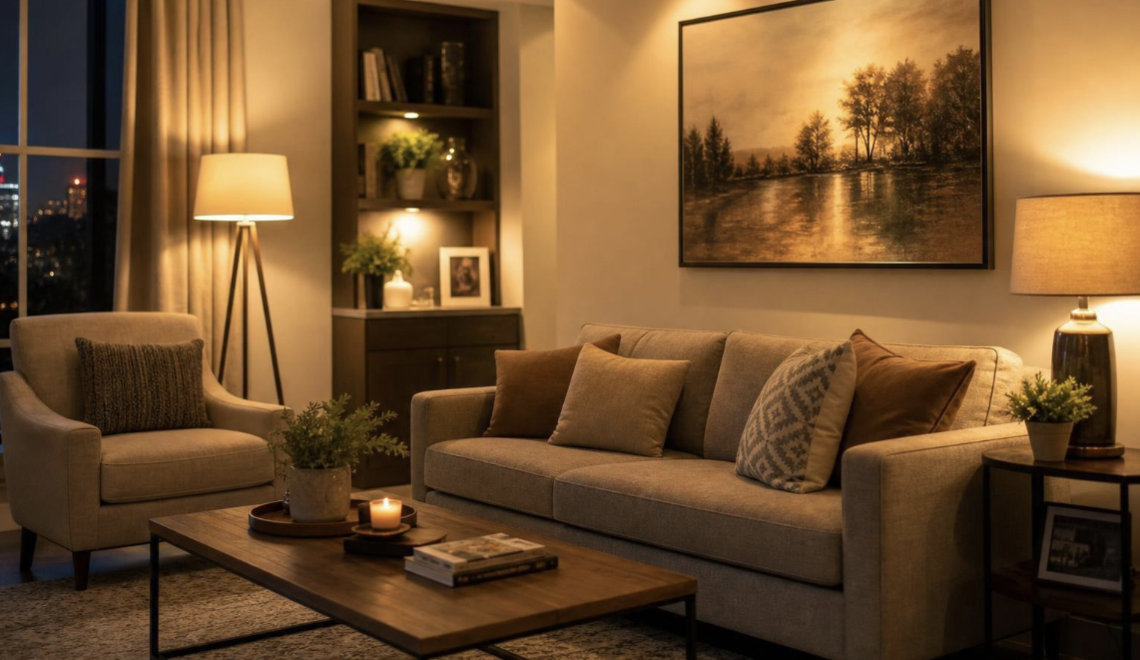
Walk into most homes, and you’ll find the same setup: one overhead fixture trying to do the job of an entire lighting system. The result is often harsh glare, awkward shadows, and dim corners that make simple tasks—reading, cooking, finding your keys—more frustrating than they should be. A better approach is to combine overhead lights, floor lamps, and table lamps so the room offers a softer, more flexible glow, one that shifts easily from focused work to a relaxed evening in. This is the idea behind layered lighting: using multiple light sources at different heights and intensities to suit whatever you’re doing in the space. There’s nothing technical about it, and it works just as well in a rented apartment as it does in a home you own, regardless of decor style.
Understanding Layered Lighting: The Foundation
At its core, layered lighting is about combining several types of light, each with a distinct role to play:
- Ambient lighting – the general light that fills a room and lets you move through it safely.
- Task lighting – focused, brighter light for activities like reading or cooking.
- Accent lighting – directional light that draws attention to art, shelves, or architectural details.
- Decorative lighting – fixtures chosen mainly for how they look.
Lighting designers tend to build spaces around these four layers, and for good reason: leaning on just one source almost never produces light that feels balanced or comfortable.
Ambient Lighting: Setting the Overall Mood
Ambient lighting is essentially a stand-in for daylight once the sun goes down, and it usually comes from ceiling fixtures, recessed lights, or pendants. The goal is even, soft coverage rather than one overpoweringly bright spot. A living room lit by a single central fixture tends to feel flat and glaring; spreading the light across several sources—and adding dimmers—makes a noticeable difference.
Key takeaway: Think of ambient lighting as your gentle base layer—bright enough to move around comfortably, but soft enough that you wouldn’t mind sitting under it for hours.
Task Lighting: Supporting Everyday Activities
Task lighting comes down to one practical question: can you actually see well enough to read, cook, or work in a given spot? It should be brighter than the ambient light around it, though not so bright that it becomes glaring. Think desk lamps, adjustable table lamps next to a favorite chair, under-cabinet lighting in the kitchen, or a well-placed vanity light.
The trick is positioning these lights so they illuminate your work surface rather than shine into your eyes—and avoiding placement directly behind you, which just casts shadows over whatever you’re doing. For reading, a lamp shade with its bottom edge roughly at seated eye level tends to work best. And if you notice yourself leaning in closer to the page than usual, that’s usually a sign your task light is either too dim or poorly positioned.
Accent and Decorative Lighting: Adding Depth and Character
Accent lighting is what puts a spotlight—sometimes literally—on the details worth noticing: artwork, a textured wall, or a few favorite items tucked into a bookcase. Decorative lighting, on the other hand, is chosen mostly for its looks, whether that’s a chandelier or a sculptural lamp, but it should still pull its weight as a light source rather than sit there purely for show.
Room-by-Room Lighting Strategies
In a living room, pair ambient ceiling light with table or floor lamps near your seating, then add accent lighting to highlight artwork. In a bedroom, aim for calm: soft ambient light paired with focused bedside lamps for reading. In a home office, task lighting should take priority—positioned to the side of your desk so it doesn’t create glare on your screen.
Light Quality, Bulbs, and Safety Considerations
Color temperature refers to whether a light feels warm or cool—warmer tones work well in relaxing spaces, while cooler tones suit areas meant for focus. Brightness, meanwhile, is measured in lumens, not watts. It’s worth keeping color temperatures consistent within a single room, checking that you’re not exceeding a fixture’s wattage limit, and making sure lamps are sturdy and stable, particularly if there are kids or pets around.
Bringing It All Together
Good lighting isn’t about piling on more fixtures—it’s about layering them thoughtfully. Start small: pay attention to where you find yourself squinting, or where shadows tend to fall, and adjust from there.
- Layer your light: combine ambient, task, accent, and decorative sources.
- Prioritize comfort: reduce glare and harsh contrasts.
- Adapt and adjust: use dimmers to shift the mood as needed.
Try this in just one room to start, and see how much of a difference it makes to your everyday comfort.
More to Love!
The Role of Dining Room Lighting in Creating a Comfortable and Functional Home
All the Unique Luxury Lighting Brands You Need to Know