SUBSCRIBE


Slow Living 101: Hobbies to Help You Reconnect with Yourself
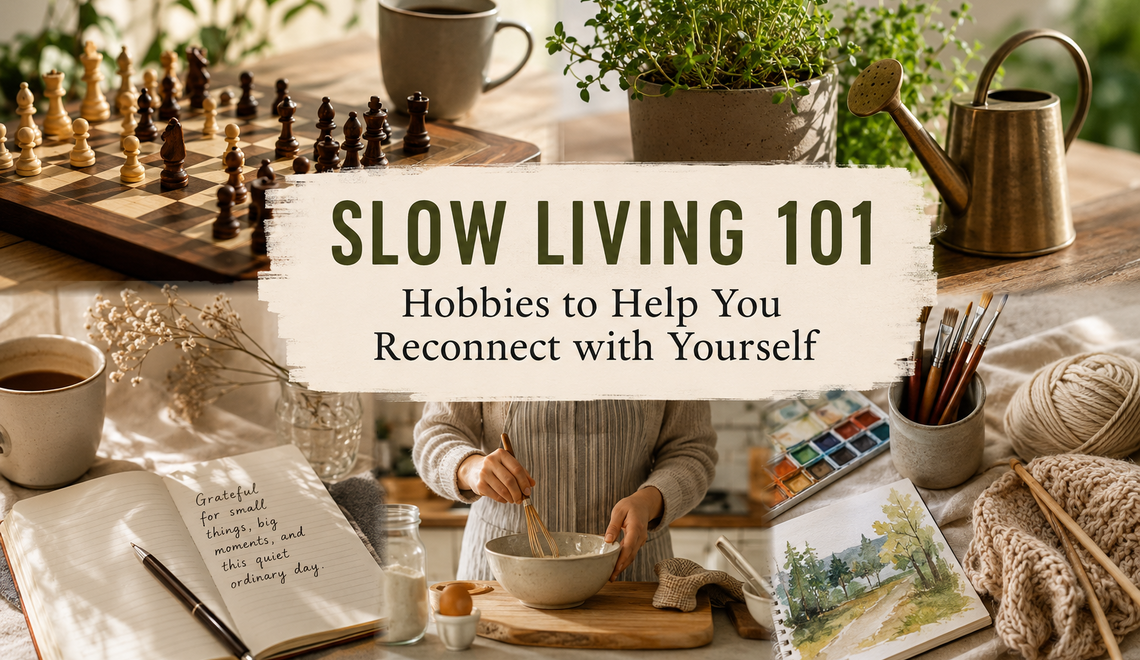
Modern life can make even quiet moments feel rushed. Between work, errands, messages, notifications, and endless scrolling, it can be difficult to spend time doing something simply because you enjoy it.
Slow living gives you a chance to focus on one thing at a time.
What Does Slow Living Really Look Like?
Slow living is all about being more intentional about your everyday life.
- It encourages you to step away from the pressure to constantly stay busy and make room for activities that support your well-being, relationships, interests, and personal growth.
- It’s about being more present in what you are doing. That could mean enjoying a meal without checking your phone, spending time in the garden, writing in a journal, or concentrating on a game of chess.
Hobbies fit naturally into this approach because they give you something to focus on without the pressure of constantly being productive.
5 Slow Living Hobbies That Can Bring More Calm Into Your Day
A hobby that helps you pause and reflect can also bring more calm into your day.
It doesn’t need to be expensive, complicated, or impressive. What matters is that you enjoy the process and can give it your attention.
1. Play Chess to Practice Patience & Focus
Chess gives you a reason to slow down. Instead of reacting instantly, you need to study the board, consider your options, and think about what could happen next.
- You can play a full game with someone else or simply spend time studying different strategies.
If you want to make chess a regular part of your routine, you can invest in a good chess set combo.
2. Grow Something with Gardening
Gardening encourages you to work at nature’s pace. Plants need time to grow, and there is no shortcut for watering, planting, pruning, or waiting for new growth.
- You can start with a few herbs, houseplants, or flowers if you do not have a large outdoor space.
3. Turn Cooking & Baking Into a Mindful Ritual
Cooking and baking can turn an everyday task into a more intentional experience.
- Measuring ingredients, preparing food, following a recipe, and paying attention to smells and textures all require you to stay involved in the process.
- Rather than rushing through a meal, try preparing something from scratch when you have the time.
The process itself can give you a break from screens and other distractions.
4. Use Journaling for Reflection
Journaling gives you a quiet space to put your thoughts into words.
You do not need to write pages every day. Even a few minutes can give you time to reflect on what happened, how you feel, or what you want to focus on.
- You can keep a traditional journal, write down things you are grateful for, or use simple prompts when you do not know where to begin.
- The important part is giving yourself uninterrupted time to think rather than immediately moving on to the next task.
5. Explore Painting, Drawing, or Hands-On Crafts
Creative hobbies can pull your attention away from the outside world and into the activity in front of you.
- Painting, drawing, knitting, pottery, scrapbooking, and other crafts all provide opportunities to work with your hands and focus on the process.
You do not need to be naturally artistic to enjoy them.
- The goal is not to produce something perfect. Instead, allow yourself to experiment, make mistakes, and enjoy creating without worrying about how quickly you finish.
Why Should You Embrace Slow Living Hobbies?
Slow living is not about adding another item to your to-do list.
It is about making room for activities that help you step out of the constant cycle of work, notifications, and obligations.
- Eases Everyday Stress: Spending time on something you enjoy may help you relax and create a clearer boundary between busy periods and personal time.
- Encourages You to Be More Present: Many hobbies require you to pay attention to what you are doing right now. They give you a reason to focus on the present rather than constantly thinking about what comes next.
- Strengthens Focus & Concentration: Chess, creative work, cooking, and similar activities can encourage you to stay with one task instead of constantly switching between different sources of stimulation.
- Makes Room for Your Own Interests: Daily responsibilities can easily push personal interests to the bottom of your list. Setting aside time for a hobby reminds you that not every activity needs to be connected to work, productivity, or an obligation.
- Supports a Healthier Relationship with Technology: Slow living doesn’t necessarily require you to eliminate technology. Instead, your hobbies can give you enjoyable alternatives to reaching for your phone whenever you have free time.
Let Your Free Time Feel Like Your Own Again
Slow living does not require a complete change in your lifestyle.
It can begin with something as simple as setting aside 20 minutes to play chess, tend to your plants, bake something, write in a journal, or work on a creative project.
In a world that constantly asks for your attention, choosing to focus on one meaningful activity can be a simple way to unplug, reconnect, and make your free time feel more intentional.
More to Love!
The Art of Slow Living: Why Taking Time Off Is the New Luxury
An Ode to Self Love