SUBSCRIBE


Modern Art Deco Furniture: The New Rules of Decorating with Deco
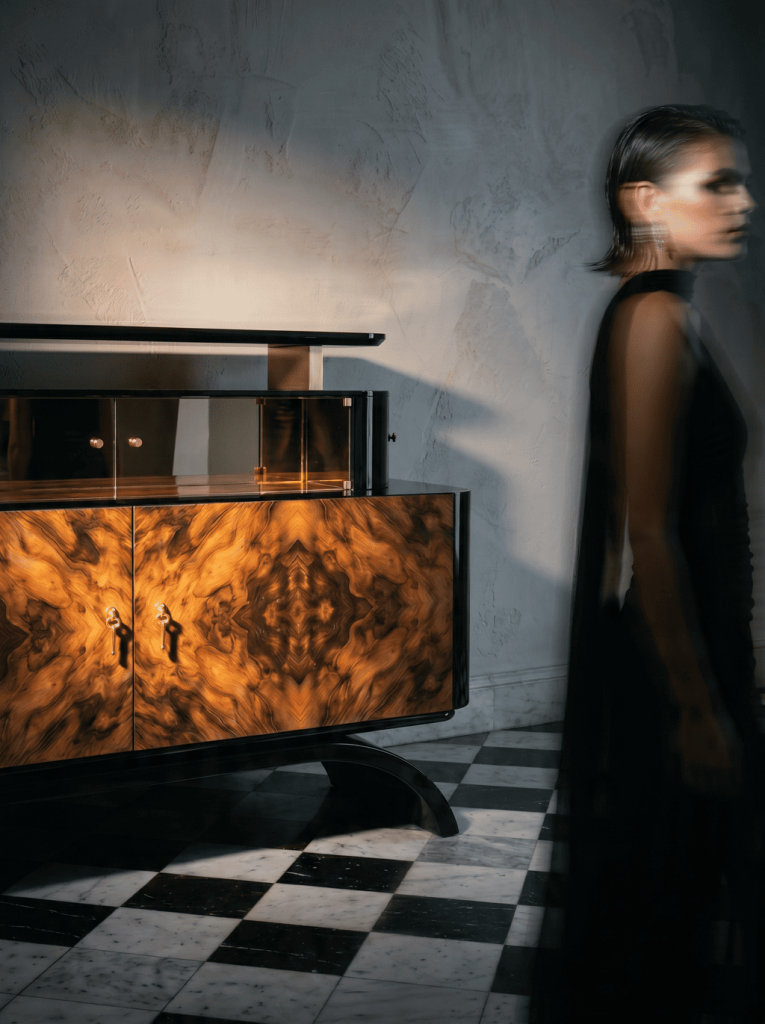
Art Deco has never been particularly interested in being subtle. Born from an era of optimism, glamour, and radical modernity, the style embraced polished metals, exotic woods, sumptuous fabrics, strong geometry, and furniture designed to command attention.
A century later, that confidence still feels remarkably relevant.
But decorating with modern Art Deco furniture isn’t about recreating a 1920s Paris apartment—or filling a room with fan motifs, mirrored surfaces, and geometric patterns. The most compelling Art Deco interiors today borrow the spirit of the era rather than reproduce it.
Think sculptural furniture. Sensuous curves against strong architectural lines. Rich materials used with restraint. And, above all, pieces with enough personality to transform a room.
Welcome to the new rules of decorating with Deco.
What Makes Furniture Art Deco?
Art Deco emerged in the 1920s and 1930s as a celebration of modernity, craftsmanship, luxury, and progress. Its furniture reflected that ambition.
The era gave us dramatic silhouettes, symmetrical forms, polished surfaces, lacquer, brass, rich woods, velvet, glass, and exquisite decorative craftsmanship. Furniture wasn’t simply functional—it contributed to the architecture and atmosphere of a room.
Yet some of the most interesting Art Deco furniture also played with contrast: straight lines against sweeping curves, hard materials beside sumptuous textiles, strict geometry softened by sensuality.
Those contradictions are part of what makes the style so easy to reinterpret today.
Contemporary Art Deco furniture doesn’t need to replicate an antique. A sculptural chair, beautifully finished cabinet, or dramatically proportioned console can evoke Deco through form, material, and attitude alone.
And behind the style were extraordinary creative women whose work helped shape the era. From Eileen Gray’s revolutionary furniture and interiors to the unmistakable worlds created by figures such as Gabrielle Chanel and Tamara de Lempicka, the women who defined Art Deco Paris helped establish an aesthetic that still influences how we think about glamour and modernity today.
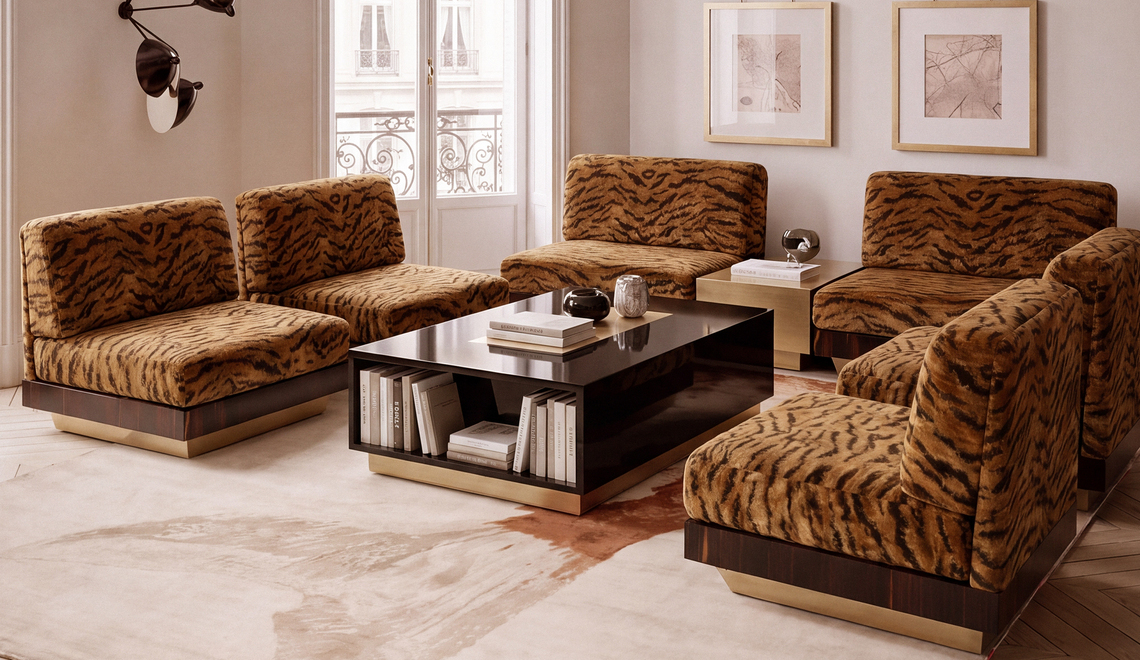
Rule No. 1: Don’t Recreate the 1920s
Perhaps the most important rule of modern Art Deco decorating is knowing when to stop.
A room doesn’t need a geometric rug, sunburst mirror, brass lighting, velvet sofa, lacquered cabinet, patterned wallpaper, and black-and-gold accessories to establish its Deco credentials.
In fact, the opposite approach can be far more sophisticated.
Choose one extraordinary piece and allow it to set the tone.
A sculptural lounge chair can introduce the curves and sensuality associated with Deco. A dramatic cabinet can bring geometry, craftsmanship, and glamour to an otherwise contemporary room. A beautifully proportioned console can transform an understated entryway without a single recognizable Art Deco motif.
The objective isn’t to create a themed interior. It is to borrow the confidence of Deco and make it feel completely at home in the present. For more inspiration, discover five ways to bring Art Deco design into the 21st century.
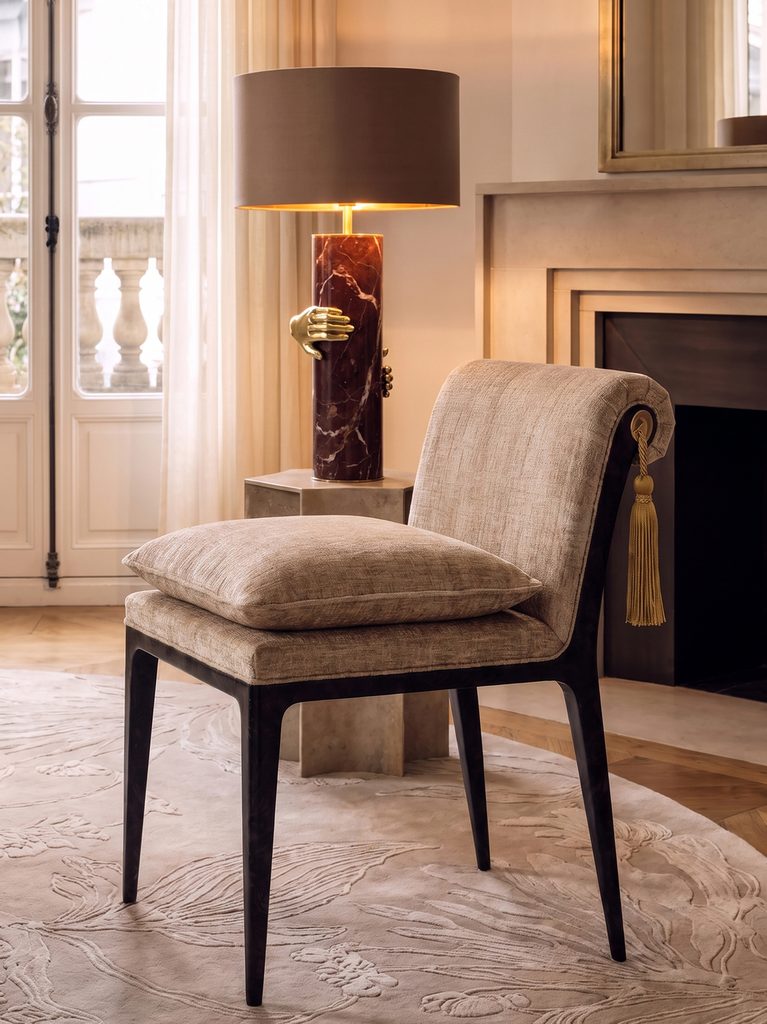
Rule No. 2: Start with the Statement Furniture
Art Deco understood the power of a statement.
Rather than building a room around decorative accessories, begin with the furniture that will define it.
An expressive armchair can become almost sculptural. A cabinet can act as architecture. A dining table can establish the geometry of an entire space.
This is particularly effective in contemporary interiors, where a single highly decorative or beautifully crafted piece gains even more impact against a quieter backdrop.
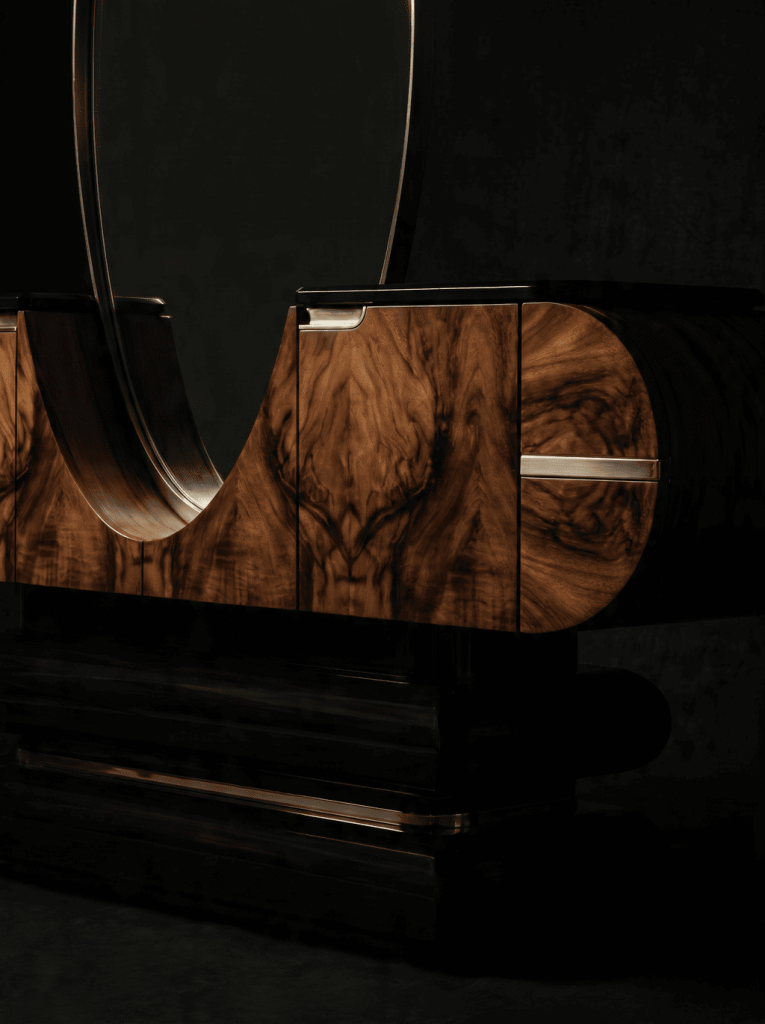
Consider KOKET’s Lola Armchair, with its strong, feminine silhouette, or the Eileen Lounge Chair, whose form brings softness and movement into a room. Casegoods such as the Odette Sideboard and Delany Display Cabinet demonstrate another side of the aesthetic, using material, proportion, and detail to turn storage into a focal point.
The common denominator isn’t a particular Deco pattern. It’s presence.
When the furniture itself carries that much character, the rest of the room doesn’t have to work nearly as hard.
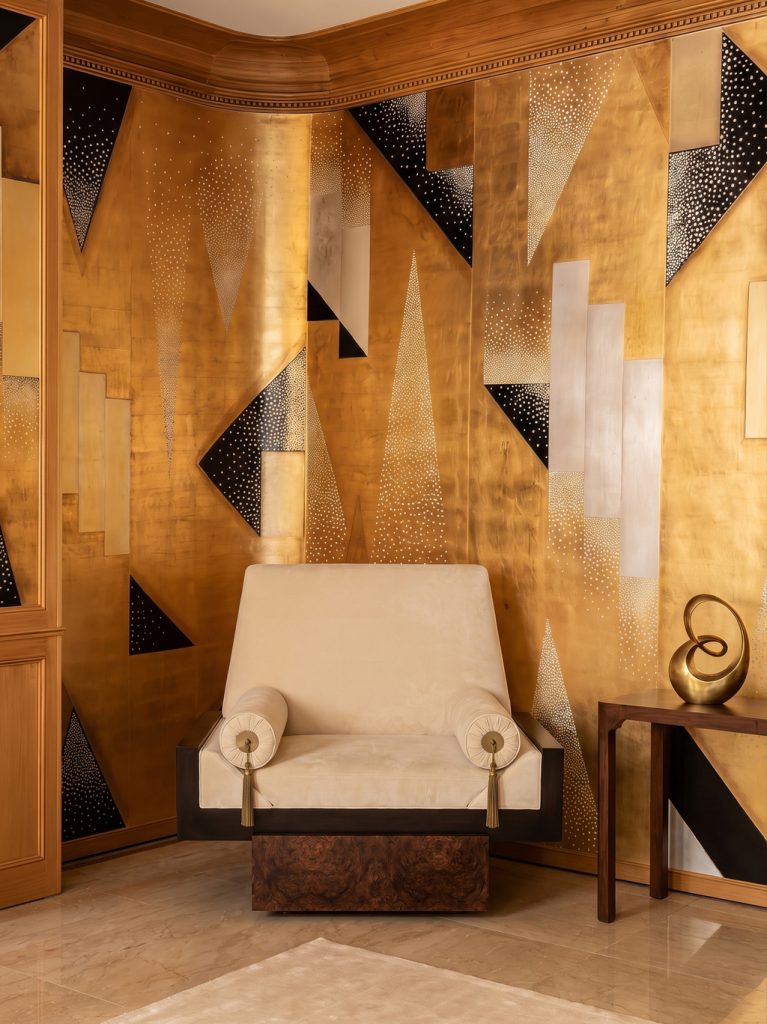
Rule No. 3: Let Materials Do the Talking
One of the easiest ways to make Art Deco feel dated is to focus too heavily on recognizable motifs.
Instead, look to material.
The original Art Deco era reveled in surfaces and craftsmanship: lacquered finishes, rich woods, metals, glass, mirrors, velvet, silk, and intricate decorative techniques.
Modern interiors can use the same language more selectively.
Pair a glossy cabinet with a matte plaster wall. Place velvet against polished metal. Let the grain of an extraordinary wood become decoration in its own right. Introduce metallic detail as a flash rather than a theme.
This approach allows Art Deco’s sense of luxury to remain while removing the feeling of historical reproduction.
Texture is equally important. A room composed entirely of polished surfaces can feel cold, while one filled with velvet and shine can quickly become overly theatrical. The magic is in the contrast.
Hard against soft. Matte against lustrous. Restrained against extravagant.
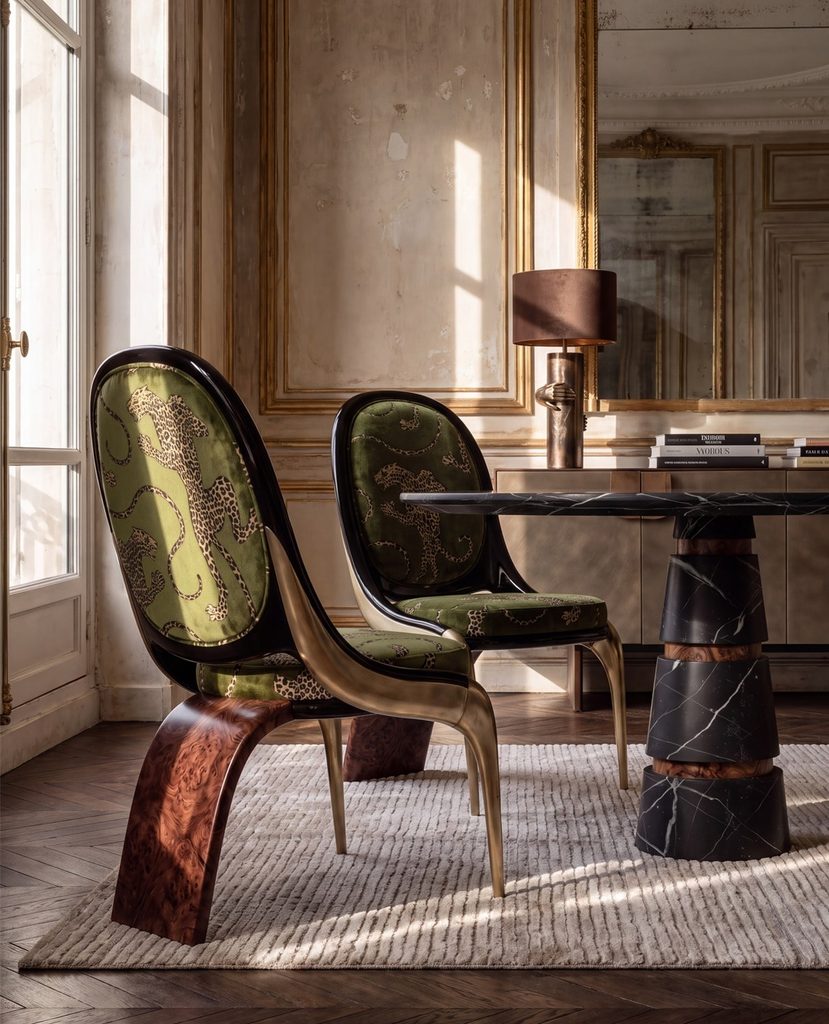
Rule No. 4: Balance Geometry with Curves
Geometry may be one of Art Deco’s most recognizable signatures, but the style was never exclusively about hard angles.
Its strongest interiors often balance architectural precision with sensual curves.
That relationship feels particularly contemporary today.
A rectangular cabinet can sit beside a rounded chair. A strong dining table can be softened by upholstered seating. A room with linear architectural details can accommodate furniture with an almost fluid silhouette.
Rather than repeating the same geometry throughout a space, create tension between shapes.
It is often that tension—not an obvious zigzag or fan pattern—that makes a modern room feel Deco.
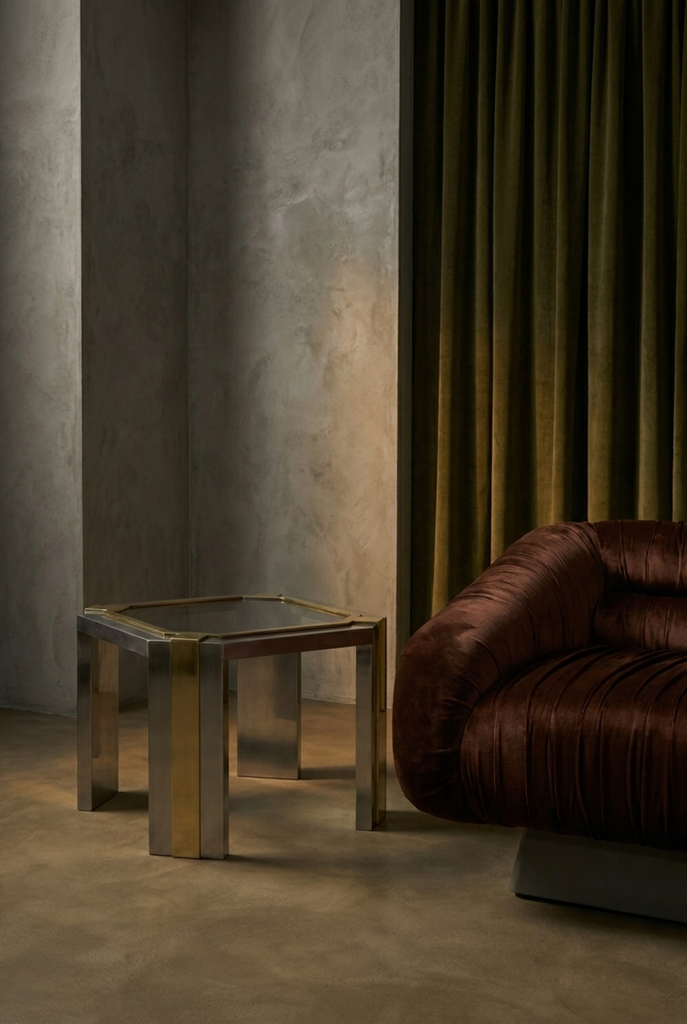
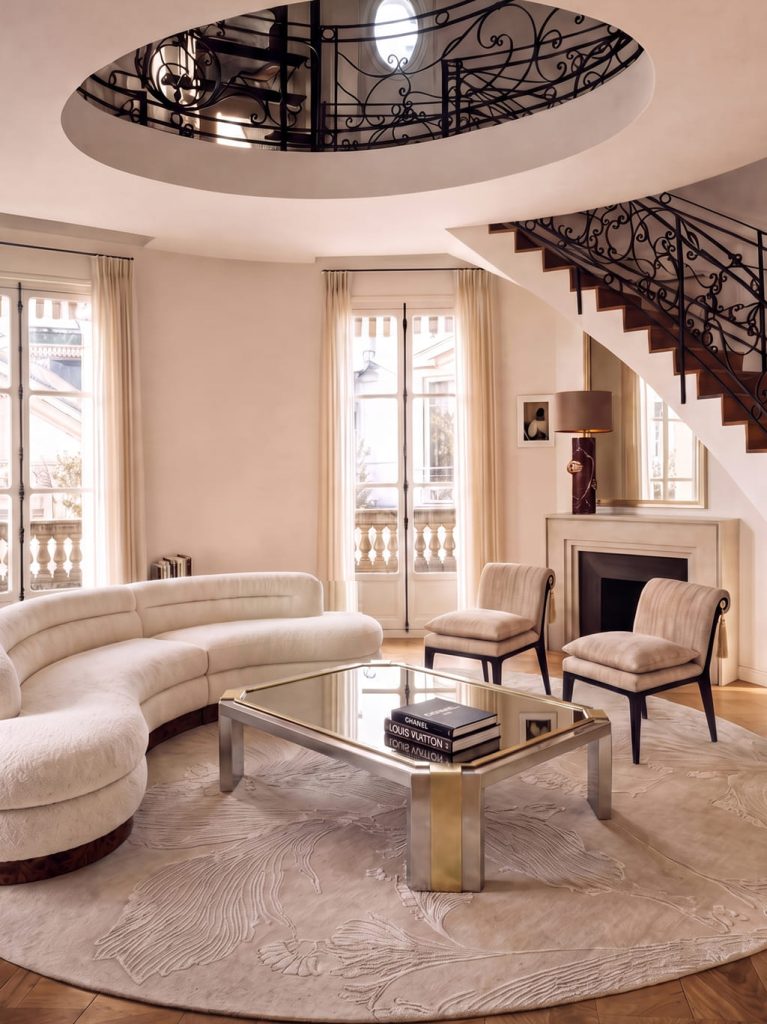
Modern Art Deco Furniture in the Living Room
The living room offers perhaps the greatest freedom for experimenting with Deco because furniture can be layered without committing the entire space to one aesthetic.
Start with a hero.
It might be a sofa with an exaggerated silhouette, a pair of sculptural lounge chairs, or a dramatic cabinet anchoring one wall.
From there, pull back.
If the seating is expressive, keep occasional tables quieter. If a cabinet is richly detailed, allow the furniture surrounding it to be more restrained. And, if the room already has ornate architecture, introduce Deco through shape rather than additional decoration.
Contemporary art can be particularly effective alongside modern Art Deco furniture. The contrast prevents the room from feeling frozen in a particular period while reinforcing the idea that Deco has always been connected to art, fashion, and culture.
For another approach to balancing glamour, history, and contemporary pieces, look to Parisian living room design.
Modern Art Deco Furniture in the Dining Room
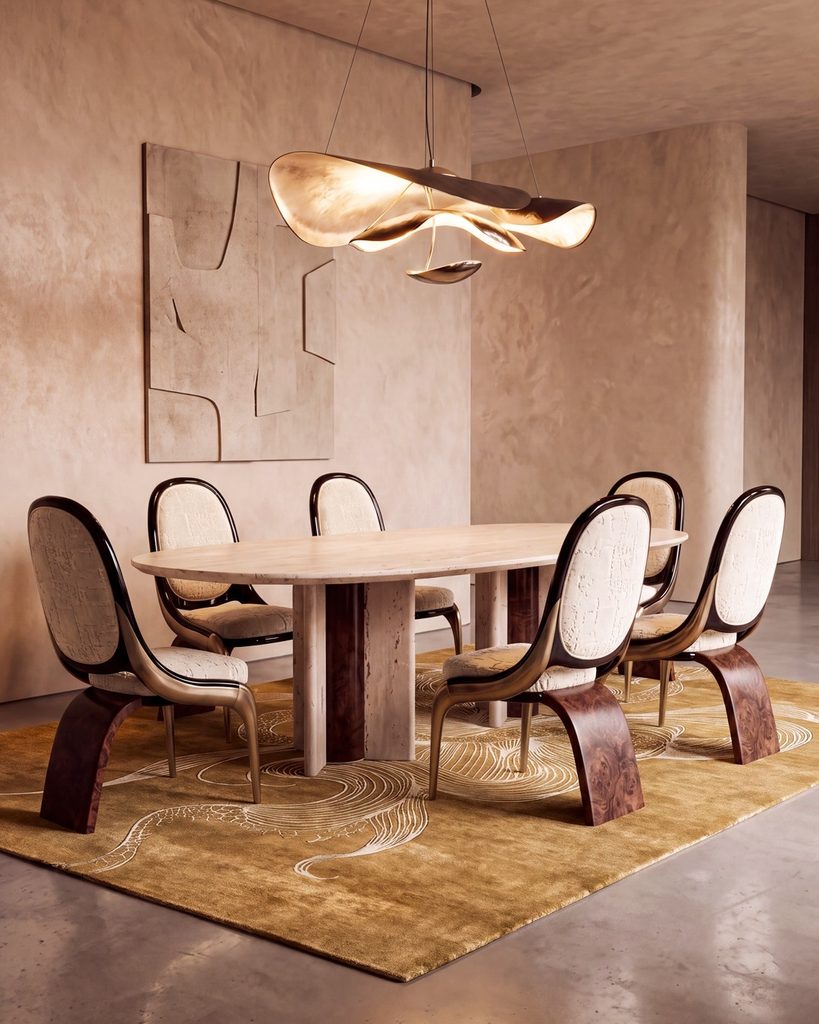
If there is one room where Art Deco’s appetite for glamour feels especially natural, it may be the dining room.
Dining spaces invite ceremony. They are places designed for gathering, entertaining, and occasionally putting on a little bit of a show.
Begin with the table as the architectural center of the room. A strong base, rich finish, or dramatic material can establish the entire design direction.
Then consider contrast in the seating.
KOKET’s Paris dining table, for example, can be paired with the expressive Gabrielle upholstered dining chairs from the Women of Art Deco collection to create a room that feels glamorous without becoming nostalgic.
A sideboard or display cabinet can add another layer of craftsmanship while providing visual height. Finish with statement lighting and resist the temptation to keep adding.
Deco loves drama. Good decorating knows when the scene is complete.
Rule No. 5: Mix Deco with Contemporary Design
A beautiful modern Art Deco interior rarely contains only Art Deco furniture.
Mixing periods and aesthetics is what makes the look feel collected rather than decorated.
Place an elaborate cabinet beside a minimalist sofa. Pair a sculptural Deco-inspired chair with a clean-lined contemporary desk. Hang abstract contemporary artwork above a glamorous console.
Even architecture can provide the contrast.
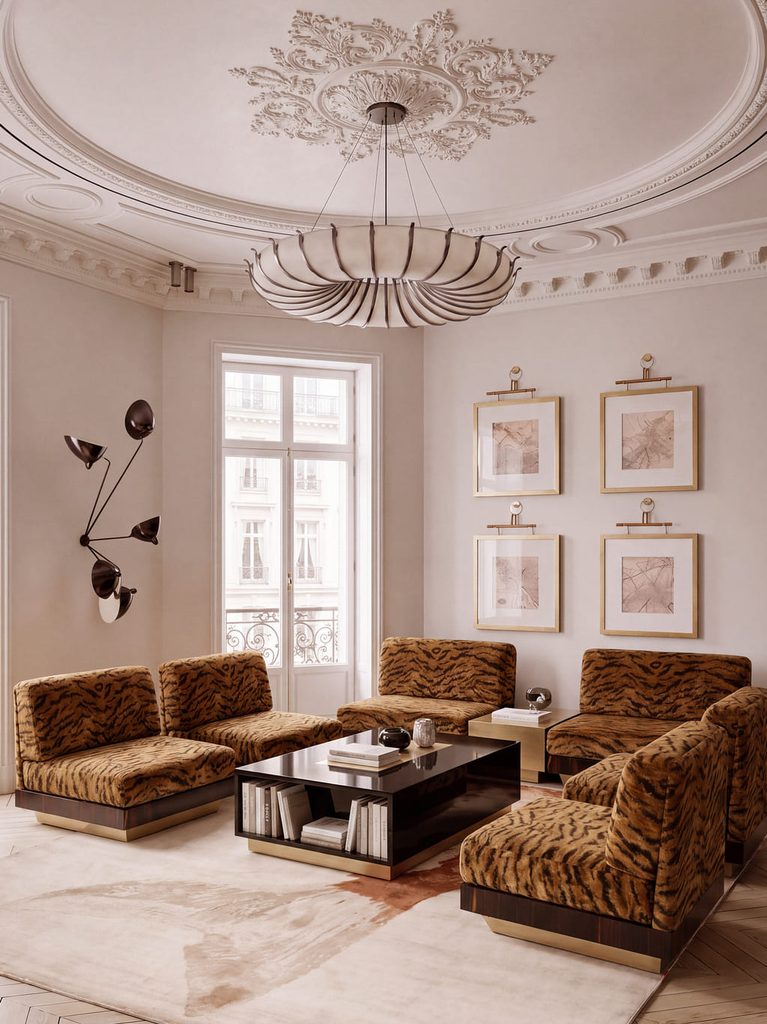
Art Deco furniture can be striking in a traditional Parisian-style apartment filled with moldings and herringbone floors, but it can be equally compelling in a stark modern home where the furniture becomes the ornament.
The goal is not historical accuracy.
It is dialogue.
Old glamour against modern restraint. Ornament against simplicity. Femininity against architectural strength.
From Art Deco to Neo Deco
Perhaps this freedom explains why Art Deco continues to return.
Today’s interpretation is sometimes described as Neo Deco: a new generation of interiors that embraces Deco’s glamour, geometry, rich materials, and theatricality without attempting to recreate the past.
The difference is less about a strict set of design rules and more about attitude.
Neo Deco can be softer. More sculptural. More eclectic. A room might contain one unmistakably glamorous piece surrounded by contemporary furniture, art, and architecture.
What remains is Deco’s belief that beauty deserves to be noticed.
Explore the evolution of the aesthetic in Art Deco Style Never Left—It Just Went Neo Deco.
Meet the Women of Art Deco
Few contemporary furniture collections capture the relationship between Art Deco heritage and modern design quite like KOKET’s Women of Art Deco Collection.
The collection pays tribute to the women who helped define the era—not by recreating the rooms they inhabited, but by translating their confidence, individuality, and creative force into furniture for today.
Pieces bear the names of remarkable women from the period, while sculptural forms, rich materials, lustrous finishes, bold proportions, and sensual details reinterpret the visual language of Deco through KOKET’s distinctly feminine lens.
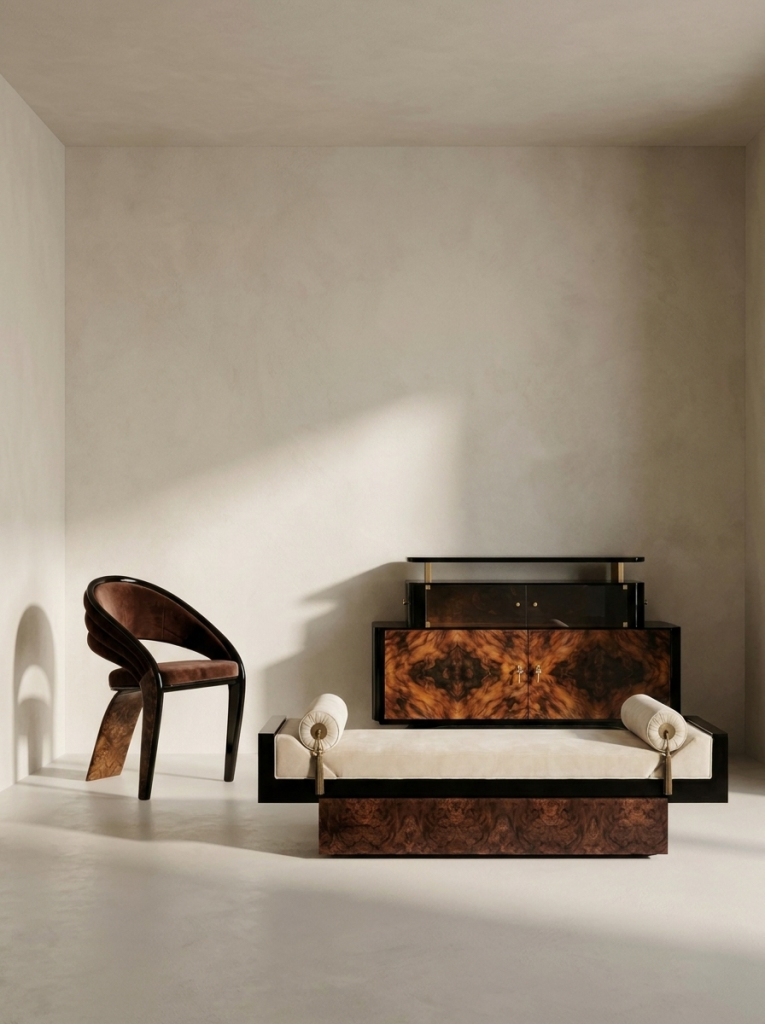
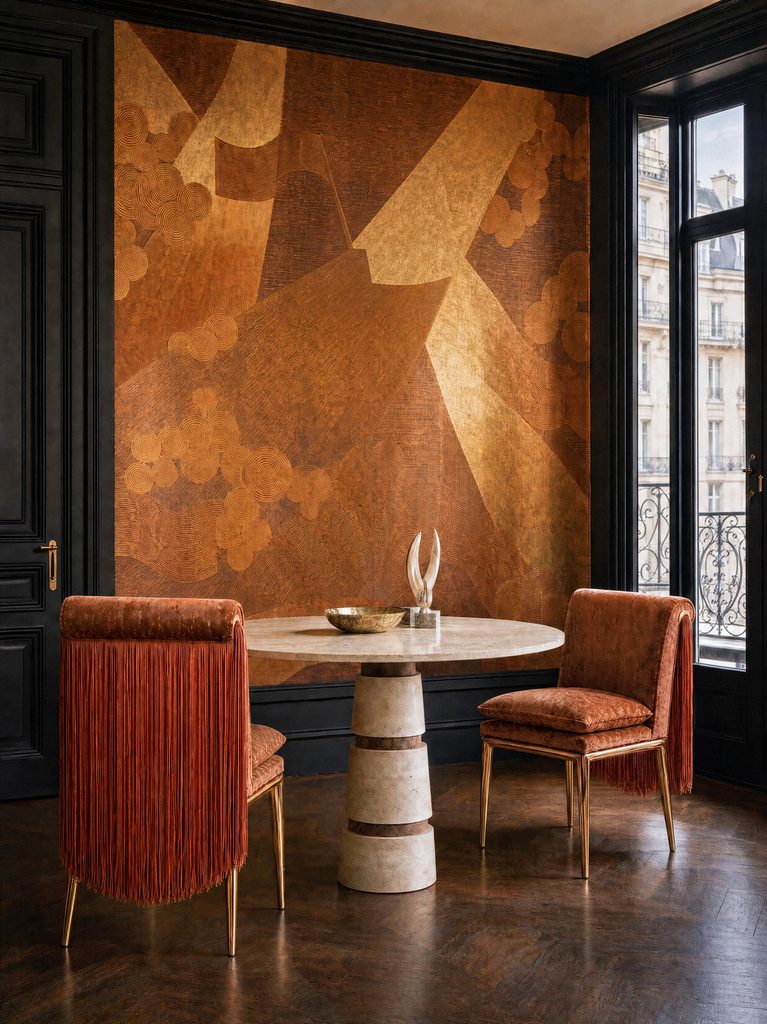
There is the architectural presence and elegance of the Odette Sideboard, the expressive silhouette of the Lola Bench, and the sculptural softness of the Yvette Lounge Chair pictured above, among so many others!
Together, they offer another way to think about Art Deco.
Not as a style preserved in the past, but as a design language that can continue to evolve.
And perhaps that is the most useful rule of all.
The best modern Art Deco interiors don’t look backward.
They take everything the era taught us about glamour, craftsmanship, confidence, and self-expression—and make it their own.