SUBSCRIBE


Beyond the Basin: How the Vanity Became Bathroom Design’s New Centre of Gravity
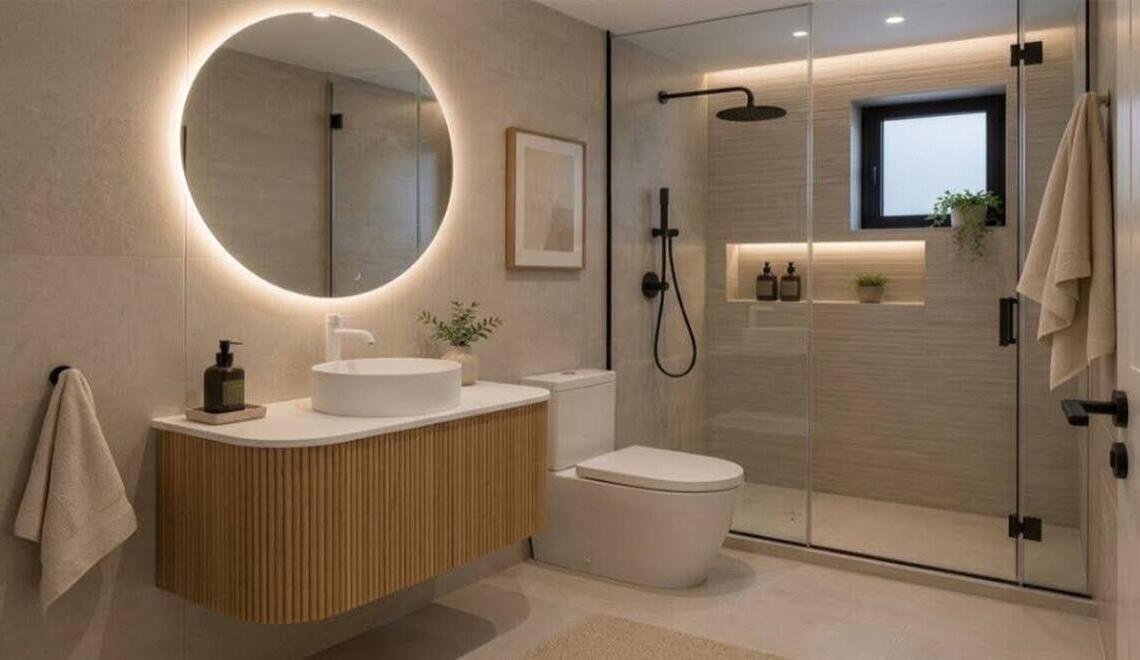
Have you ever wondered why a bathroom is interrogated quite so closely than any room in the home? Because it is small, and every decision is visible at once. In addition, it is functional enough that taste has nowhere to hide.
For years, the vanity sat at the quieter end of the conversation – it performed as a fixture that is merely chosen to hide plumbing and little less. Now, that has changed entirely. Across British interiors, the bathroom vanity unit has moved from a usable component to a piece of furniture that the entire bathroom has to be anchored around. It carries the same weight as any piece of case furniture considered in a drawing room.
Floating Above the Floor
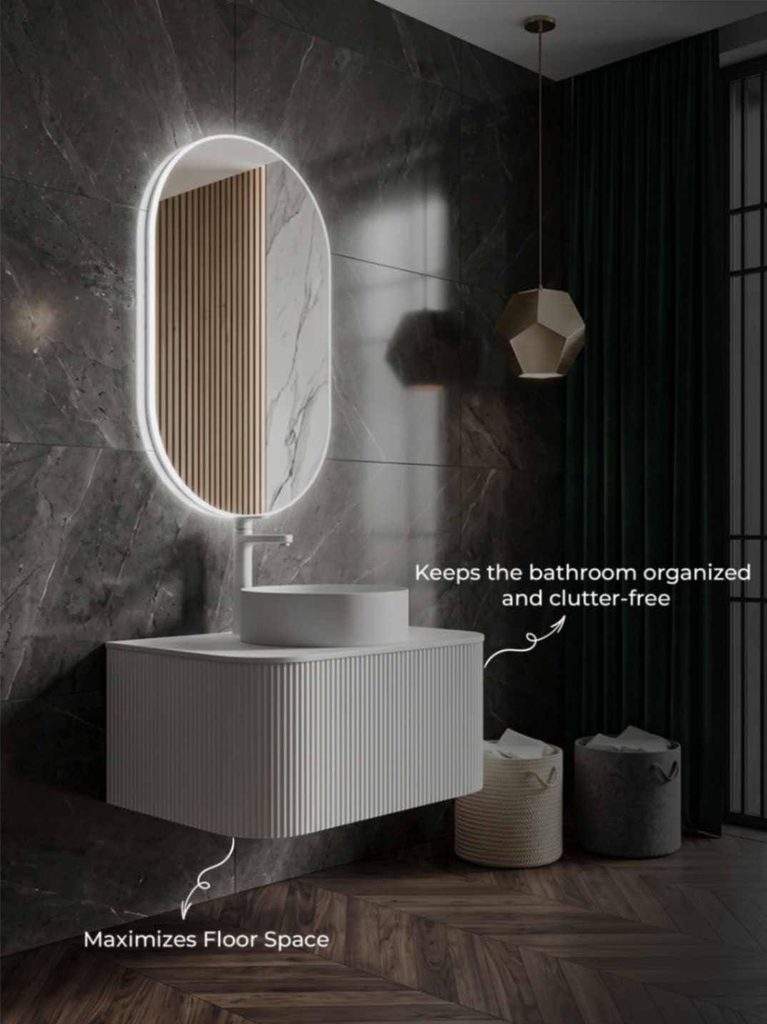
The clearest expression of the interior shift is the rise of wall mounted vanity units. Where a floor-standing cabinet once anchored the room with its solid and heavy-handed presence, a floating unit does the reverse. It leaves the floor legible as floor. While doing so, it also alters the whole bathroom proportion more dramatically than its footprint would suggest.
There is a practical dividend to it too: a clear run of tile underneath the unit is simpler to keep immaculate than a plinth ever was. However, the real appearance is visual: a wall-hung vanity reads as volume suspended in space rather than furniture occupying it. The floating vanity treats the floor as something to be seen, not stored upon.
The engineering behind this effect is not as glamorous as you might think. A unit is only as trustworthy as the wall it hangs from. A considered installer will always specify fixing into masonry or a properly battened stud wall before anything else.
Storage as Architecture, Not Afterthought
There was a period in history where storage and plumbing were treated as embarrassments. They were necessary but concealed behind a plain floor, never to be discussed. That instinct has softened considerably over the years.
A double basin arrangement was once purely concessional to a shared household timetable; now it is specified, often for the symmetry it lends a principal bathroom, for its practicality.
Waste pipes that were hidden apologetically beneath a pedestal are now routed cleanly within the cabinetry itself so that what remains visible is a single uninterrupted plane rather than a compromise.
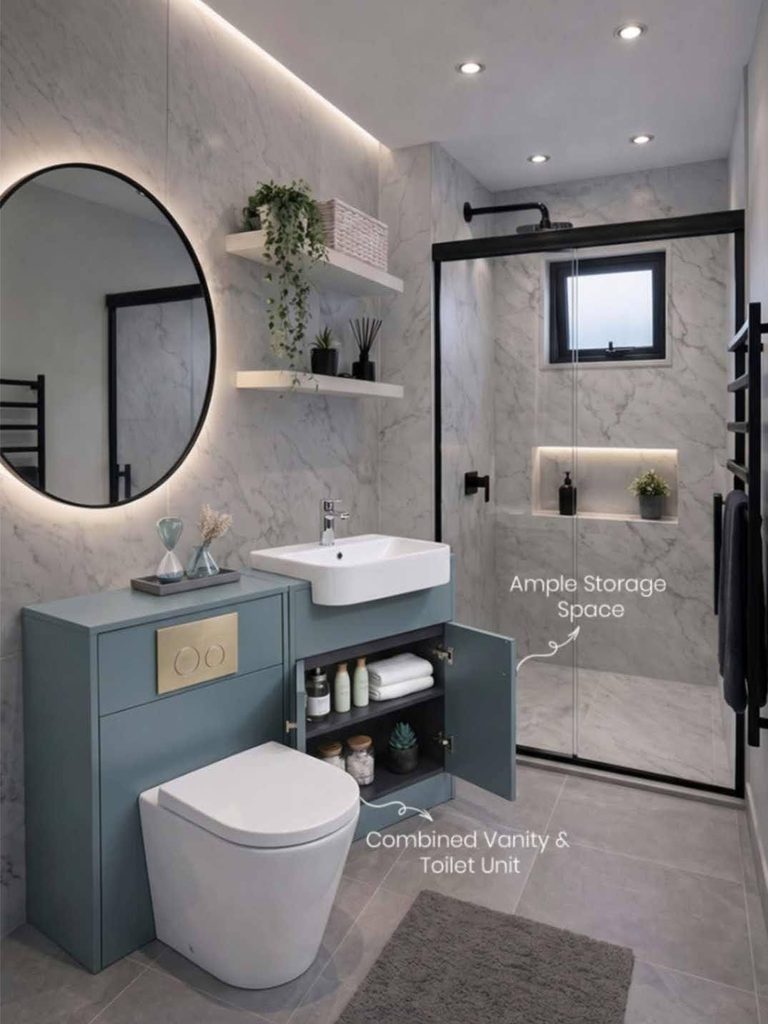
Even the marriage of basin unit and WC into one continuous run of furniture, once strictly there as a space-saving manoeuvre for an awkward bathroom footprint, has become a legitimate design choice in its own right. It is less a workaround than a decision about how a small room ought to read as a whole. Storage, in other words, has stopped being something a bathroom apologises for and has started being something it is designed around.
Material, Craft and the Question of Longevity
Nowhere does the distinction between a considered bathroom and a mere adequate one show itself more evidently than in what the vanity is actually made of. A humid, frequently splashed environment is forgiving of anything less than properly specified material. The difference rarely announces itself at the point of purchase; it announces itself eighteen months later, in a swollen edge or a joint that has begun to lift.
Marine-grade plywood and properly sealed solid wood will weather that environment convincingly. The same cannot always be said for standard MDF dressed up in appealing finishes, however handsome it looks under showroom lighting. Solid wood, worth noting, is not automatically the superior choice either; without the right PU topcoat and attention to exposed edges, natural timber can behave just as poorly as anything cheap.
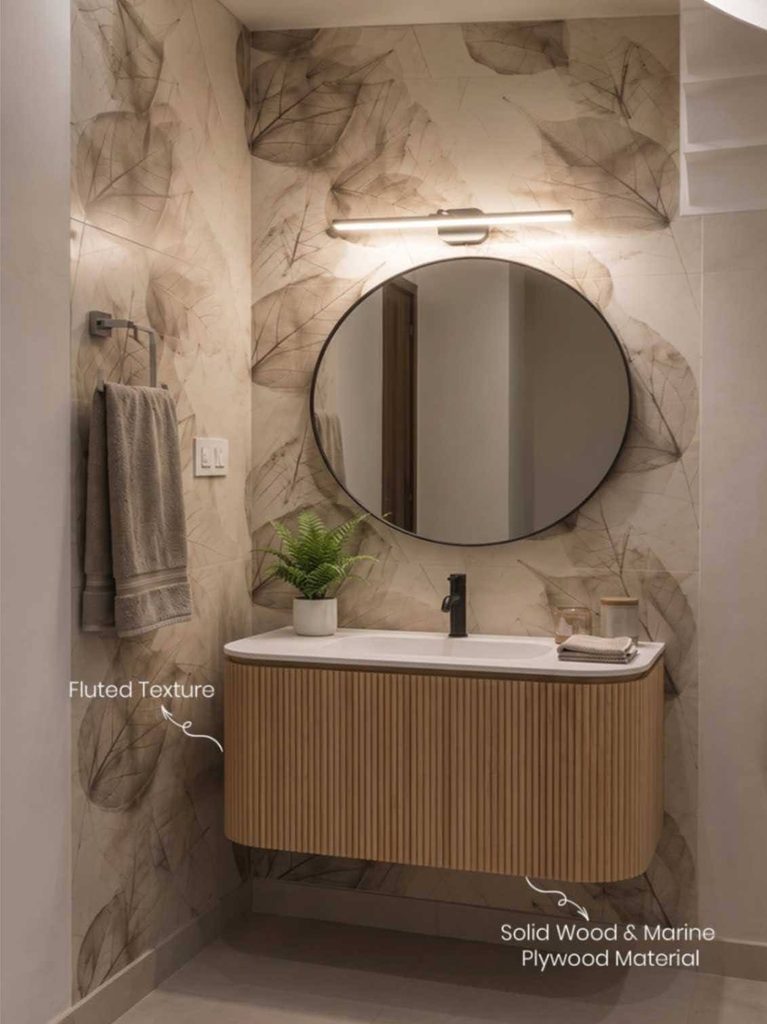
What elevates a vanity beyond the sum of its material, though, is how deliberately it is considered alongside everything around it. A fluted or heavily textured front wants plainer and large-format floor tiles to let its details breathe. A quieter, flat-fronted unit can carry more pattern in the tiling without the room tipping into visual noise.
This is where more thoughtful renovations distinguish themselves from merely competent ones; not in the vanity alone, but in how convincing it converses with the porcelain bathroom tiles surrounding it. This way, the two read as a single considered scheme rather than two separate purchases made in isolation.
What a Considered Buyer Looks For
The tells of quality are rarely dramatic. They are in the weight of a soft-close drawer, the way a seam is finished rather than simply covered, and the honesty of a timber grain that has not been laminated into uniformity.
Photographs flatter almost everything, which is precisely why a showroom visit remains worth the detour. The texture, weight, and the true depth of a finish are qualities no image quality conveys. UK suppliers such as Royale Stones, who show vanity ranges and coordinate tile collections within the same showroom, make that side-by-side comparison a good deal easier than sourcing each element from a separate supplier and hoping everything agrees with one another once installed.
None of which is to say the bathroom has become precious. It has simply become honest about what it always was: the one room in the house where nothing can be dressed up to disguise a poor decision, and where, increasingly, nothing needs to be.
More to Love!
Timeless Bathroom Design Ideas That Never Go Out of Style
Private: How to Design a Bathroom That Feels Like a Five-Star Hotel Every Morning