SUBSCRIBE


How Do You Know When Your Garage Door Opener Needs Repair or Replacement?
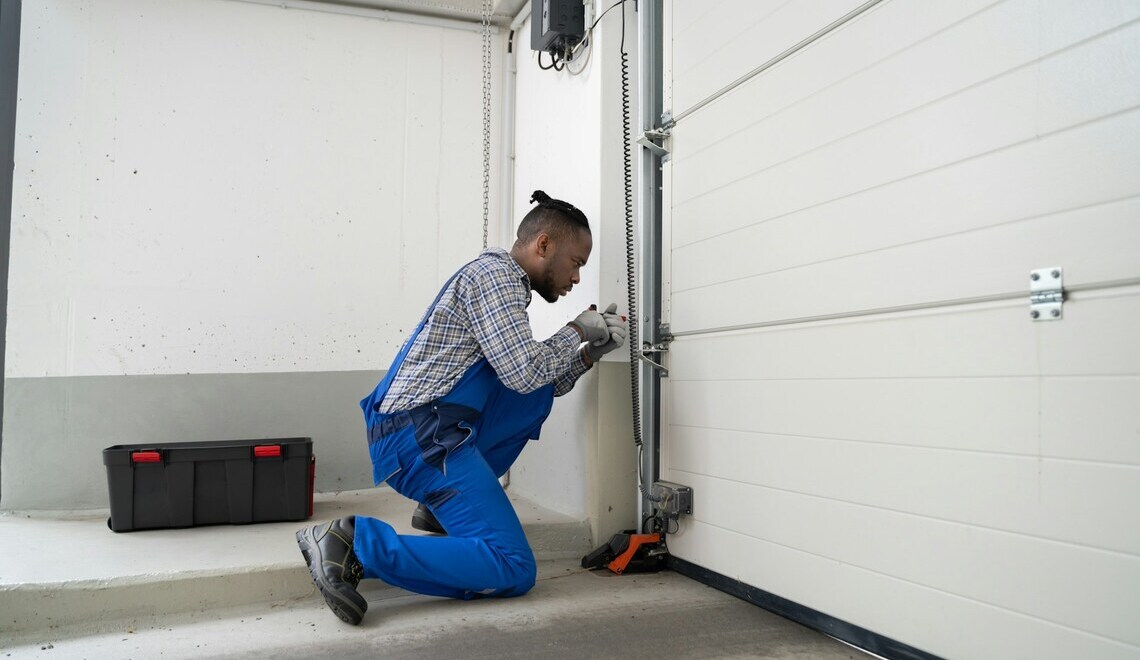
Your garage door opener logs thousands of cycles across its lifetime, and most of the time you never give it a second thought. That’s the whole point. But the instant it starts grinding, hesitating, or refusing to respond entirely, your morning routine stops cold with it. Understanding the difference between a quick fix and a full replacement saves you money, time, and the aggravation of pouring repair cash into a unit that’s genuinely done. Whether your opener just started misbehaving or has been flaky for months, the warning signs tend to follow recognizable patterns.
Warning Signs Your Garage Door Opener Is Failing
Providers of residential garage door services in Houston encounter the same handful of symptoms across hundreds of service calls each year, making diagnosis more predictable than most homeowners expect. The opener itself may be the culprit, or the trouble may trace back to the door’s hardware – springs, cables, tracks – rather than the motor unit. Sorting that out early determines whether you need a technician for a $130 sensor adjustment or a full opener swap closer to $300 to $500.
The Opener Responds Inconsistently
You press the remote twice. Nothing. Third press, the door moves halfway up and stops. This kind of intermittent behavior is one of the clearest signs that something is wrong, and it’s worth taking seriously rather than brushing off as a “bad day.”
The most common culprits are a worn-out logic board, a failing motor capacitor, or interference from a nearby device sharing the same radio frequency. A logic board replacement typically runs $80 to $150 in parts alone, and it’s a repair worth attempting on an opener that’s less than eight years old. But if intermittent response has been creeping worse over several months, the motor itself may be developing internal faults that no single part swap will fix. An opener that responds inconsistently on warm days and fails almost entirely in cold weather often has a motor winding problem; replacement is usually the more cost-effective path at that point.
Don’t overlook the remote and wall button as your starting points. Swap the battery, try a second remote if you’ve got one, and check whether the wall button works even when the remote doesn’t. If the wall button functions perfectly and only the remote fails, you’re likely dealing with a receiver or antenna issue rather than a motor problem.
Unusual Noises During Operation
A well-maintained opener makes a consistent, predictable sound. Chain units are naturally louder than belt models, but any new noise – grinding, rattling, clicking, or a high-pitched squeal – signals a mechanical change that deserves attention.
Grinding sounds from the motor housing often point to worn gears. Most residential openers use a nylon or plastic gear that meshes with a metal sprocket, and that gear wears down over time. A gear kit costs $20 to $40, and the replacement job is straightforward for an experienced technician. A squealing or high-pitched whine usually signals motor bearing wear, and bearing replacement on older units often costs more in labor than the unit’s worth. If the noise came on suddenly rather than gradually, check the door’s hardware first; a loose roller bracket or a fraying cable can produce sounds that seem to come from the opener but don’t.
A clicking sound during operation, particularly one that repeats in a rhythmic pattern, often means the door is hitting its travel limits incorrectly. That’s a calibration issue, not a mechanical failure, and a technician can adjust travel limits in minutes.

Repair or Replace? How to Make the Right Call
The age of your opener matters more than most homeowners realize. The International Door Association notes that most residential garage door openers carry a useful service life of 10 to 15 years under normal use. A 12-year-old opener needing a $200 repair is a very different equation than a four-year-old unit with the same problem. Age alone doesn’t decide the answer, but it shifts the math significantly.
What Repair Makes Sense
Repairs generally make financial sense under three conditions. The opener is less than ten years old. The repair cost stays under 50% of what a comparable replacement would run. And the failure is isolated, one component, not a cascade of worn parts surfacing all at once.
Common repairs that are worth the investment:
- Safety sensor realignment or replacement (around $130)
- Gear replacement ($20 to $40 in parts, plus labor)
- Travel limit recalibration (usually a service-call-only charge)
- Remote receiver or antenna replacement ($30 to $60 in parts)
- Circuit board replacement on units under eight years old ($80 to $150 in parts)
If your opener still has a working motor, good structural integrity, and only one component has failed, a repair almost always beats replacement on cost. Ask the technician whether the repaired component is likely to be the last failure or simply the first in a sequence.
What Points Toward Full Replacement
Some situations don’t have a repair argument. An opener that’s over 15 years old lacks the safety features now standard on modern units. The automatic reversal system required by UL 325 mandates that any door sold after 1993 reverses on contact with an obstruction, and older units may have this feature in degraded form, or not at all.
Smart home connectivity is another reason homeowners choose replacement over repair. Modern openers from LiftMaster, Genie, and Chamberlain connect to your home’s Wi-Fi and let you monitor and operate the door from your phone. If your current unit is a single-frequency chain drive from the early 2000s, no repair restores capabilities it was never built to have.
And if the motor itself has failed on a unit over ten years old, replacement makes more sense than repair in almost every case. Motor replacement costs approach the price of a new mid-range opener, and the new unit comes with a warranty, updated safety features, and a reset clock on its service life. A new belt opener suitable for most residential use typically runs $250 to $400 installed, depending on features and horsepower.
Wrapping Up
Answering “how do you know when your garage door opener needs repair or replacement?” really comes down to reading the right signals: intermittent response, new noises, age, and repair cost relative to replacement cost. Repairs make sense for isolated component failures on newer units. Replacement makes sense for openers past 10 to 15 years old, motors that have fully failed, or cases where safety and smart features matter. If you’re not sure which category your opener falls into, a diagnostic service call gives you a specific answer with real numbers, and that’s always a better starting point than guessing.
More to Love!
What Is the Best Type of Garage Door Opener for You?
Maximize Your Garage Space: Tips for an Efficient and Functional Workspace