SUBSCRIBE


Arm Wrestling Training: Building Strength for Competition and Sport
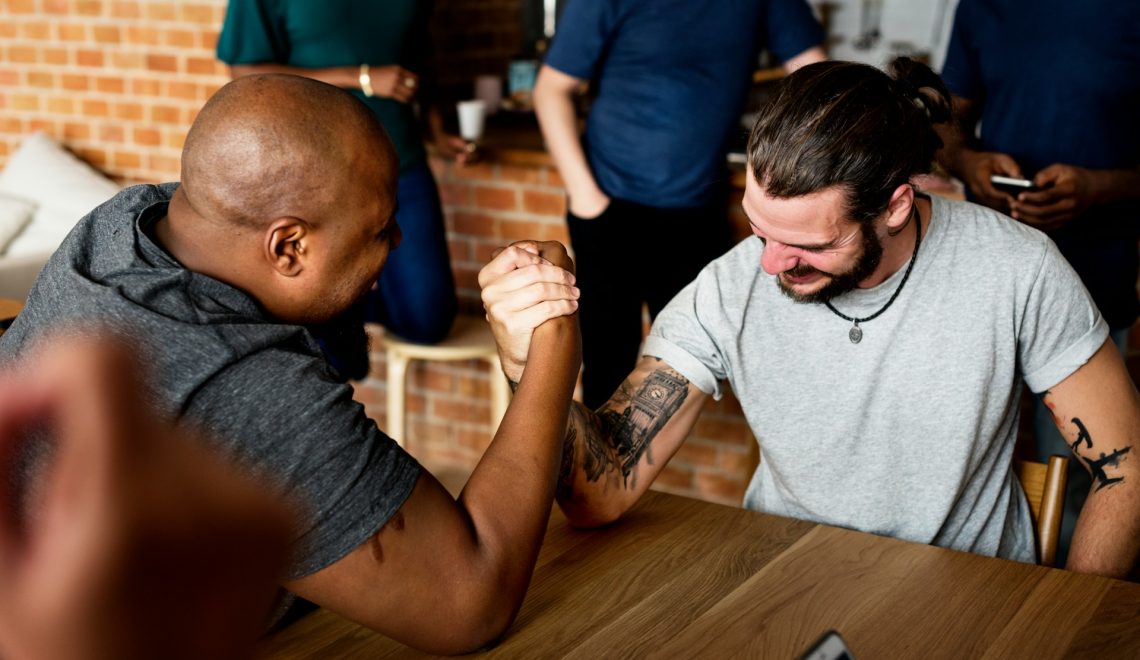
Arm wrestling appears deceptively simple—two competitors lock hands and battle until one forces the other’s arm to the table. Yet beneath this apparent simplicity lies extraordinary technical complexity and specific strength requirements that separate casual participants from serious competitors. Success demands far more than general upper body strength; it requires targeted development of particular muscle groups, refined technique, and specialised training approaches that traditional gym programmes rarely address.
The Unique Demands of Arm Wrestling
Unlike conventional strength sports where movement patterns remain relatively consistent, arm wrestling involves dynamic, angular forces that change continuously throughout each match. Your hand, wrist, and arm must generate and resist force from multiple directions simultaneously whilst maintaining structural integrity under extreme loads.
The biceps, forearms, and hand muscles receive obvious stress, but successful arm wrestlers also develop exceptional shoulder strength, particularly in unusual ranges of motion. The lats engage heavily during pulling movements, whilst the chest and triceps contribute during pressing phases. Core stability becomes essential for transferring force from your torso through your arm.
This multifaceted demand means general strength training, whilst beneficial, proves insufficient for competitive success. Arm wrestling requires sport-specific development addressing the unique biomechanical challenges inherent to the discipline.
Essential Muscle Groups and Their Roles
Hand and Wrist Strength
Your hand and wrist form the critical connection point with your opponent. Weakness here means losing control of the match before your arm strength even matters. Specifically, you need crushing grip to maintain hand control, flexor strength to curl your opponent’s hand backward, and pronation strength to rotate their hand into vulnerable positions.
Wrist strength in multiple planes prevents your opponent from breaking your structure and allows you to attack their positioning. The wrist acts as the steering mechanism—control it and you control the match’s direction.
Forearm Development
The forearms do far more than simply connect hand to elbow. They contain muscles controlling wrist movement, finger flexion, and forearm rotation—all crucial for arm wrestling success. Powerful forearms allow you to maintain advantageous hand positions whilst preventing opponents from establishing theirs.
The brachioradialis, visible on top of the forearm when flexing, contributes substantially to arm wrestling pulling power. Its development often distinguishes intermediate competitors from advanced athletes.
Biceps and Arm Cupping
The ability to maintain a tight arm angle—”cupping”—prevents opponents from straightening your arm and gaining mechanical advantage. This requires enormous bicep strength in contracted positions, different from the full range-of-motion work typical bodybuilding programmes emphasise.
Training biceps specifically for arm wrestling means emphasising shortened position strength through exercises like static holds, partial range movements, and resisted flexion against various angles of force.
Shoulder and Back Integration
Elite arm wrestlers possess exceptional shoulder strength in unconventional ranges. The side pressure technique, for instance, demands extreme lateral shoulder strength as you attempt to drag your opponent’s arm sideways across the table.
Your lats function as your body’s largest “arm” muscle, generating pulling power that smaller arm muscles alone cannot match. Developing the lat-arm connection allows you to engage your body’s strength rather than relying solely on isolated arm power.
Specific Training Approaches
Sport-Specific Equipment
Whilst general strength training provides foundations, arm wrestling training equipment offers targeted development impossible through conventional exercises alone. Specialised handles, resistance bands configured for arm wrestling angles, and dedicated wrist training devices allow you to strengthen precisely the movement patterns and positions you’ll encounter during competition.
Cable machines configured for specific arm wrestling movements—rising, pressing, hooking—enable controlled resistance through sport-specific ranges. This specificity accelerates skill development whilst building relevant strength simultaneously.
Table Time
Nothing replaces actual practice against opponents. Table time—the hours spent arm wrestling various competitors—develops technical proficiency, teaches you to read opponents’ strategies, and conditions your connective tissues to handle the sport’s unique stresses.
Begin with controlled practice against partners of similar or slightly higher skill levels. Avoid immediately battling opponents far beyond your current capability, as this risks injury without providing useful training stimulus.
Progressive Resistance Training
Like any strength pursuit, arm wrestling responds to progressive overload. This might involve increasing resistance on cable exercises, advancing to more difficult grip tools, or extending hold times in static positions. Systematic progression ensures continued adaptation.
Track your training metrics across key exercises. Are you holding heavier weights in the cupped position? Maintaining wrist control against greater resistance? Generating more force in pronation movements? Objective measures reveal progress and highlight areas requiring additional focus.
Injury Prevention Essentials
Proper Warm-Up Protocols
Arm wrestling places extraordinary stress on relatively small joints and connective tissues. Adequate warm-up isn’t optional—it’s essential for injury prevention. Dedicate 10-15 minutes to progressive joint mobilisation, light resistance work, and gradually increasing intensity before serious training or competition.
Respecting Technical Limits
Many arm wrestling injuries occur not from excessive strength training but from poor technique during matches. Dangerous arm positions—particularly allowing your shoulder to lag behind your hand—create vulnerability to serious injuries including spiral fractures.
Learn proper technique from experienced competitors or coaches. Understanding safe positions and recognising when you’ve lost structural integrity prevents ego-driven persistence in compromised positions that lead to injury.
Balanced Development
Overemphasising certain movements whilst neglecting others creates imbalances that increase injury risk. For instance, excessive pronation training without adequate supination work can lead to elbow issues. Comprehensive programmes address complementary muscle groups and opposing movements.
Frequently Asked Questions
How long does it take to become competitive in arm wrestling?
This depends enormously on your starting strength, natural leverages, and training dedication. Someone with substantial strength training background might compete locally within 6-12 months. Reaching regional or national competitive levels typically requires 2-4 years of focused training. Elite international competition represents even longer journeys for most athletes.
Is arm wrestling dangerous?
When performed with proper technique and appropriate opponents, arm wrestling is reasonably safe. However, the sport does carry injury risk, particularly spiral fractures of the humerus when athletes lose structural integrity. Learning correct technique, warming up thoroughly, and avoiding matches against opponents far beyond your capability minimises these risks.
Can I train arm wrestling effectively without a partner?
Whilst nothing fully replaces live table time, you can develop substantial strength and conditioning independently. Specialised equipment, cable exercises configured for arm wrestling angles, and grip training all contribute meaningfully to your development. However, technical refinement requires actual practice against opponents.
What’s more important: strength or technique?
Both matter enormously, though their relative importance varies by context. Against opponents of similar strength, superior technique prevails. Against significantly stronger opponents, technique helps but may prove insufficient. Most successful competitive careers balance systematic strength development with continuous technical refinement.
Should I focus on one arm wrestling style or develop multiple techniques?
Beginners benefit from focusing initially on fundamental techniques that suit their natural leverages and strengths. However, advancing competitors typically develop versatility across multiple styles—hooking, top-rolling, pressing—allowing them to adapt strategies based on opponents’ strengths and weaknesses. Versatility becomes increasingly valuable as you face more skilled competition.
Wrapping Up
Arm wrestling combines raw strength with technical sophistication, creating a uniquely challenging pursuit that rewards dedicated training. Success requires specific development of hand, wrist, forearm, and shoulder strength through angles and ranges rarely addressed in conventional fitness programmes.
Whether you’re drawn to competitive arm wrestling or simply intrigued by this distinctive strength challenge, appropriate training approaches accelerate progress whilst minimising injury risk. Invest in sport-specific training methods, dedicate time to technical development, progress systematically through increasing challenges, and respect the adaptation timeframes required for connective tissue strengthening.
The journey from casual participant to serious competitor demands patience, consistency, and intelligent programming. Yet the strength, technical mastery, and competitive satisfaction developed along the way make arm wrestling a uniquely rewarding athletic pursuit that continues to challenge you regardless of how far you progress.
More to Love!
Nike Outfits for Every Occasion: Sporty Versus Stylish
From Local Clubs to International Teams: The Diversity in Mystershirt Boxes