SUBSCRIBE


Designing the Future of Live Performance Spaces: Investment Beyond Traditional Real Estate
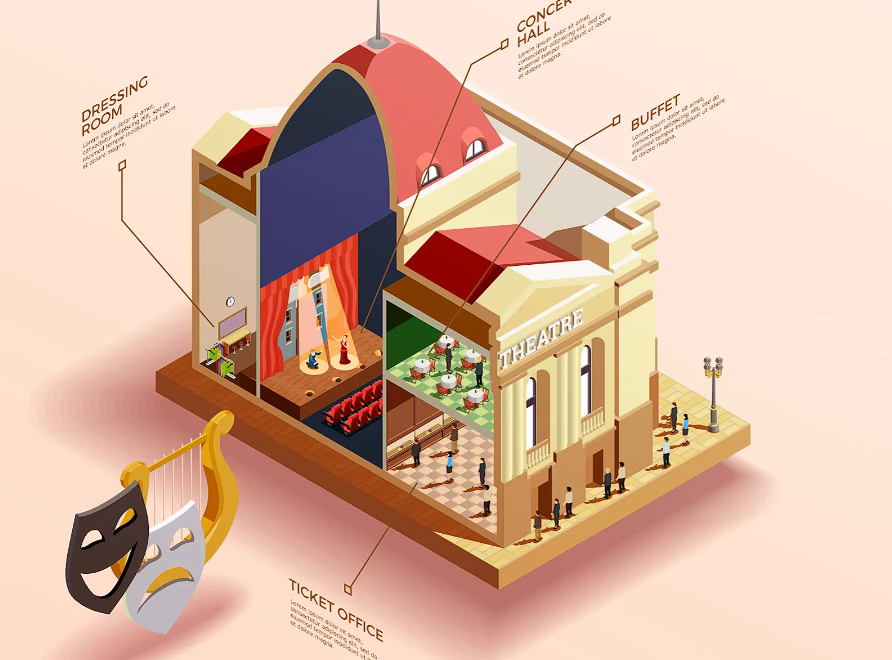
From “Venue Real Estate” to “Operating Platform”
Here’s something the real estate crowd is finally catching on to: live performance venues aren’t just buildings. They’re experience platforms. The shell matters, sure, but value creation happens through programming quality, hospitality execution, and that tricky business of turning a one-off event into a habit. If you’re underwriting theatres for sale, it helps to treat the asset like an operating platform from day one-and start with a tight property search that surfaces layout constraints, prior use, and any hidden compliance flags.
In practical venue investment terms, design choices influence event count, spend per head, and premium mix-sometimes more directly than location alone. When a room is built to run well, it tends to book well. Simple as that. That’s also why a quick reverse address lookup or reverse address search can be useful early on: you want to verify what’s actually tied to the address before you model performance.
A Practical Playbook Connecting Design to Investment Outcomes
This playbook connects venue design strategy to investment outcomes through a usable model. We’ll break down value drivers, design levers that actually move the needle, partnership structures that keep incentives aligned, and KPIs that prove performance. You’ll see market context, monetization beyond rent, future-ready performance space planning, district anchoring, and a 90-day roadmap for turning an idea into something investable-supported by practical diligence steps like a reverse address finder and, when the parcel history matters, a reverse property search.
The Market Case in 5 Minutes: Demand, Spend, and Cultural GDP
Live Demand Remains Strong, but Formats Are Shifting
Live music demand continues showing scale at the top end, even as audience preferences fragment across genres, room sizes, and those “one night only” experiences everyone suddenly wants. Pollstar reported the top 100 worldwide tours grossed $9.5B in 2024-marquee content still pulls serious spend.
Major promoters point to record attendance growth and continued venue pipeline expansion. For capacity planning, that combination matters: more shows, more configurations, more competition for dates. Flexible venues win because they absorb different formats without forcing every show into the same footprint.
Arts and Culture Are Macro-economic Infrastructure, Not a Niche
The arts economy registers as infrastructure now, not a passion project. BEA estimated U.S. arts and culture value added at $1.17T in 2023-that’s 4.2% of GDP. This changes how cities and capital partners view venues entirely.
For investors and developers, this explains why public partners often engage with land, entitlements, infrastructure, or financing tools. Cultural infrastructure supports downtown activation, tourism, small business demand. It also creates political scrutiny, which makes governance and community outcomes part of the business plan whether you planned for it or not.
What “Investment Beyond Traditional Real Estate” Means
The Value Stack: Revenue Lines Beyond Rent
Investment beyond traditional real estate means accepting that venues monetize through multiple revenue streams, not a single lease line. Common venue revenue streams include ticketing participation, premium seating, memberships, sponsorship inventory, F&B revenue, parking, content capture, and private events.
Group these into three buckets for cleaner underwriting. Per-event revenue covers tickets, F&B, parking, merchandise participation. Recurring revenue includes memberships, sponsorship packages, premium subscriptions, annual suite contracts. District spillover captures adjacent restaurants, hotels, retail uplift, and increased land value around your asset.
The premium layer deserves attention. Lounges, clubs, and hospitality upgrades have become central to venue strategies because they increase yield without requiring more calendar dates-though only when the experience is genuinely differentiated. And operationally smooth. That second part trips people up more than they’d admit.
The Underwriting Shift: Operational Capability Becomes the “Tenant”
Underwriting shifts when the operating model becomes the effective tenant. Operator quality and calendar strategy drive NOI more than comparable rents because utilization rate determines how often revenue engines turn over. A great building with weak programming feels empty; a solid room with excellent booking feels inevitable.
Ask four questions early: who books the calendar, who sets pricing, who controls sponsorship sales, who owns data. Those control points decide whether upside is captured or given away. They also determine adaptation speed when market tastes shift. And they always shift.
The Investor-design Loop: Design Decisions That Move Financial Outcomes
Design for Throughput: Entry, Concourses, Concessions, Restrooms
Throughput design is revenue design. Faster entry, better concourse flow, shorter concession lines-these increase spend and reduce the frustration that quietly suppresses repeat visitation. Queue management isn’t glamorous. But it shows up in margin.
Actionable tactics: distributed points of sale instead of giant bottlenecks, sightline-friendly kiosks that don’t block circulation, back-of-house service corridors letting staff restock without fighting crowds, wayfinding that works when patrons are distracted or tired. Small decisions compound on sold-out nights.
Design for Utilization: Changeovers, Multi-format Staging, Flexible Capacity
Utilization is where design meets calendar math. Flexibility increases bookable event days by reducing dead time between show types and expanding the range of events that fit. Multi-format staging, retractable seating, rigging designed for fast changeovers-these turn “we can’t do that here” into “yes, and.”
New venues are increasingly planned with flexible capacity and movable stage concepts to hit a local “sweet spot” rather than building one-size-fits-all boxes. More configurations can mean more dates. More dates stabilize revenue across seasons. The math isn’t complicated; the execution is.
Design for Premium Yield: Hospitality, Clubs, and Differentiated Inventory
Premium hospitality works when treated as inventory with purpose, not decorative add-on. Clubs, suites, and VIP zones can subsidize broader accessibility while improving margins. But premium must not compromise sightlines or circulation. If premium creates choke points or “bad seats,” you’re trading short-term yield for long-term reputation. Expensive swap.
Future-ready Performance Space Design Covering Flexibility, Acoustics, Tech, Sustainability
Acoustic Adaptability As a Competitive Advantage
Acoustic design becomes part of a venue’s reputation among artists, crews, and patrons. Consistent sound coverage across formats drives repeat bookings and reduces show-by-show “band-aids” that add cost and risk.
Upgrade paths include distributed audio systems, rigging flexibility supporting different hangs, and tuning capability letting the room respond to rock one night and spoken-word the next. Acoustics is both design and operations-technically excellent rooms still underperform if they’re hard to dial in under real changeover pressure.

Technology That Improves Both Show and Operations
Plan venue technology like core infrastructure, not a last-minute wish list. Networking, monitoring, and integrated building systems increase reliability while opening revenue options: content capture, partner activations, data-driven operations.
Separate show tech from building tech:
- Show tech supports the performance itself
- Building tech supports the business-Wi-Fi density, POS reliability, security systems, staffing coordination
A tech master plan early in performance space planning reduces painful retrofits later. And retrofits in finished public spaces are never cheap.
Accessibility, Safety, and Comfort as Baseline “Future” Requirements
Inclusive design isn’t a special feature; it’s baseline demand protection. Accessibility works best when ADA seating distributes across price points and sightlines, not segregated into corners. Sensory-friendly zones and clear quiet spaces broaden audiences without diminishing the core experience.
Safety and comfort should be designed into flow. Comfort sounds soft, but it’s hard economics-people return to places that feel good.
District Thinking: Venues as Anchors for Mixed-use and Year-round Programming
The 18-hour District Logic: Capture Value Outside the Ticket
The most resilient venue investment strategies treat venues as anchors within entertainment districts. Restaurants, hotels, plazas, and year-round programming extend dwell time and diversify revenue when event calendars run uneven. Create reasons to arrive early, stay late, return on non-event days.
Sports-anchored mixed-use districts model how public realm, retail mix, and consistent programming drive activity beyond main events. Plan programmable plazas, weather strategy, and edges that stay lively when doors close.
Community Benefit without Backlash: Equity, Noise, and Displacement Considerations
Social license is a performance variable. Projects can be technically sound and still stall if equity, noise, and displacement concerns get handled late or dismissed.
Actionable mitigations: sound management plans with monitoring and clear cutoffs, transportation plans reducing neighborhood spillover, local vendor inclusion policies, community access nights built into the calendar-not added only when pressure rises. Communities accept impact more readily when benefits are visible and consistent.
Capital Stack and Partnerships: Who Owns What, Who Controls What
Common Partnership Models
Venue ownership and operations split often, and alignment prevents underperformance. Three models recur: city-owned/operator-managed; developer-owned with operator lease or management agreement; nonprofit cultural ownership paired with commercial operator for certain formats.
Control points must be explicit regardless of structure. If they’re vague, the partnership becomes a negotiation during every conflict. That’s the slowest way to run a live business.
Underwriting with Operators: The Diligence Checklist
Operator diligence should stress-test assumptions against calendar and staffing reality, not aspirational renderings. Include minimum event days by configuration, staffing models, realistic changeover time assumptions.
Additional de-risking questions: what premium inventory strategy is realistic for this market, how maintenance reserves get funded, what failure modes hurt similar venues. Operators usually know these pain points. Ask early, before concrete is poured.
Measurement: KPIs That Prove Performance Beyond Ticket Sales
The KPI Set Owners Actually Need
Ticket sales matter but don’t explain whether the platform improves. Track venue KPIs reflecting utilization, margin drivers, and satisfaction: event days, occupancy by configuration, spend per head, premium attach rate, queue time, changeover time, repeat booking rate, incident rate.
If spend per head and queue time both improve, throughput design is working. If repeat booking rate stays flat, something about the experience-or deal terms-may be pushing talent elsewhere.
Make Design Accountable: Post-occupancy Tuning
Post-occupancy evaluation closes the loop. Operational data should feed back into design tweaks through quarterly pain point reviews: chokepoints, acoustics complaints, concessions bottlenecks. Treat tuning as normal rather than pretending the first version is final.
Conclusion: A 90-day Roadmap From Idea to Investable Concept
The Next Steps
A structured sprint turns ambition into investment readiness. Days 1-15: demand scan, operator conversations, site constraints defining what’s truly possible. Days 16-45: concept program covering adjacencies, flexibility strategy, capex ranges grounded in operating reality.
Days 46-75: align partnership model, governance, and district integration so control points are explicit. Days 76-90: set KPI targets, build a risk register, reach a clear go/no-go decision based on measurable outcomes-not just excitement.
More to Love!
Stay Winning: How to Build a Resilient Investment Portfolio That Inspires Confidence
Confident and Protected: Event Security Tips for Women on the Go