SUBSCRIBE


3 Best Engraving Tool Brands for Creative DIY Enthusiasts
There’s a particular kind of satisfaction that comes from putting a permanent mark on something with your own hands. A name on a cutting board. A initials inside a wedding ring box. A quote etched into a glass ornament that someone will keep on a shelf for decades.
Engraving used to feel like a skill reserved for trophy shops and jewelers with specialized equipment, but that’s no longer the case. Handheld engraving pens have made this craft accessible to anyone with a steady hand and a little patience, regardless of artistic background.
Below, we break down what matters most when choosing a tool, then look at three established brands worth considering this year.
What to Look for In an Engraving Pen
Not all engraving pens are built for the same job, so the right one depends heavily on what you plan to make. A few factors consistently separate a satisfying engraving experience from a frustrating one.
Motor Speed and Power
Engraving pens typically operate at 5,000-25,000+ RPM. Higher speeds generally allow for cleaner cuts on harder materials like metal or glass, while lower, more controlled speeds tend to work better for softer materials like wood or leather. A pen with adjustable speed settings gives you more flexibility to match the tool to the project rather than the other way around.
Material Compatibility
Some pens are designed primarily for one or two surfaces, while others are built to handle a wide range of surfaces, including wood, glass, metal, leather, plastic, and ceramic. If you’re not sure yet what kind of projects you’ll gravitate toward, a tool with broader compatibility and a variety of interchangeable bits gives you more room to experiment.
Power Source and Ergonomics
Cordless, rechargeable models offer more freedom of movement and are easier to use on bulky or oddly shaped objects, while corded tools eliminate battery anxiety during longer sessions. Weight and grip matter just as much: a pen-style design that mimics the way you already hold a writing instrument tends to reduce hand fatigue and improve control, especially for detailed work.
Included Accessories and Support
A starter kit with multiple bit types saves you from buying attachments separately right away, and brands that offer guides, tutorials, or responsive customer service tend to make the learning curve far less intimidating.
Our Top Picks for Engraving Pens
1. Resparked Customizer Engraving Pen
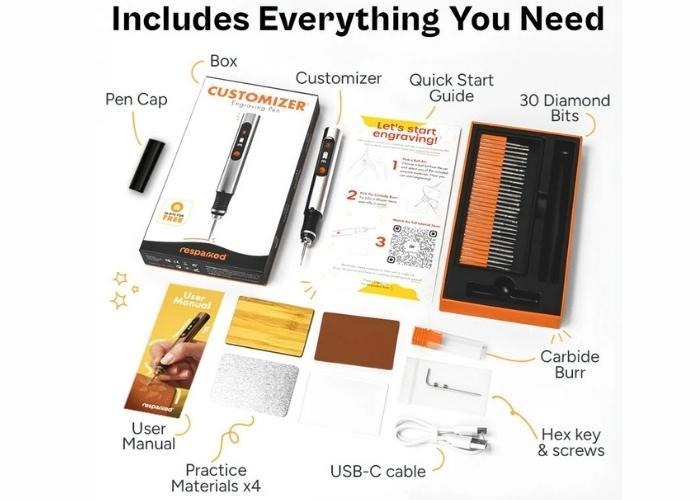
The Resparked Customizer Engraving Pen has built a reputation as one of the more approachable entry points into the hobby, having been used by more than 650,000 customers and maintaining an “Excellent” rating across nearly 2,500 reviews. Rather than adapting an industrial rotary tool for craft use, Resparked designed the Customizer specifically as a creative engraving pen, which shows up in both its handling and its learning curve.
Key Features:
- Cordless, USB-rechargeable battery for full mobility
- Variable speed motor reaching up to 25,000 RPM
- Compatible with 50+ surfaces, including wood, metal, glass, leather, and ceramic
- Comes with 30 free bits and a beginner mastery guide
Best For:
Beginners and hobbyists who want a zero-experience-required tool for personalizing gifts, home decor, and everyday DIY projects across a wide range of materials.

Standout Quality:
What sets the Customizer apart from many lower-cost alternatives is the combination of a genuinely lightweight, pen-style grip and motor power that holds up on both hard and soft materials. New users don’t have to choose between comfort and capability, and the included bit variety means most people can start a project the same day it arrives. Backed by a money-back guarantee and 24/7 customer care, it also removes much of the risk that often comes with trying a new hobby tool for the first time. You can find their easy-to-use engraving kits, including their acrylic kit, at resparked.com.
2. Dremel Stylo+
Dremel has been one of the most recognized names in rotary and hobbyist tools for decades, and the Stylo+ brings that legacy into a dedicated pen-style format. It’s built specifically for detailed creative work rather than general-purpose cutting or grinding.
Key Features:
- Variable speed range from 5,000 to 22,000 RPM
- Slim, pen-style form factor designed to reduce hand fatigue
- Corded power source for uninterrupted sessions
- Includes 15 accessories compatible with the broader Dremel ecosystem
Best For:
Crafters who already own Dremel accessories, or who want a trusted, established brand for detailed engraving and polishing work on wood, glass, metal, and leather.
3. Fanttik F2 Master
The Fanttik F2 Master is a mini cordless rotary tool that doubles as a capable engraving pen, offering a feature set aimed at users who want more versatility out of a single device.
Key Features:
- NeoPulse motor with five speed settings, up to 25,000 RPM
- Cordless design with USB-C rechargeable battery
- Comes with 35 accessories for engraving, sanding, polishing, and carving
- Compact “Revostor Hub” for quick bit changes
Best For:
DIYers who want one tool that can move between engraving and other crafting tasks, such as sanding 3D-printed parts or light carving work.
How We Evaluated These Tools
Each brand on this list was assessed against the same core criteria:
- Motor Performance and Speed Range: how well the tool adapts across both hard and soft materials
- Material Compatibility: versatility across common craft surfaces like wood, glass, metal, and leather
- Power Source Practicality: the real-world trade-offs between corded and cordless designs
- Included Accessories: the value and variety of bits or attachments included out of the box
- Beginner Accessibility: how manageable the learning curve is for someone with no prior engraving experience
- Customer Feedback Volume and Consistency: since a tool’s real-world reliability often matters more than its spec sheet
Wrapping Up
Choosing the right engraving pen comes down to matching the tool to your goals: the materials you want to work with, how often you’ll use it, and how much of a learning curve you’re willing to take on. The brands above represent genuinely different approaches, from beginner-focused versatility to established industrial pedigree to budget-friendly power, and any of them can serve as a solid entry point into the hobby.
Whichever you choose, start small, practice on scrap material first, and let the projects guide you in deciding which features matter most to you as you go. Once you’ve made your first piece, it’s hard not to start looking for the next surface to leave your mark on.
More to Love!
Next-Level DIY: How to Get Professional Results
DIY vs. Contractor: When to Hire a Pro for Your Home Remodel?