SUBSCRIBE


Sleep Is the Next Luxury: How to Start Sleepmaxxing

With early alarms, long workouts, and tight schedules, sleep is whatever time happened to be left over. But with the growing trend of wellness, rest is getting a place on the priority list. Social media has given the trend a name: sleepmaxxing.
What Is Sleepmaxxing?
Sleepmaxxing is a social media trend focused on improving sleep quality and duration through everyday habits, bedtime routines, and changes to the sleep environment. From keeping a consistent sleep schedule to creating a better bedroom environment, it aims to make rest a priority rather than something left in a busy day. Harvard Health notes that while many sleepmaxxing tips overlap with established sleep hygiene practices, others remain unproven.
Sleepmaxxing is not a criticism. The CDC’s sleep advice reads like a sleepmaxxing starter kit: keep consistent bed and wake times, even on weekends; make the bedroom quiet, dark, relaxing, and a comfortable temperature; take TVs, computers, and phones out of the room; and avoid large meals, caffeine, and alcohol close to bedtime. [1]
Six Ways to Start Sleepmaxxing
1. Create a Cool Sleep Environment
If you always wake up feeling hot or throw off the covers during the night, take a look at your bedroom temperature. A fan, breathable bedding, or a lighter comforter can help you stay cool without making big changes. The ideal temperature varies from person to person, so pay attention to which suits you best.
2. Make Your Bed Comfortable for Sleeping
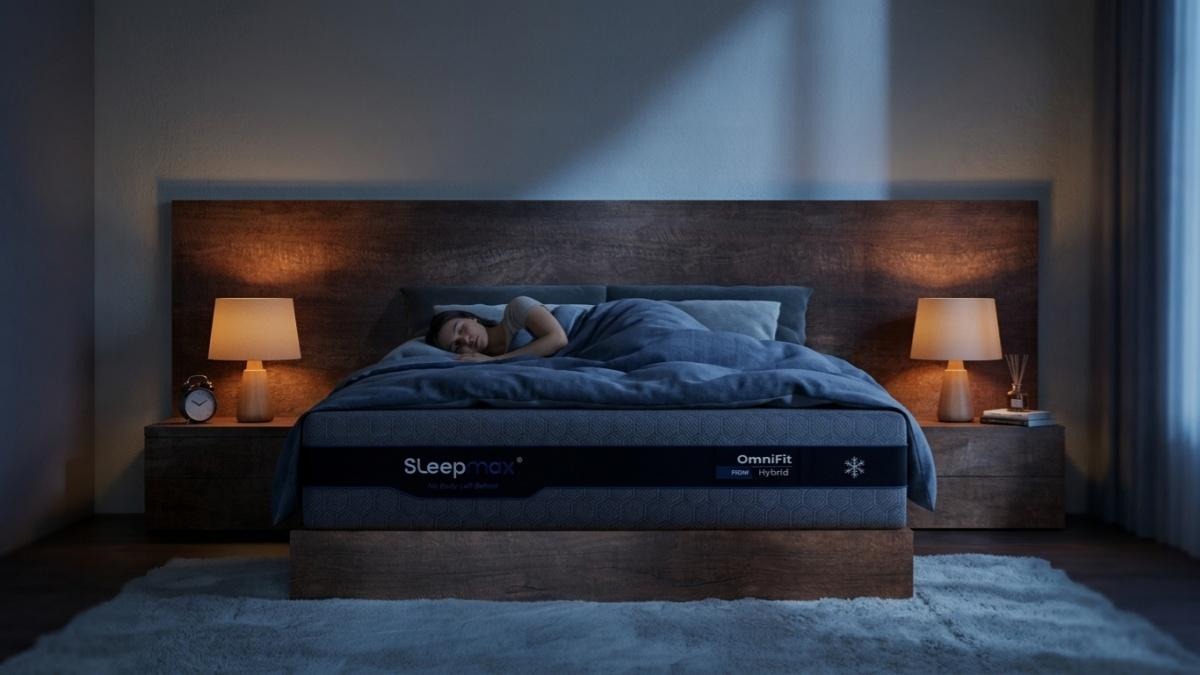
A comfortable bed is the basis of good sleep. Your mattress, pillows, and bedding all affect how your bed feels, but the mattress deserves particular attention since it helps cushion your body and support spinal alignment. If you regularly wake up with back pain or stiffness, your mattress may be worth a closer look. When researching the best mattress for back pain, look for a balance of cushioning and support that suits your body and sleeping position. Persistent back pain, however, may have causes beyond your mattress, so consider consulting a healthcare professional if it continues.
3. Switch to Softer Lighting in the Evening
Bright overhead lights can make it harder to wind down as bedtime approaches. Try using a bedside lamp with a warm-toned bulb instead, and lower the brightness around your bedroom as the night goes on. If outdoor lights spill into your room, blackout curtains can help keep your room darker when it’s time to sleep.
4. Keep Your Phone Out of the Bedroom
A scroll can easily turn into half an hour of checking messages, reading novels, or watching videos. Leaving your phone in the living room can help resist the habit and keep your bedroom focused on rest. If you use your phone as an alarm, consider placing it across the room or using a separate alarm clock.

5. Try a Few Minutes of Gentle Stretching
Long workdays can leave you feeling drained, both mentally and physically. A few minutes of gentle stretching before bed can help you ease. Try some slow neck rolls, shoulder stretches, or a relaxed forward fold, and pay attention to how your body feels as you move. There’s no need to push yourself or follow a strict routine. Give yourself a little time to slow down, release some tension, and leave tasks behind.

6. Keep Your Sleep Schedule Consistent
It’s normal for many people to stay up late on weekends and get up late the next morning. But if your bedtime keeps shifting, getting back into a weekday routine can be harder. Try to keep your bedtime and wake-up time more consistent throughout the week, and leave enough time for a good sleep.
Sleepmaxxing Trends You Don’t Need to Follow
There are many sleep hacks online, but you don’t have to add all of them into your sleepmaxxing list.
1. Mouth Taping
Mouth taping has gained attention on social media as a way to encourage nasal breathing during sleep. A 2025 review in PLOS One looked at 10 studies and found only two suggesting a possible benefit, and only for mild sleep apnea. Four warned of a risk of asphyxiation for people whose mouth breathing is caused by a blockage in the nose. The authors also noted the studies were not consistently high quality. [2] If you snore heavily or wake up exhausted, talk to a doctor rather than reaching for tape.
2. Supplement Stacks
Magnesium powders and melatonin gummies often appear on social media as easy ways to get better sleep. But the science is less convincing than the hype suggests. The U.S. National Center for Complementary and Integrative Health notes that research on magnesium supplements for insomnia is limited [3], while melatonin may be useful for specific sleep-timing problems but isn’t well supported as a treatment for chronic insomnia [4]. Before adding supplements to your bedtime routine, consider whether they’re necessary and check with a healthcare professional if you’re unsure.
3. Perfect Tracker Scores
Sleep trackers can offer an overview of your sleep quality. But checking the score every morning and worrying whenever it falls short can turn sleep into a performance review. Pay attention to how you feel over time, as the point of sleepmaxxing is more rest instead of more pressure.
Make Better Sleep Your Everyday Luxury
Sleepmaxxing isn’t about buying the latest sleep gadgets or following every trend on your feed. It is about a bedroom that feels comfortable, an environment that feels cool, and a routine to refresh your mind. Sleepmax hybrid mattress is a brand that aims to max sleep quality. The Sleepmax pressure relief hybrid mattress combines contouring memory foam, gel-infused high-density foam with honeycomb-inspired pocketed coils to help ease pressure, create a cooler sleep experience, and minimize motion transfer. If you’re searching for one of the best online mattresses, Sleepmax is worth a look.
More to Love!
Drowsy Sleep Review 2026: How Its Silk Sleep Masks Handle Light Blocking
Best Mattresses for Couples With Different Sleep Preferences