SUBSCRIBE


Spooky Interior Design: How Steven Miller Styles Curiosities
Every October, plastic skeletons and disposable cobwebs flood the seasonal aisles. However, for Los Angeles designer Steven Miller, founder of Folk Mod Interiors, true spooky interior design has nothing to do with throwaway Halloween props. Instead, it lives in the year-round thrill of a genuine cabinet of curiosities. Weathered patina, vintage medical models, and unexpected oddities give a room an unforgettable pulse.
Before launching his Echo Park studio, Miller worked in film and television set design. He also spent years in real estate staging and in-house design for Airbnb. Because of that cinematic training, he approaches every residence like a book with its own narrative arc. For Miller, mixing old and new in a contemporary home means leaving room for friction, humor, and mystery.
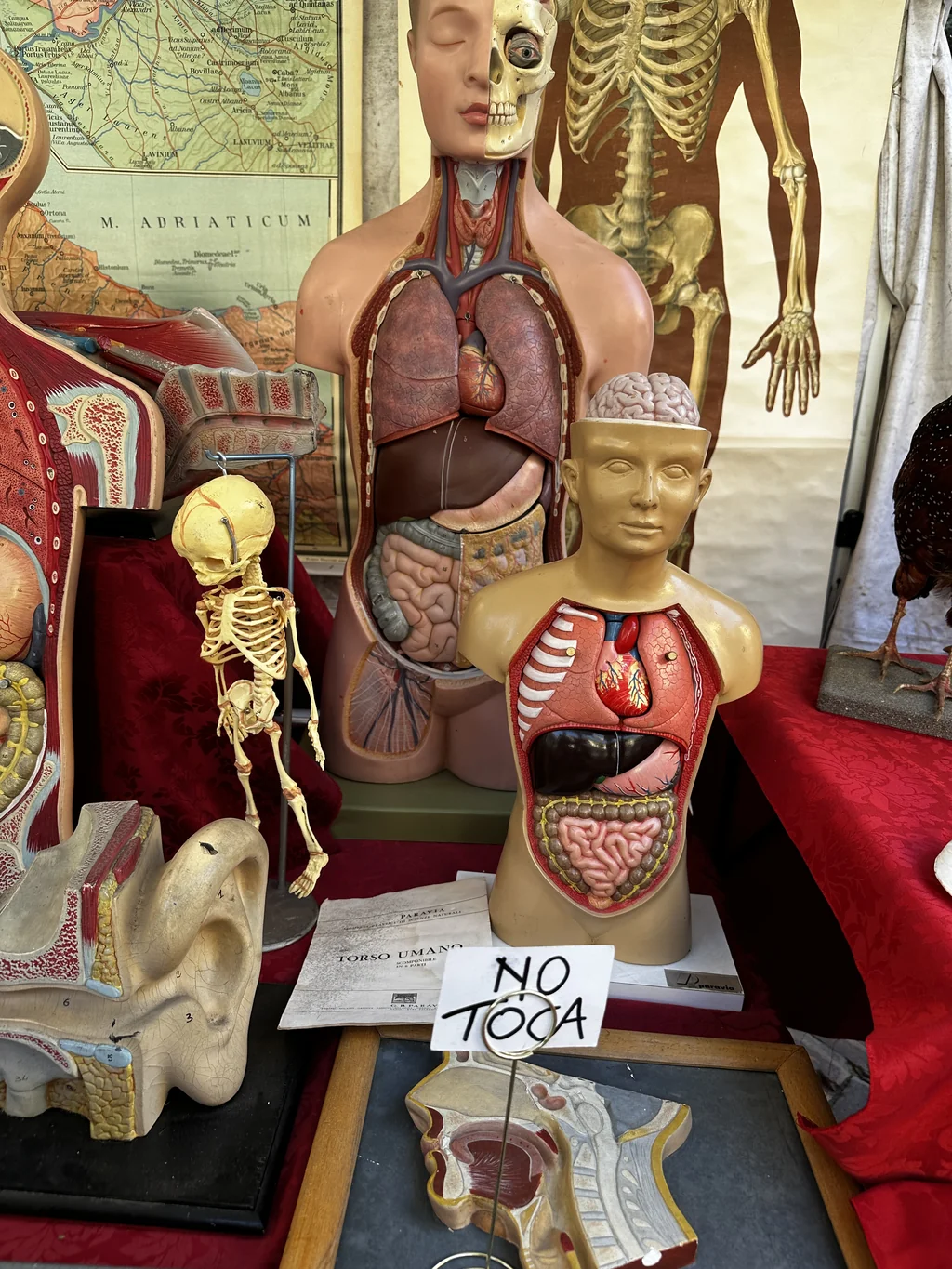
Recently, Miller returned from the historic Fiera Antiquaria di Arezzo in Tuscany. While there, he traded taxidermy birds for a vintage Italian anatomical human-body diorama and a miniature skeleton. Just in time for Halloween, Miller sat down with Love Happens to share how he hunts for macabre treasures and styles them into warm, livable interiors.
Inside the Cabinet of Curiosities: Steven Miller on Spooky Interior Design and the Art of the Oddity
Love Happens Magazine: Where did your love for slightly eerie, macabre, or uncanny objects begin? What pulls you toward objects with an edge or a haunting history?
Steven Miller: As a kid, I always appreciated old-school horror movies like Bride of Frankenstein and Dracula. Halloween was always a favorite holiday of mine. Those classic black-and-white films had incredible atmosphere. They weren’t about cheap jump scares. Instead, they relied on shadow, texture, and architecture that made you lean closer to the screen.
Consequently, I find real beauty in objects that carry an aged, weathered look. Natural forms like bleached bones, interesting rocks, or gnarled branches bring instant depth to my work. That applies to my early days in set design as well as the residential rooms I design today. Furthermore, I find it fun to look outside the conventional scope of what designers are supposed to use. Why not create spaces that spike your curiosity, just like I felt as a kid discovering this universe?
LHM: In interior design, what does a slightly “creepy” or unsettling object do for a room that a safe, conventional accessory can’t?
Steven Miller: A safe accessory lets your eye glide right past it. By contrast, an oddity changes the energy of a room the second you walk in. Everyone is a little bit weird. Honestly, if a room has zero weirdness in it, the space can feel sterile. Adding one slightly uncanny object is the secret to elevated spooky interior design because it breaks the status quo.
Taxidermy immediately comes to mind when I think of pieces that read as slightly “creepy” to some people. Lately, I have been seeing more designers use peacocks or even mountain lions in residential spaces. Personally, I have always loved birds. In fact, I recently picked up a vintage taxidermy quail at a flea market. Whenever I get a moment to tuck vintage taxidermy into a room, I get so excited.
Ultimately, designing a room that captures the vibe of a natural history museum is something I strive for. When photographers shoot my projects, they usually end up laughing because there is an “I Spy” layer hidden on the shelves. You might spot a beetle preserved in a heart-shaped bottle, a jawbone on National Geographic magazines, or a ceramic collie in a corner.
LHM: Take us inside those two 8 a.m. days at the Fiera Antiquaria in Arezzo, Tuscany. How did you end up walking out with an anatomical human-body diorama and a baby skeleton?
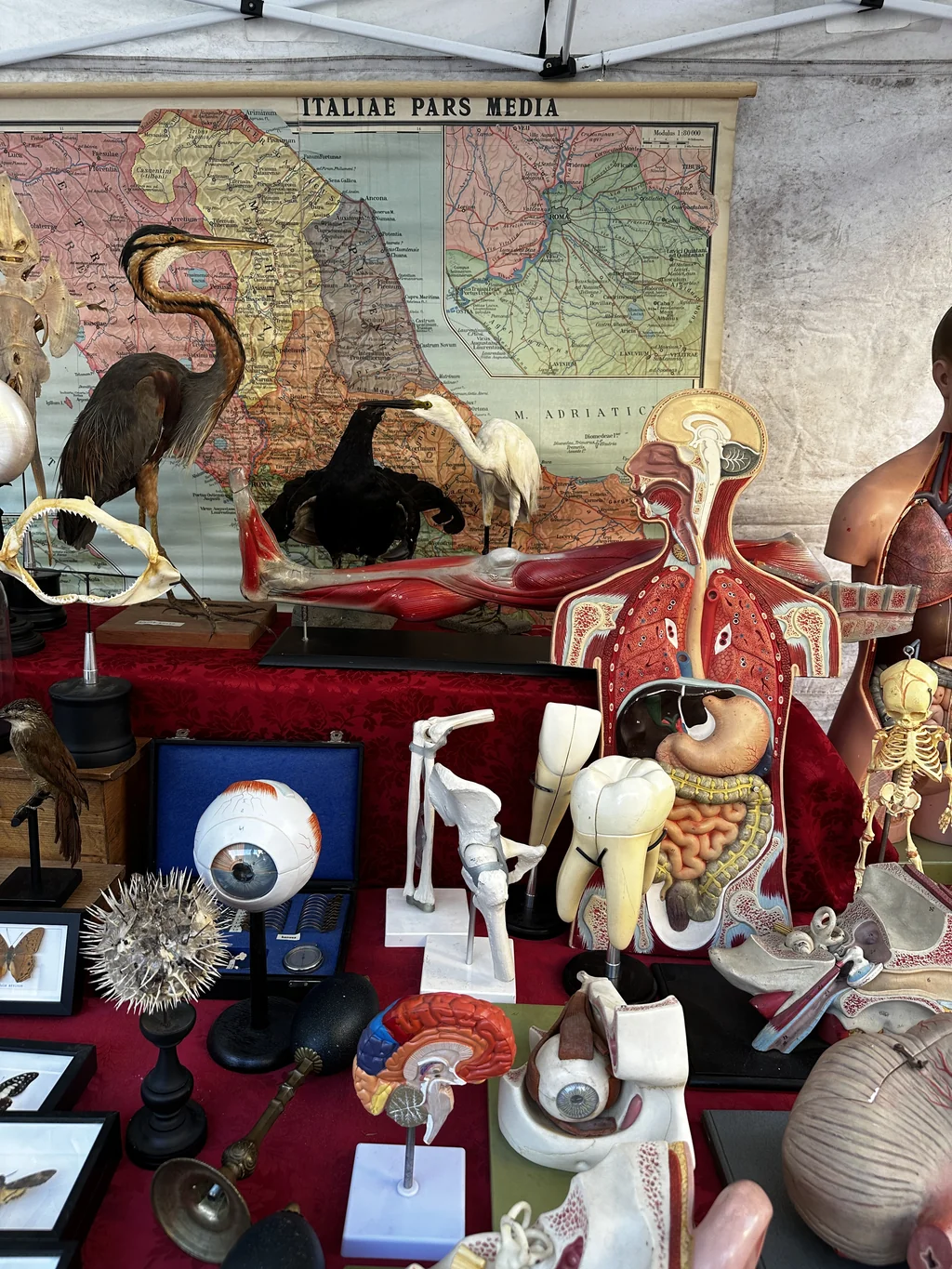
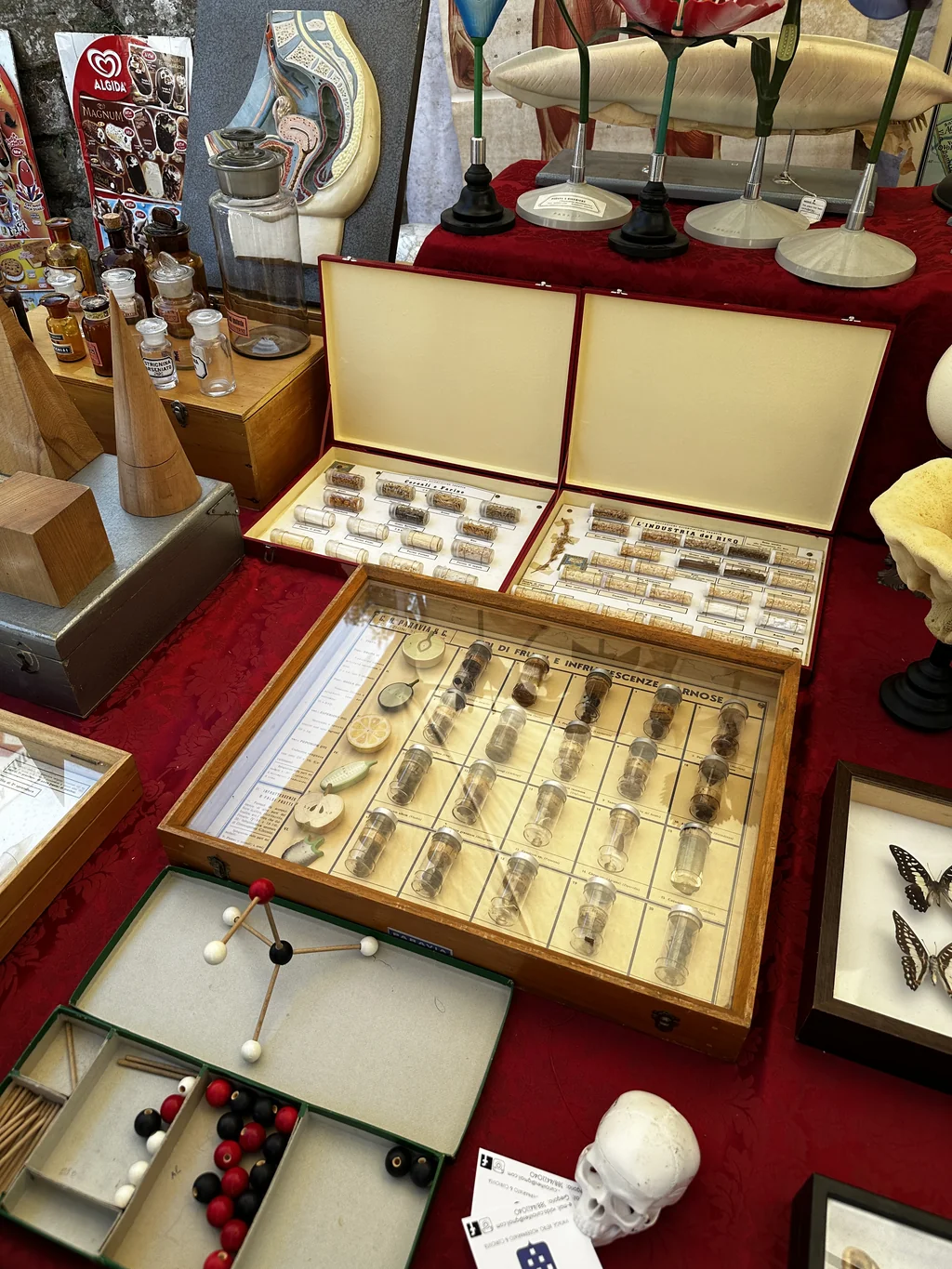
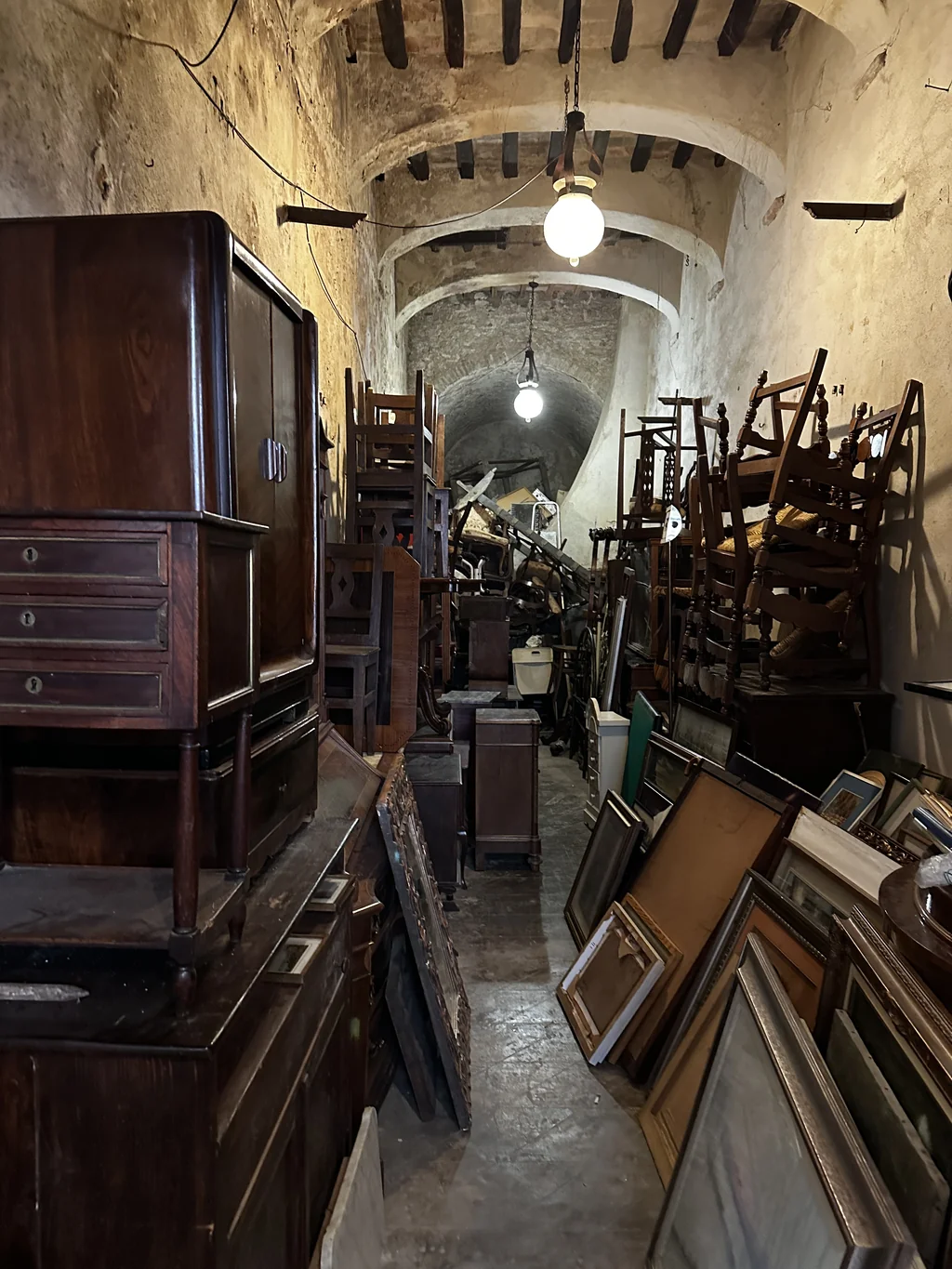
Steven Miller: Arezzo is wild because the fair takes over the medieval streets and Piazza Grande. Because of that, you have to hit the cobblestones at 8 a.m. to see the best pieces first. Early on the first morning, I wandered into a stall run by two Italian brothers. Their booth featured true “curiosities,” and a dozen things caught my eye right away.
At first, it was the taxidermied birds that drew me in. They had some extraordinary specimens, including a vintage penguin and a crane. The brothers were awesome, and I loved seeing everything they had curated. Plus, they had a full warehouse nearby packed with even more treasures for spooky interior design collectors.

LHM: What happened when you tried to clear U.S. customs for the taxidermy birds, and what made you pivot to the anatomical models?
Steven Miller: Naturally, I tried to figure out how to bring the crane and the penguin home. The brothers had all the proper Italian export paperwork on hand and researched the rules with me. However, it turned out that U.S. customs required clearance across multiple federal agencies. Because I couldn’t ship the birds home, I pivoted to two pieces I loved: an anatomical human-body diorama and a baby skeleton.
Beyond the medical models and framed butterfly home decor specimens, the brothers had fascinating scientific case studies. They showed me glass-vial teaching displays of Italian olive oils, seeds, grains, rice, and cereals. Today, I actually use the human-body model and baby skeleton for my own sketches, paintings, and drawings. Life drawing and studying how the human body moves have always been a passion of mine.
LHM: Tell us the story behind the five white porcelain hands on the dusty-blue library shelves in your St. Louis (Stuyvesant) project.
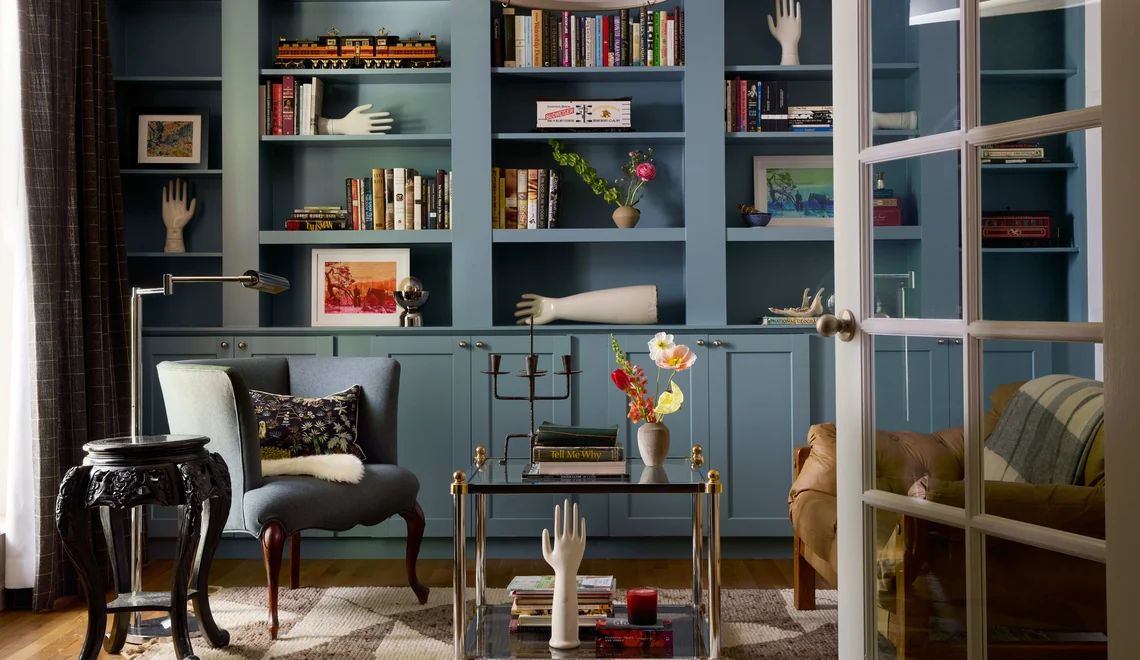
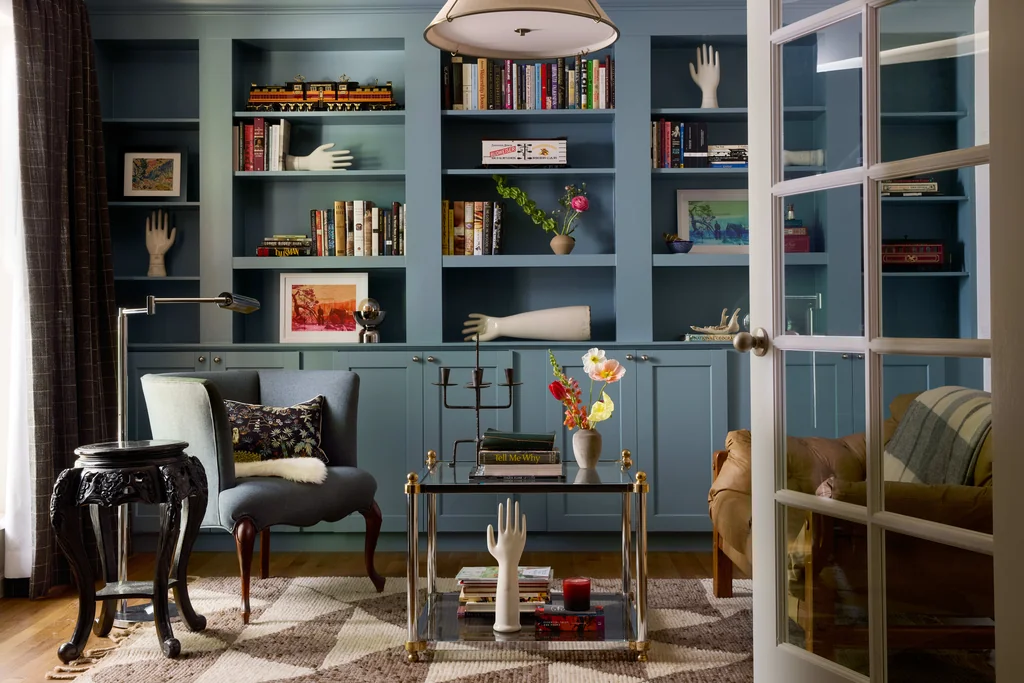
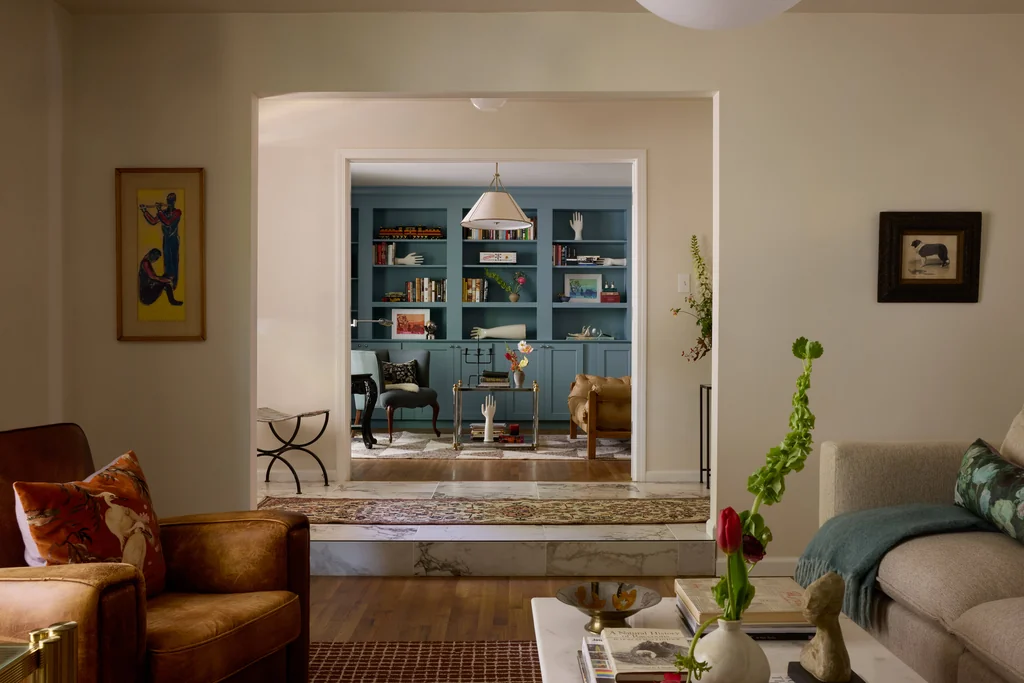
Steven Miller: Oh yeah, I love those pieces. You should have seen how many of them there were when I walked into the shop! For that St. Louis project, we converted a rarely used formal dining room into an everyday family library. We wrapped the entire space in dusty-blue built-in millwork. While sourcing locally, I learned that a regional rubber-glove factory had closed down and donated its molds to an antique store.
When I stepped inside, the shop owner had 50 to 60 porcelain hands lined up along the windowsills. I had never seen anything like that in person, so I knew I had to integrate them into my work. Against the dusty-blue cabinetry and cognac leather, those porcelain hands offer a subtle nod to spooky interior design while reading like modern sculpture. At home, I actually use one of the porcelain glove molds to hold my rings and watches.
LHM: When you’re hunting through flea markets or European antique fairs, what separates a “good” spooky antique from something that feels theatrical?
Steven Miller: First and foremost, it comes down to craftsmanship and purpose. When I look at medical or natural history pieces, I want authentic case studies. I look for pieces that students, doctors, or scientists actually used to teach and learn from. Real porcelain, hand-painted plaster, and aged brass carry an honesty you cannot fake with a mass-produced prop.
Second, how you style a great antique determines whether your spooky interior design feels sophisticated or theatrical. Because of my background in set design, I always think about how someone feels when they enter a room. While doing research, I fell in awe of the craftsmanship in vintage puppets, dolls, and wooden mannequins. Using vintage puppets or wooden hands as bookends and paperweights in a study is way more fun than visiting a stationery store.
LHM: What is your rule of thumb for styling an eerie piece, like a skeleton or row of hands, so the room feels livable year-round?
Steven Miller: My number-one rule of thumb for spooky interior design is asking a simple question. Does the item I am designing with actually make sense in the space? In a study or a library, it doesn’t feel odd to see a human-body diorama or the baby skeleton. Similarly, in a nursery, vintage dolls or wooden puppets can fit who the people are and the lives they live. That way, the piece never reads as a random “creepy object” dropped in for shock value.
For example, I have seen plenty of designers use vintage dough bowls or pepper shakers in kitchens. However, wouldn’t those exact same items look super weird if someone used them to style a living room? Another rule is making sure these objects enhance the narrative of the space. When you pair them with warm textures like dusty blues, sage greens, and cognac leather, they feel inviting all year.
LHM: Where are you planning to place the Arezzo anatomical diorama and baby skeleton—in your own Echo Park home (Lemoyne) first, or in a client project?
Steven Miller: Well, let’s find out together! My own house in Echo Park has always been my design laboratory. That is where I test out color drenching, gallery wall ideas, and eccentric objects before bringing them to clients. As of right now, I am thoroughly enjoying both the anatomical torso and the baby skeleton in my studio office.
However, I never get too precious about holding onto things forever. If I work on a client space that needs both of them, I will totally use them for a project. Until that room comes along, they have a very happy home next to my drawing desk.
LHM: How do you pitch a “creepy” or eccentric object to a hesitant client, and how did curating for Airbnb Plus shape where you draw the line?
Steven Miller: Most of the time, my clients already understand my sense of humor and how I work with eccentric objects. Whether we are styling everyday rooms or exploring spooky interior design for autumn, I want to make the space better. Above all, I want to engage with whoever is living or staying in the home.
In fact, I have a great example from working with an Airbnb host. One of the strict Airbnb Plus requirements was to have a television in every vacation property. However, this host’s space was a remote cabin deep in the woods. It wasn’t the type of getaway where anyone would even think of turning on a modern flat-screen TV.
Instead of fighting the rule, I leaned into the setting. I had the host buy a vintage television with a built-in VHS player. Then, we designed a wall full of vintage horror movies on VHS that guests could watch at night. It met the Airbnb Plus requirement while enhancing the entire cabin experience.
Explore more of Steven Miller’s work at folkmodinteriors.com and follow @folkmod_interiors on Instagram.
More to Love!
The Art of Mixing Old and New in a Contemporary Home
The Butterfly Effect: Elegant Butterfly Home Decor Ideas We Love
Naples Best Hidden Secret: Casa D’Anna ai Cristallini