SUBSCRIBE


Picture Ledge vs Floating Shelf: How to Choose for Your Art Display
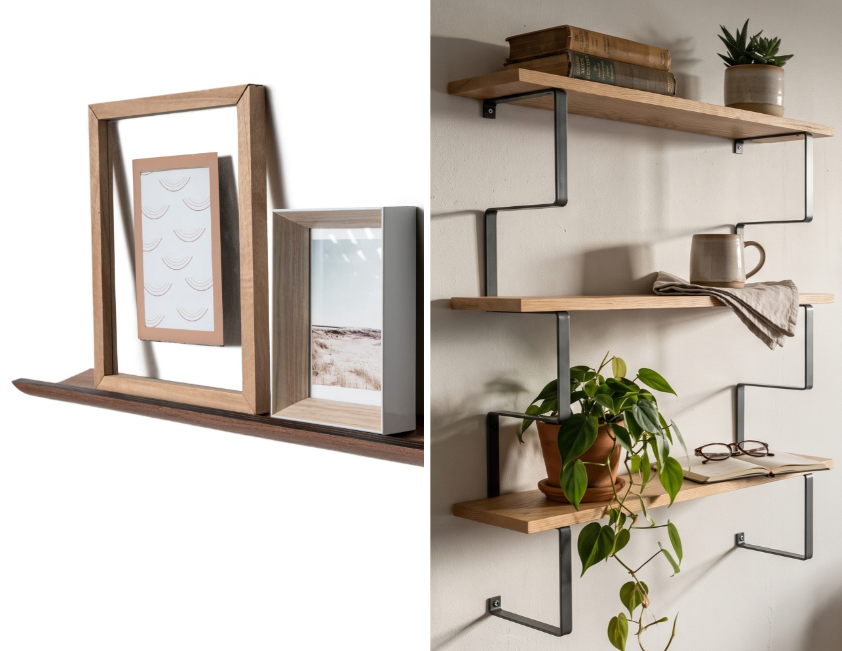
A framed print needs somewhere to lean. A ceramic bowl needs enough depth to sit flat. Put them on the same narrow shelf and the difference becomes obvious: the frame fits, but the bowl hangs over the edge.
That is the useful starting point when comparing a picture ledge vs a floating shelf. Choose a picture ledge when your display is mainly framed art or photography. Choose a deeper floating shelf when you want room for ceramics, small sculptures or a mixture of objects. The right choice depends on what will sit on it, how you want the arrangement to look and how often you expect to change it.
There is also a naming detail worth clearing up. A picture ledge can have concealed mounting and appear to float. The real comparison is between a shallow shelf designed to support pictures and a broader display shelf.
What Is the Difference Between a Picture Ledge and a Floating Shelf
A picture ledge is usually a shallow wall shelf with a raised front edge, a groove or another feature that helps position leaning frames. The artwork rests on the ledge and leans towards the wall. The exact profile varies, so check the side view rather than relying on the product name.
A floating shelf gets its name from its concealed supports. Many have a deeper, flat platform that accommodates freestanding objects. They may have a straight edge or a curved, sculptural profile. Concealed mounting alone tells you nothing about their depth or load capacity.
For an art display, the practical difference is where the space goes. A picture ledge gives most of its length to a row of images. A deeper shelf lets objects sit in front of, or beside, those images.
| Display need | Picture ledge | Deeper floating shelf |
| Framed prints and photographs | Designed for leaning pictures; check frame limits | Can work if frames are stable and fit |
| Ceramics and small sculptures | Limited by usable depth and support | More space for a stable base |
| Changing the arrangement | Swap frames within a fixed shelf layout | Rearrange objects within the shelf limits |
| Visual effect | A narrow line beneath the artwork | A broader platform that can be a design feature |
Choose a Picture Ledge for Prints and Photography
Picture ledges work particularly well when you want to rotate a collection. A new photograph can take the place of an old one without moving a separate picture hook. Once the ledge is installed, the arrangement can change within its usable space and weight limit.
They also allow frames to overlap. A smaller photograph placed partly in front of a larger print can connect two images without requiring a precisely measured gallery wall. Leave the important parts of each image visible; covering half a photograph simply to create layers rarely improves it.
Frame thickness matters as much as frame width. Two slim frames may fit behind one another where two deep box frames will not. Measure the usable area behind the front edge, allowing for the angle at which the pictures lean. A shelf’s full external depth may be greater than the space available for the frames.
For a collection made mostly of prints, a shallow ledge can keep the wall arrangement visually compact. Its narrow projection is also useful where a deeper shelf would get in the way.
Choose a Deeper Floating Shelf for Ceramics and Sculpture
A bowl, a carved object or a small sculpture needs a stable footprint. Measure the object’s base and check that the usable shelf surface supports it fully. A decorative piece can be light enough for the shelf yet still be too deep to sit securely.
A deeper floating shelf offers more options for mixed displays. A framed drawing can sit towards the back, with a small ceramic piece positioned beside it. The objects do not all have to share the same front edge, which creates a different view as you move around the room.
Depth also affects visibility. If a vase sits directly in front of a photograph, the extra shelf space has added storage but hidden the image. Arrange the larger objects first and check the display from your usual viewing position, whether that is the sofa, a desk or the doorway.
For substantial pieces, a deeper shelf is only the starting point. The shelf, its mounting system and the wall must all be suitable for the intended load.
Decide How Visible You Want the Shelf to Be
A slim picture ledge can act like a shared lower frame for several pictures. Choosing a finish close to the wall colour can reduce its prominence, while a darker wood introduces a visible line beneath the artwork.
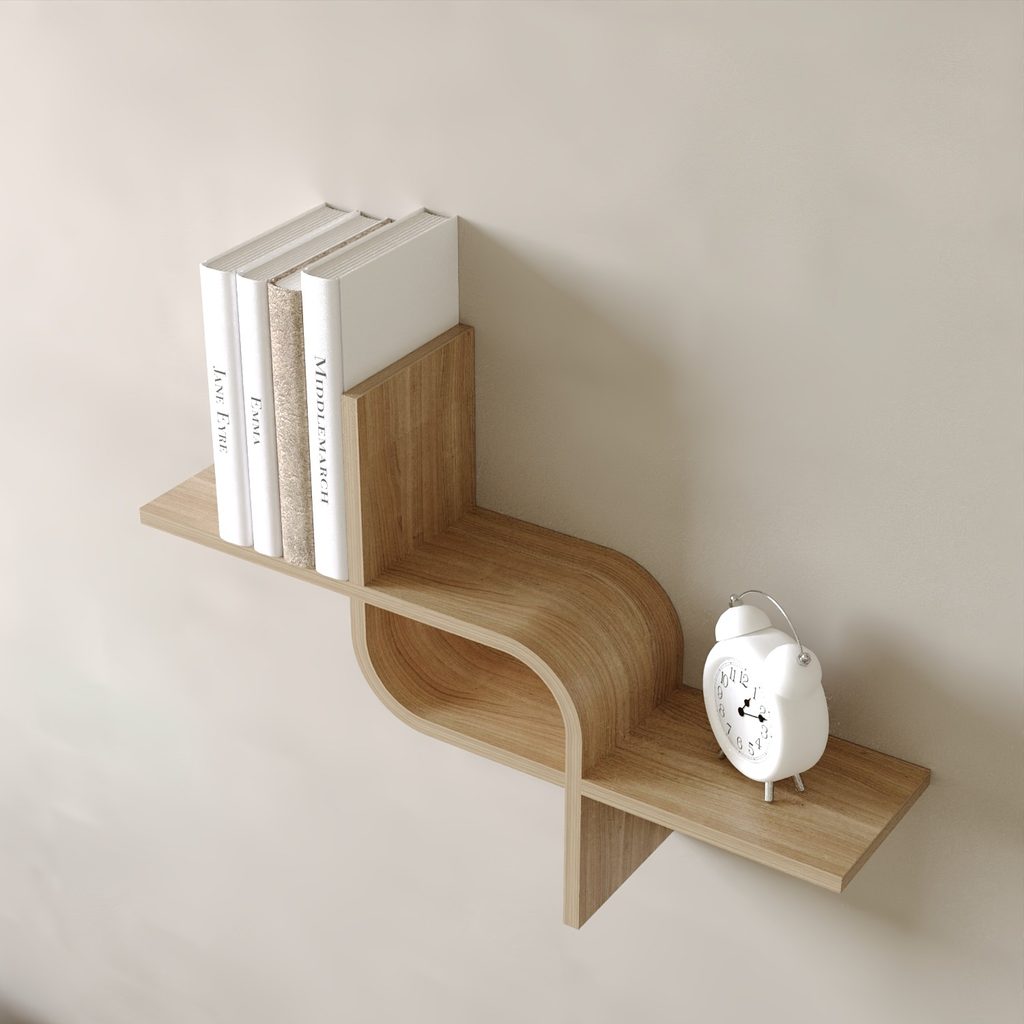
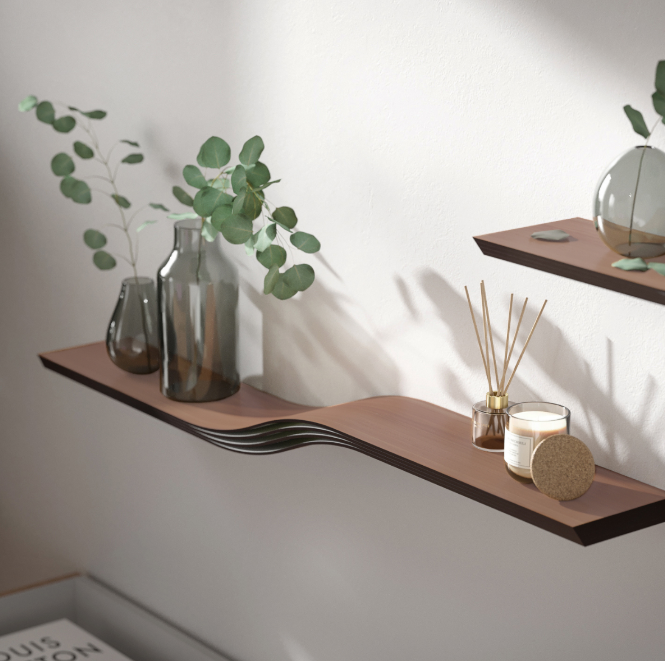
With a sculptural floating shelf, the shelf itself may become part of the display. A curved edge remains visible beneath the objects and casts a different shadow from a straight board. Give that shape some room: a crowded surface can conceal the reason you chose it.
The Latvian maker EWART WOODS offers an example of both approaches. Its Picture Ledge Shelf has a curved profile and measures 58 cm wide by 10 cm deep, while its sculptural wave shelves make a more pronounced feature of the supporting surface. These designs show that a picture ledge does not have to be a plain rail, and a display shelf can contribute more than a horizontal platform.
Use the artwork to decide how much detail the shelf needs. A group of busy, colourful prints may benefit from a quiet support. A sparse arrangement can leave more attention for the furniture beneath it.
Plan the Arrangement Before Choosing the Shelf Length
Lay the frames and objects out on a table first. Include the gaps you want between them and any intended overlap. Measure that arrangement rather than adding up the widths of the frames alone.
A single large print and two small photographs may need less length when layered than when placed side by side. However, overlapping creates a deeper arrangement. Check length and depth together before deciding that a shorter picture ledge will work.
For two rows of shelves, measure the tallest intended frame before marking the upper row. Allow space to lift it out as well as space to see it. A display that fits tightly on installation day can become awkward when you want to change a picture.
Masking tape can help you preview the shelf position and the outline of the artwork. Use it to judge the composition, then measure properly for installation. Tape marks do not establish whether the wall or fixings are suitable.
Check Frame Stability and Mounting Details
A front lip or groove can help locate a frame, but it does not make every picture safe to lean. Follow any frame height, depth and weight restrictions supplied with the ledge. Tall or heavy frames may need additional restraint or a different display method.
Both options normally require fixing to the wall. A picture ledge can reduce the need for new picture holes each time you rearrange your art; it is not automatically a solution that needs no drilling.
Check the wall construction, specified fixings and installation instructions. Count the combined weight of frames, glazing and decorative objects. Avoid treating an attractive installation photograph as evidence of what a shelf can hold.
Which Should You Choose for Your Art Display
For a collection of framed prints that changes regularly, start with a picture ledge. Look closely at the usable depth, frame support and spacing between shelves.
For pottery, small sculptures and mixed collections, start with a deeper floating shelf. Choose the depth around the objects, then decide whether a straight or curved profile suits the display.
You can also use both in one room. A ledge can carry photographs while a separate shelf gives a favourite ceramic piece enough space to be seen. Let each surface suit the object on it, rather than expecting one narrow shelf to accommodate the whole collection.
Common Questions About Picture Ledges and Floating Shelves
Can You Put Pictures on a Floating Shelf
Yes, if the shelf has enough usable depth and the frames are stable. Check whether a frame can stand securely on its own or needs a suitable leaning support. Concealed mounting does not itself provide a retaining edge.
Can You Put Plants on a Picture Ledge
Only if the planter fits fully within the usable surface and the ledge can carry its total weight, including water. Keep moisture away from frames and the shelf finish. A deeper shelf is often more practical for plant pots.
Is a Picture Ledge Better Than a Gallery Wall
A ledge suits people who want to rearrange pictures within a fixed shelf layout. Individually hung artwork allows more freedom in height and spacing and avoids a shelf beneath the frames. The better option depends on the arrangement you want.
More to Love!
Reflections Of Elegance: How Acrylic Prints Bring A Gallery Look To Your Home
From Paintings to Photos and Prints: How Wall Art Has Evolved Through the Years