SUBSCRIBE


Inside Oscar Heyman Jewelry: The Quiet Genius Behind America’s Most Exclusive Jewelry House
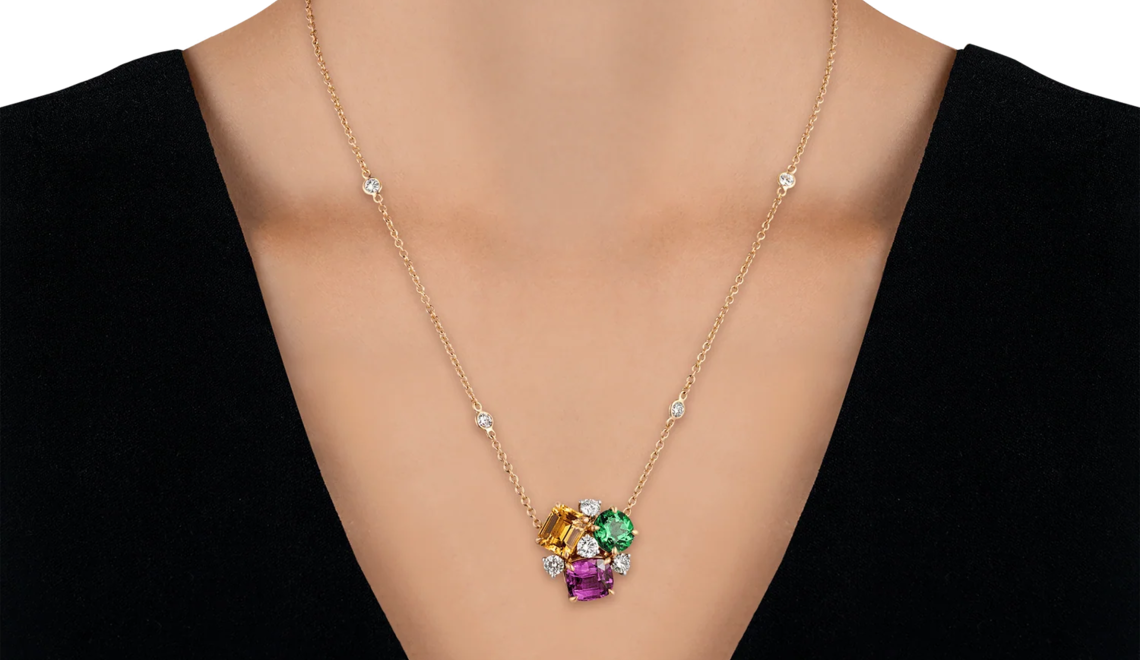
There’s a name you’ll see stamped inside some of the finest jeweled pieces ever made in America, and unless you already collect, you’ve probably scrolled right past it. No splashy flagship on Fifth Avenue. No celebrity campaign. Just a small workshop and a stubborn commitment to doing things the slow way. If you’ve ever admired a sapphire brooch with stones set so tightly they look grown into the metal, that’s the house I’m talking about: Oscar Heiman Jewelry, a family operation with a story worth sitting with.
I’ll be upfront about my angle here. I don’t want to talk about what these pieces are worth, and I’m not going to frame them as things you park money in. That conversation is tired. What actually pulls me toward Oscar Heyman pieces is craft, family, and the strange, quiet cultural history of owning something an American workshop made by hand while the rest of the industry was learning to scale.
So here’s the plan. We’ll walk through where the house came from, what “made in a workshop, not a factory” actually means on a piece of jewelry, why these pieces keep surfacing in museum collections, and how to slow down and really look at one if it’s ever in front of you.
Where Oscar Heyman Jewelry Actually Began
The story starts in Latvia, in the early 1900s. The Heyman family were jewelers there, and as the century got more dangerous for Jewish families in the region, they left. Oscar, one of the sons, arrived in New York, and by the late 1910s the family had opened a jewelry business in the city.
Here’s the part most people miss. For decades, Oscar Heyman and Brothers wasn’t primarily selling under its own name. It was a manufacturer for other famous houses. That’s a strange thing to sit with, honestly. Some of the most photographed pieces of 20th-century American jewelry carry another brand’s mark, and the bench work came out of this family’s shop.
That dynamic shaped how the house operates. There’s no need to chase fads when your clients are the ones setting them. You keep the workshop small, you train people for years, and you let the work speak through the sales floor it leaves through. That patience is the spine of the whole story.
What “Bench Made” Means When You Hold The Piece
If you’ve never owned an antique, the physical reality of bench work is the best part. Modern commercial jewelry is engineered for efficient production. Stone settings get slightly forgiving. Clasps get simpler. Once you’ve handled a truly hand built piece, you notice the difference in the first ten seconds.
Three things in particular stand out on Oscar Heyman jewelry.
- Stone matching. The family was obsessive about selecting stones that read as a single composition, not a lineup of unrelated gems.
- Setting tightness. Calibrated work lets stones sit close enough to disappear into a continuous field of color.
- Mechanism design. Clasps, hinges, and articulations on the better pieces feel like they were built for a lifetime of actual wear, because they were.
There’s a reason museum curators care about this stuff, and why the Smithsonian keeps a serious collection of American decorative arts. Their collections exist because craft has a material record, and the record matters long after the marketing fades. You can see the broader picture at the Smithsonian Institution, where these kinds of pieces sit alongside the paintings and furniture of the same era.
Why Owning An Antique Is Different From Buying New
This is where I’ll commit to a stance. If I had to choose between a brand new piece with a hefty markup and an antique one with real history behind it, I’d take the antique. Every time. Not because of money, and not because of appreciation. Because of ownership experience.
A new piece is yours alone. An antique one is yours for now. Somebody else wore it to a dinner in 1955. Somebody else had it sized, repaired, maybe hid it in a drawer during a rough decade. You’re holding all of that. The heft of an older piece is partly physical and partly narrative, and you can’t buy that from a boutique.
There’s a practical side, too. Antique pieces tend to be built in smaller numbers, with techniques that don’t always show up in modern production. Colored gems from earlier decades were often cut before later cutting standards homogenized what shows up on the market. You end up with stones that look slightly odd and much more interesting. Dealers who handle estate work talk about this constantly. Even adjacent trades notice the pattern. The Institute of Inspection, Cleaning and Restoration Certification is a good window into how much of preservation work is really about understanding materials and original making, a mindset that runs through every serious collecting field.

The Craft Question: What Do You Actually Watch For?
If a piece ever lands in front of you, slow down. Here’s what I’d actually check, in order.
- Read the marks first. A jeweler’s stamp, a metal purity mark, and a maker’s signature tell you part of the story before you look at the design.
- Turn the piece in your hand. Rotate it slowly. Hand built pieces have consistent polish and finishing on the back side, not just the front.
- Look at the stones individually. Real matching work reads as coordinated color, not a random assortment. Small inconsistencies can be a good sign of natural stones.
- Check the mechanisms. Clasps and hinges should operate with a specific kind of firmness. Anything that feels loose or gritty is a signal.
- Ask about provenance on older pieces. Where it was sold, who owned it, any paperwork. This is where real texture usually lives.
Honestly, that last point is the one people skip. Auction records, family documents, and even old photographs do more to tell you what you’re looking at than any certificate. If you’re buying from an estate or an auction house, ask what’s known. Silence isn’t automatically bad, but documentation is a gift.
Who Actually Collects This Pretty Specific Stuff
The collector base for Oscar Heyman pieces is smaller than for the blockbuster name brands, and that’s part of the appeal. You’ll run into three types.
There’s the design-driven collector who’s spent years looking at mid-century and Art Deco jewelry and eventually lands here because the construction keeps them coming back. There’s the family-history collector who seeks out Oscar Heyman because a relative worked at the bench, or because a piece has been in their family for decades. And there’s the museum-adjacent crowd, people who treat collecting as a form of quiet stewardship.
What ties them together is patience. Nobody arrives at this house in a weekend. The learning curve is real, and it rewards people who read and ask questions.
One more thing worth knowing. The American jewelry trade as we know it today took shape across the 20th century, and the number of people working behind the scenes at workshops and design houses is a durable part of the broader craft economy. According to baseline data from the Bureau of Labor Statistics, craft, design, and precision trades still make up a meaningful slice of American employment, and jewelry work sits squarely inside that world.
Owning Something That Outlasts Its Owner
The beautiful thing about Oscar Heyman jewelry is that it wasn’t built to be a moment. It was built to be an inheritance. Somebody’s grandmother wore a piece, somebody’s mother kept it in a velvet box, and now it sits in a case waiting for the next person. That cycle is the actual point.
If you want to think about these pieces clearly, stop thinking about the years ahead and start thinking about the years behind. Ask who made the thing. Ask how they learned. Ask what the stones look like in dull light. Those questions will tell you more than any label.
And if you happen to find yourself in front of one, hold it a little longer than feels polite. That’s how this hobby gets its hooks in.
More to Love!
Moss Agate Rings: Discover the Natural Beauty of Unique Gemstone Jewelry
How Designers Are Reinventing Crystal Jewelry for Today