SUBSCRIBE


How to Clean Up Household Spills Safely and Effectively
Spills happen—they’re simply part of living in a home with people, pets, and daily routines. But how you respond in those first few minutes often determines whether you’re dealing with a minor inconvenience or a lingering problem days later. Leave a puddle sitting too long and you risk warped flooring, odor-causing bacteria, or a slip hazard waiting to happen. The right response really comes down to a handful of factors: what spilled, what surface it landed on, how much there is, and whether biological or chemical hazards might be involved. Different jobs call for different tools—a wet & dry vacuum is one example of equipment designed to handle both liquid and dry debris, which is a good reminder that most ordinary household vacuums simply aren’t built for moisture. It’s also worth keeping in mind that routine cleaning with soap and water takes care of dirt and many germs, while disinfection is a separate, more targeted step reserved for situations involving illness or suspected contamination.
Assess the Spill Before Cleaning
Identify the Substance
Before you reach for a towel or mop, take a second to figure out what you’re actually dealing with. Water and similarly harmless liquids need little more than a quick drying. Food, drinks, and pet accidents call for cleaning agents suited to organic residue, while oily or greasy spills usually require a degreasing approach. Broken glass or sharp debris needs careful, deliberate handling by hand. If you’re not sure what the substance is, caution should win out—don’t touch, mix, or vacuum an unidentified liquid or powder until you’ve checked any available labeling or safety information.
Check the Surface and Immediate Risks
Next, think about where the spill landed. Hard flooring, carpet, upholstery, wood, electronics, and porous materials all react differently to moisture and cleaning products, so the surface matters just as much as the substance. Scan for immediate hazards too: a slick floor, nearby outlets, or liquid working its way into seams and floorboards. And until you’ve confirmed the area is safe, keep kids and pets well clear of it.
A simple comparison illustrates the point: a glass of water spilled on tile calls for little more than a quick wipe and dry, while a pet accident on carpet demands blotting, the right cleaner, and enough time to dry fully. The same cloth or solution shouldn’t be used interchangeably for every type of mess—what works for one can make another worse.
Prepare the Area and Cleaning Equipment
Before diving in, block off the area if needed and crack open a window or door for ventilation, especially if you’ll be using cleaning products. Gather only what the job actually requires: absorbent towels, gloves where appropriate, a suitable mop, mild detergent, waste bags, and a vacuum matched to whatever you’re collecting. Always follow the product label’s directions on dilution, ventilation, protective gear, and disposal—these details exist for good reason. Household cleaners can release airborne chemicals more readily than people assume, so proper airflow matters more than it might seem. Just as important: use the right equipment for the material. A standard household vacuum isn’t designed to pick up liquids, and using it that way can damage the machine or create an electrical hazard.
Before using any equipment on liquids, fine powders, chemicals, or contaminated material, take a moment to check the manufacturer’s instructions rather than assuming one method will work across the board.
Use the Right Cleanup Method for the Spill
Small Liquid Spills on Hard Surfaces
Mop up excess liquid right away to cut down on slipping and keep it from seeping into seams. Clean with a suitable detergent solution, rinse if needed, and dry the area thoroughly—thorough drying heads off odors, material swelling, and microbial growth before they start.

Liquid Spills on Carpet and Upholstery
Here, blotting beats scrubbing every time. Work from the outside edge toward the center to keep the spill from spreading further. Test any cleaning product on a hidden spot first, use only as much moisture as you need, and give it time to dry completely. If you’re facing extensive flooding, sewage contamination, or valuable materials, it’s often smarter—and safer—to call in a professional.
Dry Debris and Mixed Messes
Pick up sharp objects by hand with suitable protection; don’t rely on a vacuum for this. Fine particles are a different story—a vacuum with proper filtration can help keep dust from scattering back into the air. And whatever you do, never run wet material through equipment that isn’t designed for liquid collection.
Understanding the difference between absorption, extraction, wet collection, dry vacuuming, and disinfection makes clear that getting rid of visible mess isn’t the same as disinfecting a surface.
When Cleaning Is Not Enough
Cleaning handles dirt and some germs, but disinfection goes a step further, targeting germs that cleaning alone leaves behind. It’s worth considering disinfection when someone in the household is sick, bodily fluids are involved, a high-touch surface has been contaminated, or official health guidance calls for it. The order of operations matters here: clean before disinfecting, apply the disinfectant, let it sit for the required contact time, and follow the label’s ventilation and disposal instructions. One rule to never break: bleach and other disinfectants should never be mixed with each other or with unrelated cleaners, since doing so can produce dangerous fumes. And stick to using disinfectants only on the surfaces listed on their label.
Key takeaway: The safest cleanup method depends on the substance, surface, and equipment involved. When in doubt, isolate the area, avoid mixing products, and follow the label.
Common Spill-Cleanup Mistakes to Avoid
- Scrubbing carpet aggressively, which can spread a stain
- Using excessive water on wood or laminate
- Disinfecting a visibly dirty surface without cleaning it first
- Mixing bleach with another cleaner
- Using a standard vacuum on liquids
- Leaving moisture trapped under rugs or furniture
- Working in a closed, unventilated space with strong chemicals
- Letting children or pets back in before the area is dry and fume-free
Highest-risk errors to avoid: mixing cleaning chemicals, using unsuitable electrical equipment around liquids, and leaving damp materials untreated.
How to Prevent Future Spills and Reduce Damage
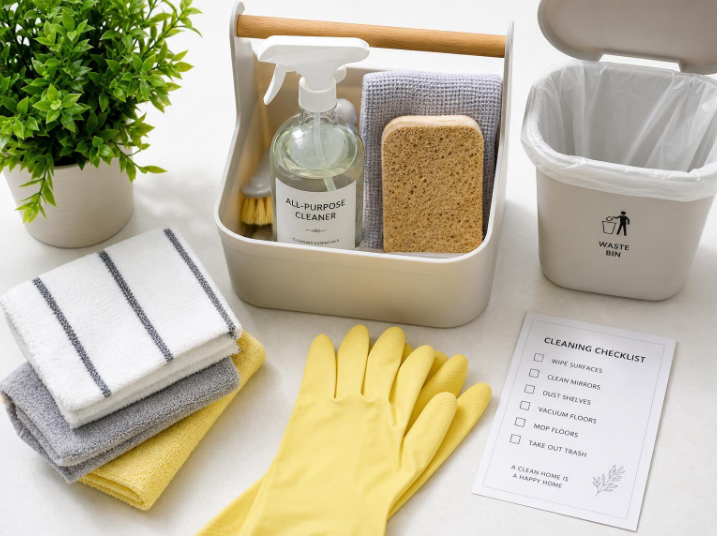
A little prevention goes a long way. Store liquids securely, keep cleaning products in their original labeled containers, and use trays or mats under plants and pet bowls. Keep absorbent towels within easy reach, check moisture-prone spots like under sinks now and then, and deal with small spills before they turn into lasting stains. Putting together a simple household kit—one for the kitchen, one for the bathroom, and one for pet areas—makes it far easier to respond quickly and appropriately when something does spill.
A Practical Spill-Cleanup Checklist
- Keep people and pets away.
- Identify the substance and surface.
- Disconnect nearby electrical equipment if safe.
- Remove excess liquid or debris with a suitable method.
- Clean with an appropriate product.
- Disinfect only when needed, per the label.
- Ventilate and let the area dry fully.
- Dispose of contaminated materials safely.
- Check for lingering moisture, odor, or damage.
Keeping Household Cleanup Safe and Manageable
Effective spill cleanup starts with a quick assessment, not with grabbing the nearest towel or chemical off the shelf. Match the method to the substance and surface, use equipment only for what it’s meant to do, clean before disinfecting when that step is warranted, ventilate the space, and let everything dry completely. For hazardous substances or serious damage, calling in a professional is often worth the cost. A small, well-organized spill kit, paired with a quick glance at your cleaning products’ instructions, can be the difference between a minor cleanup and a lasting headache.
More to Love!
The Evolution and Impact of Modern Vacuum Cleaners on Home Cleaning
Machine Washable Sofas for Busy Homes: 10 Popular Brands to Consider