SUBSCRIBE


5 Home Theater Setup Ideas to Maximize Small Spaces
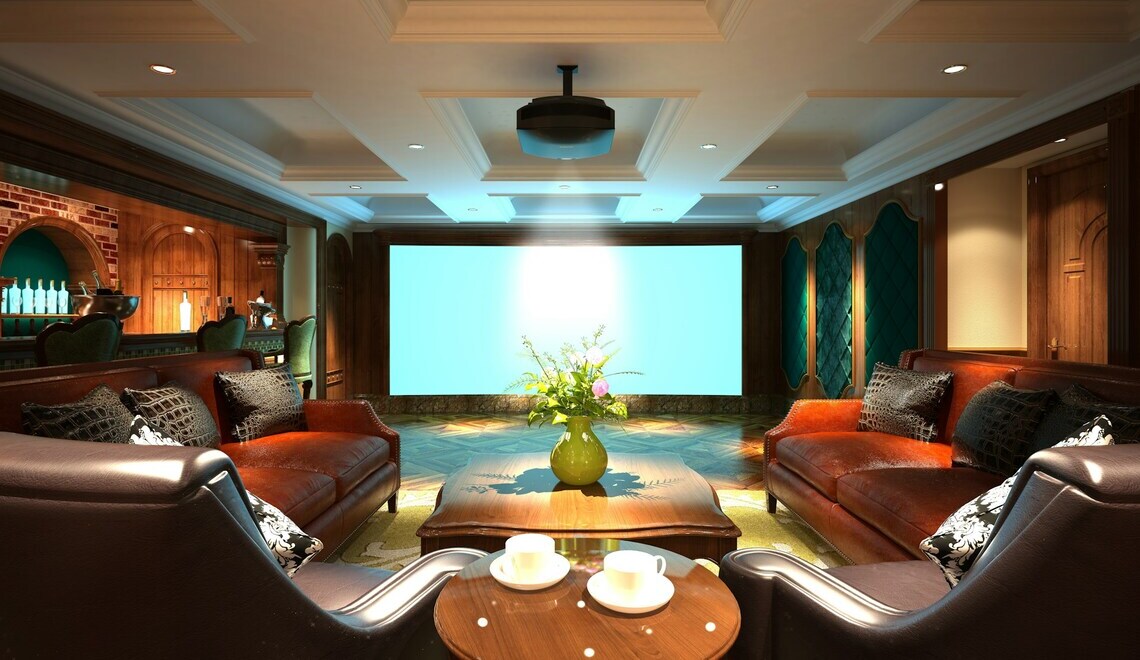
A small room doesn’t have to mean a compromised viewing experience. Some of the most impressive home theaters are tucked into spare bedrooms, finished basements, or converted closets, spaces that looked limiting on paper but delivered exceptional results with the right planning. The difference between a frustrating setup and a genuinely great one usually comes down to how well the space is understood before any equipment is purchased.
These five home theater setup ideas are built around the reality of small rooms: limited square footage, awkward dimensions, and the need to make every design decision count.
Why Small Rooms Behave Differently and What That Means for Your Gear
Before getting into specific setups, it’s worth addressing something most guides skip: small rooms create unique acoustic and visual challenges that directly affect which equipment performs well and which underdelivers.
Sound behaves differently in compact spaces. Bass frequencies tend to build up in corners and along walls, which can make audio sound muddy or boomy even with high-quality speakers. Hard, parallel walls create a flutter echo. These are solvable problems, but they affect speaker placement, subwoofer positioning, and whether acoustic treatment panels are worth adding.
On the visual side, short throw distances change, which screen sizes and projector types make sense. A screen that looks perfect at 12 feet looks overwhelming at 7. Getting these fundamentals right first means fewer expensive mistakes later.
5 Home Theater Setup Ideas for Compact Rooms
1. The Dedicated Single-Wall Setup
This is the most straightforward home theater setup for a small room and often the most effective. Everything faces one wall: the screen or TV, the speakers, and the seating. The approach keeps the room feeling open while concentrating the viewing experience where it belongs.
For this layout to work well:
- Mount the display on the wall rather than placing it on furniture to reclaim floor space and improve sightlines
- Use a slim soundbar or a compact 3.1 speaker configuration (left, center, right plus a subwoofer) to deliver clear audio without crowding the room
- Position seating at roughly 1.5 to 2.5 times the screen’s diagonal measurement for the best field of view
The single-wall approach works particularly well in narrow rooms where placing speakers on the side walls isn’t realistic. When home theater seating is tight on width, a loveseat or a pair of compact recliners positioned close together can replicate the front-row cinema feel without eating into walkway space.
2. The Projector and Pull-Down Screen Setup
A fixed large-screen TV in a small room can feel oppressive; it dominates the space visually even when it’s off. A ceiling-mounted projector paired with a motorized pull-down screen solves that problem neatly. When the screen is retracted, the room serves its other purposes without any visual clutter.
Short-throw and ultra-short-throw projectors have improved dramatically in recent years, making this option far more practical for small spaces than it once was. An ultra-short-throw projector can be placed just inches from the wall and still produce a 100-inch image, eliminating the need for a long throw distance or a ceiling mount in the middle of the room.
Key considerations for this setup:
- Ambient light rejection screens are worth the investment in rooms that can’t be fully darkened
- Ceiling mounts should be anchored into joists for stability, especially with heavier projectors
- Factor in the projector’s fan noise — in a small, quiet room, a loud fan becomes distracting fast

3. The Converted Closet or Alcove Theater
Odd architectural features, such as deep closets, built-in alcoves, and under-stair recesses, are often overlooked as usable space. With the right setup for home theater use, these compact nooks can deliver a surprisingly immersive experience.
The logic works because of proximity. In a small, enclosed alcove with a display at one end and seating close to it, the screen fills more of the visual field than it would across a larger room. Pair that with headphone audio or near-field speakers, and the result is a focused, personal viewing space that punches well above its square footage.
Practical notes for alcove setups:
- Ventilation matters; enclosed spaces trap heat from electronics quickly, so a small fan or ventilation gap is necessary
- Cable management is harder in tight spaces, so plan routing before mounting anything permanently
- Acoustic foam or fabric panels on the side walls improve sound quality significantly in a hard-walled alcove
4. The Multi-Use Room Setup
Not every small space can be dedicated to home theater use. A guest bedroom that doubles as a viewing room, or a living room that needs to function for daily life and movie nights, requires a setup for home theater that integrates cleanly rather than taking over.
The key to multi-use rooms is choosing equipment that serves both purposes without looking out of place. A TV that doubles as a display for streaming and gaming during the day becomes the movie screen at night. Furniture with clean lines that doesn’t scream “home theater” keeps the room feeling balanced.
For home theater seating in a multi-use room, a leather sectional works better than dedicated recliners because it serves everyday seating needs while still positioning viewers correctly for the screen. Leather holds up to spills and daily wear better than fabric, and modular pieces let you reconfigure the layout as needs change. Ottoman extensions can fill in the front row when a movie night calls for more people.
What makes multi-use setups succeed:
- Conceal cables and equipment in furniture or wall channels so the room doesn’t look like a tech installation during daylight hours
- Use a universal remote or smart home system to switch the room between “living space” and “theater mode” with minimal setup time
- Invest in blackout curtains that can be drawn for viewing and opened again without disrupting the room’s daytime feel
5. The Immersive Audio-First Micro Theater
Sometimes a room is so small that the visual scale is limited, no matter what. In those cases, shifting the emphasis to audio rather than screen size produces a more satisfying result. A 65-inch display with a genuinely excellent surround sound system creates more immersion than a 90-inch screen with mediocre speakers.
This home theater setup philosophy prioritizes a full speaker configuration even in limited square footage. A 5.1 system – front left, center, front right, two surrounds, and a subwoofer – is achievable in a room as small as 10 by 12 feet with careful placement.
The surround speakers are the trickiest part. In-wall or on-wall speakers keep them from jutting into walkways, and wireless rear speaker kits from brands like Sony and Sonos have improved enough that cable runs aren’t always necessary. Positioning them slightly behind and above ear level at the primary seating position gets close to the reference placement used in professional mixing rooms.
| Speaker Position | Ideal Placement in a Small Room |
| Front left and right | Angled toward the main seat, 2-3 feet from the display |
| Center channel | Directly above or below the screen, angled down toward the seating |
| Surround speakers | Behind and above the main seat, mounted on the wall or ceiling |
| Subwoofer | Start in a corner, then adjust for the smoothest bass response |
A properly calibrated 5.1 system in a small room, with even basic acoustic treatment on the rear wall, will outperform a home theater twice its size with poor speaker placement.
The Details That Separate a Good Setup from a Great One
Across all five of these home theater setup ideas, a few consistent details separate rooms that look good in photos from rooms that actually deliver a great experience every time.
- Lighting control is underrated. Bias lighting behind the display reduces eye strain and improves perceived contrast. Dimmable overhead lights or LED strips along the floor keep the room functional without washing out the image during viewing.
- Cable management affects both aesthetics and safety. In a small room where everything is close together, exposed cables look worse and create more trip hazards than in a larger space. In-wall cable kits for the main display run are worth the effort, and cable raceways along baseboards handle the rest cleanly.
- Acoustic treatment is the most commonly skipped step in small room setups, and the one that makes the biggest audible difference. Even four to six small absorption panels placed at first reflection points on the side walls will noticeably reduce harshness and improve dialogue clarity. These don’t need to be expensive or ugly — fabric-wrapped panels in a matching color blend into a room easily.
- For home theater seating, comfort over long viewing sessions matters more than it might seem during a quick showroom test. A seat that feels fine for thirty minutes can become genuinely uncomfortable over a two-hour film. Lumbar support, seat depth, and armrest height all affect how much people actually enjoy using the space.
Turning Square Footage Limits Into Design Decisions
The most successful small home theaters share one quality: their constraints were treated as design inputs rather than obstacles. A narrow room becomes the reason for a focused single-wall setup. A multi-use space becomes the reason for clean, integrated furniture choices. Limited throw distance becomes the reason to invest in a quality short-throw projector.
Every limitation points toward a specific solution. The rooms that end up feeling purpose-built rather than compromised are the ones where those solutions were chosen deliberately, with the actual dimensions and usage patterns of the space in mind from the start.
Small doesn’t mean second-best. It means the planning has to be smarter.
More to Love!
How to Get into Luxuries Lap with the Ultimate Home Theater
7 Home Upgrades That Make a Huge Value Impact