SUBSCRIBE


5 Indoor Simulators Designed for Vacation Homes
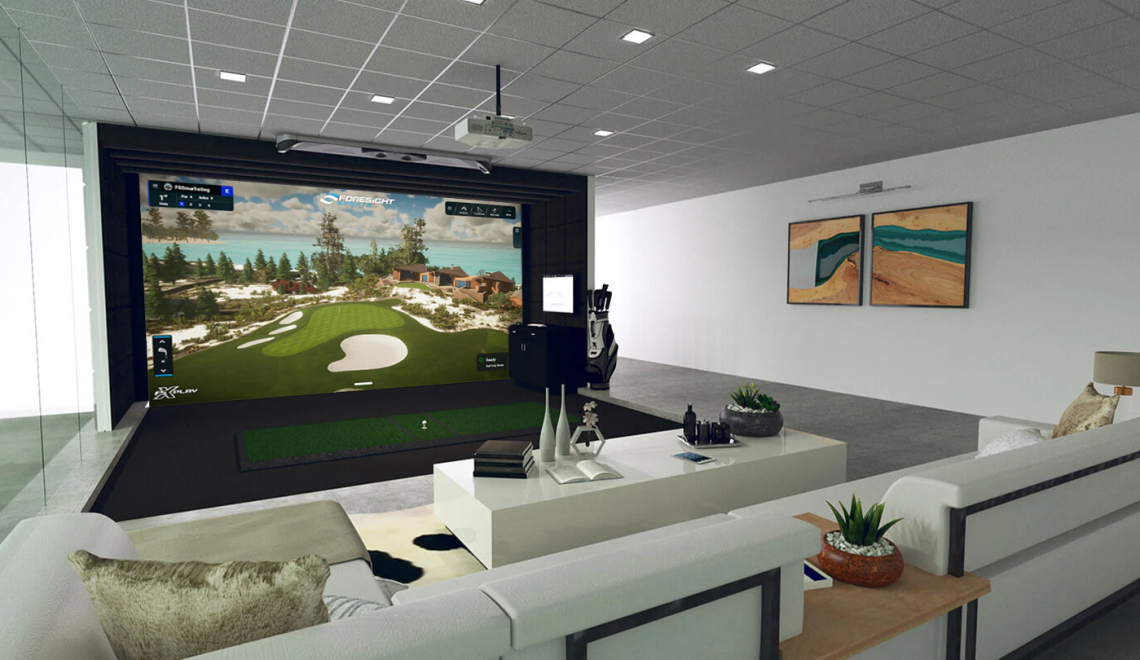
Golf simulators are now a top-tier amenity in vacation homes and short-term rental properties in 2026. A single well-chosen simulator can command higher nightly rates and attract bookings throughout the year, rain or shine. Property owners who invest in the right system see measurables: better reviews, longer stays, and guests who rebook year after year.
Here is the problem most vacation homeowners run into: they pick a system built for dedicated practice or professional coaching instead of one designed for rotating guests who arrive with zero technical knowledge. That choice creates friction. Guests struggle with setup. They call for help at 9 p.m. They leave bad reviews.
The five systems in this guide work for vacation homes. They all track standard, unmarked golf balls. None require a technician to operate. You will find an all-in-one touchscreen unit that needs no phone or PC, a Centerville-based brand founded in 1982 with a ceiling-mounted system that installs without contractors, portable units that work outdoors on a deck or lawn, and simulators with massive course libraries that entertain recreational players rather than scratch golfers grinding through practice drills.
How to Select the Best Golf Simulator for a Vacation Home
Choosing the right simulator for a vacation property means looking at five practical factors.
- Self-contained operation without a connected PC or device: Some simulators need a gaming laptop or Windows PC running software to function, while others are fully self-contained with an integrated touchscreen or onboard processor. Confirming the system can be operated by guests without a separate PC prevents the most common vacation home tech support issue.
- No marked balls or club stickers required: Systems that need metallic sticker dots on golf balls or stickers on club faces create friction for guests who show up with their own equipment. Confirming the system tracks standard, unmarked golf balls with no guest preparation steps keeps the experience smooth for every visitor.
- Course library depth for entertainment vs. practice: Vacation home guests are typically recreational players looking for a fun, social experience. Confirming the number of included or subscription-accessible courses, and whether they include famous venues like Pebble Beach or St Andrews, determines whether the simulator entertains guests who are not dedicated practice-focused golfers.
- Ease of setup and whether professional installation is required: Some simulator systems can be set up and taken down by the homeowner without contractors, while others require ceiling mounting, hardwired electrical, or calibration by a certified installer. Confirming the setup complexity before purchasing determines whether the system is realistic for a second home without a permanent on-site maintenance team.
- Portability and indoor/outdoor flexibility: Vacation homes often have flexible spaces like a porch, deck, garage, or multi-use room. Portable systems that can be moved, stored between seasons, and used both indoors and outdoors without reconfiguration provide more value per square foot than permanently installed ceiling-mounted units.
Top 5 Golf Simulators for Vacation Homes
Here are the five systems designed for vacation property use.
- Foresight Sports
- TruGolf
- Garmin Approach R50
- SkyTrak
- FlightScope
Best Golf Simulators for Vacation Homes
1. Foresight Sports
- Founded and location: Founded 2009 in San Diego, California; vertically integrated manufacturer with all design, engineering, manufacturing, and assembly in San Diego; 15,000+ GC launch monitors in use worldwide.
- Vacation home product: GC3 ($6,999); SIM IN A BOX packages starting under $8,000; complete full-size simulator in a compact package delivered and assembled without professional installation; fits rooms as small as 10 feet wide with 8-foot ceilings.
- Technology: Camera-based photometric system; measures at impact using high-speed cameras and requires only inches of ball flight; no marked balls or special equipment required; works indoors and outdoors.
- Courses and software: FSX Play and FSX 2020 simulation software; 35+ world-class courses included in SIM IN A BOX packages; no annual subscription required for tracking; LINK-enabled technology pairs with Bushnell Golf rangefinder.
- Awards: GCQuad has won Golf Digest Editors’ Choice Award for Best Launch Monitor four consecutive years; launch monitor of choice for more PGA Tour players than any other technology.
Founded in 2009 in San Diego, Foresight Sports produces the GC3 and SIM IN A BOX packages. These compact, drop-shipped simulator setups start under $8,000, fit in small rooms, require no professional installation, use no marked balls, and include 35+ courses with no annual subscription fees. The best golf simulator for home at Foresight Sports is designed for vacation properties where low-maintenance operation matters most.
Best For: Vacation homeowners who want a compact, high-accuracy camera-based simulator that self-assembles in most standard room sizes, with no marked ball requirements, no annual subscriptions, and a course library guests can use immediately.
Standout Feature: SIM IN A BOX packages starting under $8,000 deliver a complete, drop-shipped simulator with no professional installation required, including 35+ courses, no subscription fees, and photometric technology that works accurately in rooms as small as 10 feet wide.
2. TruGolf
- Founded and location: Founded 1982; headquartered in Centerville, Utah; first company to develop a 3D golf simulation engine; approximately 75 employees; parent company Access Software was acquired by Microsoft in 1999; now operating as TruGolf Holdings Inc.
- APOGEE launch monitor: Ceiling-mounted; proprietary ultra-high-speed stereoscopic cameras with Instant Impact algorithm, no marked balls or special clubs required; minimum 25″ ball flight; requires 9 to 10 ft ceiling height; designed and built in the USA; works seamlessly for right- and left-handed players without repositioning.
- TruGolf MAX simulator: Full simulators starting at $6,995; 15-foot edge-to-edge screen; designed for easy setup without professional installation; ships approximately 2 weeks from order date.
- E6 CONNECT software: Home license includes 27 courses with no annual subscription; Enjoy Subscription (included 1 year with TruGolf MAX) unlocks 15,000+ virtual golf courses, bag mapping, club fitting, and skills challenges; 7,500+ real-world courses available in 4K.
- Guest-friendly features: “Hey APOGEE” voice commands allow guests to change clubs, request mulligans, and navigate gameplay without touching a computer; Laser Launch Pad shows guests where to place the ball; Point of Impact slow-motion replay after every shot.
Founded in 1982 in Centerville, Utah, TruGolf was the first company to build a 3D golf simulation engine. The APOGEE ceiling-mounted system and MAX simulator are designed for easy, non-professional setup, require no marked balls, and include “Hey APOGEE” voice commands that let guests navigate courses without touching a keyboard.
Best For: Vacation homeowners who want a dedicated ceiling-mounted simulator with guest-friendly voice commands, no marked ball requirements, and access to 15,000+ virtual courses in a system designed to set up without professional installers.
Standout Feature: “Hey APOGEE” voice control lets guests change clubs, request mulligans, and navigate the course by voice command alone, eliminating the need to interact with a keyboard or screen between shots and making it the most self-directed guest experience in this guide.
3. Garmin Approach R50
- Technology and self-contained operation: First golf simulator requiring no phone, tablet, or computer; all functions operate via a built-in 10″ color touchscreen; 3-camera photometric system; connects directly to any projector or TV via HDMI; up to 4 hours battery life; carrying case included.
- Courses: 43,000+ virtual golf courses via Home Tee Hero (Garmin Golf membership: $9.99/month or $99/year); up to 4 simultaneous players; weekly global tournaments available.
- Portability: Weighs just over 4kg; designed for indoor and outdoor use; no minimum ball flight distance required; compatible with GSPro, E6 Connect, E6 Apex, and Awesome Golf via Wi-Fi/PC.
- Price: Under $5,000; no gaming laptop required for standalone simulator operation; HDMI cable to any TV or projector is all that’s needed.
- Data: Tracks 15+ ball and club metrics including spin rate, spin axis, and club speed; built-in barometer for accurate carry distances; club stickers required for club data (250 stickers included in box).
The Garmin Approach R50 is the most portable and genuinely self-contained system in this guide. It operates entirely from its built-in 10″ touchscreen, connects to any TV via HDMI without a PC, weighs just over 4kg, and offers 43,000+ courses for groups of up to 4 players for under $5,000.
Best For: Vacation homeowners who want a truly plug-and-play simulator that requires no gaming PC, no permanent installation, and no technical knowledge from guests, just the unit, any TV or projector, and an HDMI cable.
Standout Feature: The only system in this guide that operates entirely from a built-in 10″ touchscreen with no phone, PC, or tablet required, connecting to any TV or projector via HDMI and offering 43,000+ courses for up to 4 players in a portable unit priced under $5,000.

4. SkyTrak
- Technology: ST MAX (released 2025) uses dual Doppler radar and photometric camera system; no marked golf balls required; works indoors and outdoors on mats; reads shots by measuring the first few feet of ball flight.
- Pricing and subscriptions: ST MAX starts at $2,995; software subscription required for full functionality. Essential plan $129.99/year (includes 3D range, bag mapping, skills challenges, 30+ courses); premium course library available through Course Play for $299.99/year.
- Course access: Course Play software library; partnerships with Foresight Sports (38+ courses including Pebble Beach, Kingsbarns, Muirfield Village) and Trackman course libraries both accessible through SkyTrak (announced 2025).
- Guest features: Compatible with E6, TGC, and WGT third-party software; basic driving range available without subscription; Speed Training powered by GOLFTEC exclusive to ST MAX; simultaneous charging and PC connectivity via dual USB-C ports.
- Setup: Sits beside the ball on the floor; compact form factor; works on iOS, Android, and PC; no ceiling mounting or permanent installation required.
The SkyTrak ST MAX is a floor-standing dual radar/camera system priced from $2,995 that requires no ceiling installation, tracks standard unmarked golf balls, and connects to iPhones, iPads, Android devices, or PCs. It offers basic range use without subscription and access to multiple premium course libraries for vacation property guests.
Best For: Vacation homeowners on a mid-range budget who want a portable, floor-standing system with no installation requirements, standard ball compatibility, and access to premium course libraries from a $129.99/year subscription starting point.
Standout Feature: Access to both the Foresight Sports (38+ courses) and Trackman course libraries through SkyTrak’s Course Play software on a single $2,995 hardware unit, with no ceiling mounting, no marked balls, and basic range access available without any annual subscription.
5. FlightScope
- Founded and location: Founded 1989 in South Africa by Henri Johnson (Founder and CEO); originally developed phased-array Doppler radar for the defense industry; headquarters relocated to Orlando, Florida in 2008; technology in use across 120+ countries.
- Vacation home products: Mevo+ (patented Fusion Tracking with 3D Doppler radar plus synchronized high-speed imaging; 20+ data parameters; 12 E6 Connect golf courses including Pebble Beach and St Andrews included, no subscription for main data; metallic ball stickers required); Mevo Gen2 ($1,299; launched August 2025; 20 data parameters; 8 E6 Connect courses included; built-in camera; sold out globally in early 2026 with 5 to 7 week lead time).
- Portability: Portable floor-standing unit; works indoors and outdoors; no ceiling mounting required; up to 6 hours battery life (Mevo Gen2); place 8 feet directly behind the ball.
- No subscription for main data: All main data parameters available at no ongoing cost; future firmware and software updates provided free; optional Pro Package (D-Plane data) available as add-on.
- Awards: Mevo Gen2 named MyGolfSpy Staff Pick for Best Personal Golf Launch Monitor (2026); AJGA partnership renewed for 5-year extension (March 30, 2026).
Founded in 1989 by Henri Johnson and based in Orlando, Florida since 2008, FlightScope offers the Mevo+ (12 included E6 courses, no main subscription) and the sold-out Mevo Gen2 ($1,299). Both portable, floor-standing units work indoors and outdoors with no ceiling installation, delivering Fusion Tracking accuracy with courses included in the box.
Best For: Vacation homeowners who want a low-cost, portable system with no installation, no annual subscription fees for main use, and world-famous E6 courses included, usable both indoors and outdoors on the property.
Standout Feature: Patented Fusion Tracking with E6 Connect course ownership included in the purchase price, no ongoing subscription for main data, a 6-hour battery, and portability for both indoor and outdoor use on vacation properties at a starting price of $1,299 (Mevo Gen2).
Factors to Consider When Choosing a Simulator for a Vacation Home
Prioritise Guest-Operated Systems Over Practice-Grade Complexity
Golf simulators designed for dedicated practice often require software calibration, sticker application, and PC connections that guests visiting a vacation property will not navigate without frustration. Systems with built-in screens, voice commands, or self-contained touchscreen operation that launch into a round without technical setup consistently generate better guest reviews and fewer maintenance calls to the owner.
Confirm Whether the System Requires Marked Balls or Club Stickers
Asking vacation guests to apply metallic tracking dots to golf balls or stickers to club faces before every session creates barriers to use and degrades the experience. Systems that track standard, unmarked golf balls with no guest preparation steps are better suited to rotating-user vacation environments than those relying on reflective markers.
Match the System’s Portability to Your Property’s Available Spaces
Vacation homes often lack a dedicated simulator room. A garage, den, screened porch, or convertible space is more common. Portable floor-standing or all-in-one units that can be repositioned, stored between seasons, or used outdoors on a deck or lawn deliver more usable value per installation cost than permanently ceiling-mounted systems that require a dedicated room year-round.
Calculate the Real Cost of Course Access for Recreational Guests
A system with a large included course library (particularly famous venues like Pebble Beach or St Andrews) generates more guest engagement than one with a limited base library requiring an annual subscription to access entertaining content. Calculating the combined hardware plus subscription cost over three years checks whether the course variety justifies the investment for a guest audience rather than a single dedicated practice golfer.
Verify That the System Survives Repeated Guest Use Without Ongoing Calibration
Vacation home simulators are used by rotating guests with varying levels of golf ability. Systems that require periodic re-calibration after misuse, club sticker replacement after heavy rotation, or IT troubleshooting for software disconnections demand more owner attention than the typical vacation home amenity can sustain. Confirming the system’s documented durability, self-diagnostic capabilities, and remote support options before purchase reduces long-term maintenance burden.
Final Thoughts
Vacation homeowners choosing a golf simulator in 2026 need to match the system’s operational complexity to the technical level of the least tech-savvy guest likely to use it. The more self-contained and voice- or touchscreen-controlled the system is, the more consistently it will be used and enjoyed by rotating guests.
The second big consideration is course library depth. A simulator with fewer than 20 courses becomes repetitive quickly for guests visiting more than once, while systems with 27 to 43,000+ courses maintain novelty across multiple stays.
Always test the setup and teardown process yourself before guests arrive. Verify that the system tracks standard balls without any guest preparation steps. That single check prevents most of the friction that turns a premium amenity into a maintenance headache.
More to Love!
A Weekend Retreat for the Stylish Golfer
5 Luxury Ways to Give Your Home a Hotel Vibe