SUBSCRIBE


Why Collectible Design Is Becoming the New Language of Luxury in the Middle East
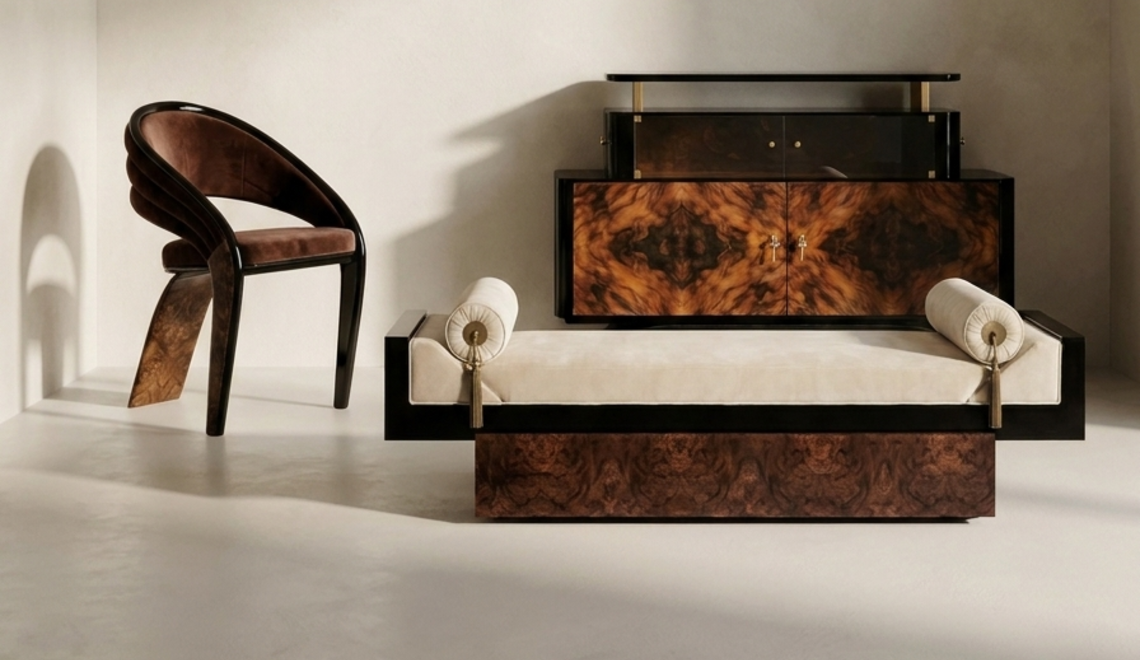
For decades, luxury in the Middle East spoke a familiar dialect: marble lobbies, monogrammed leather, a skyline written in names everyone could read from the street. That language hasn’t disappeared. But a quieter, more fluent one is rising alongside it — the vocabulary of collectible design, where a hand-carved console or a single-edition lighting sculpture now carries more cultural currency than anything with a logo stitched into it.
Across Dubai, Riyadh, and Doha, a generation of collectors who came of age between art fairs and design weeks has started to treat furniture the way their parents once treated fine art: as an asset, a signature, a story worth telling at dinner. The question is no longer “where did you buy it,” but “who made it, how many exist, and what does it mean that you own one.”
A FAIR GROWS INTO AN INSTITUTION
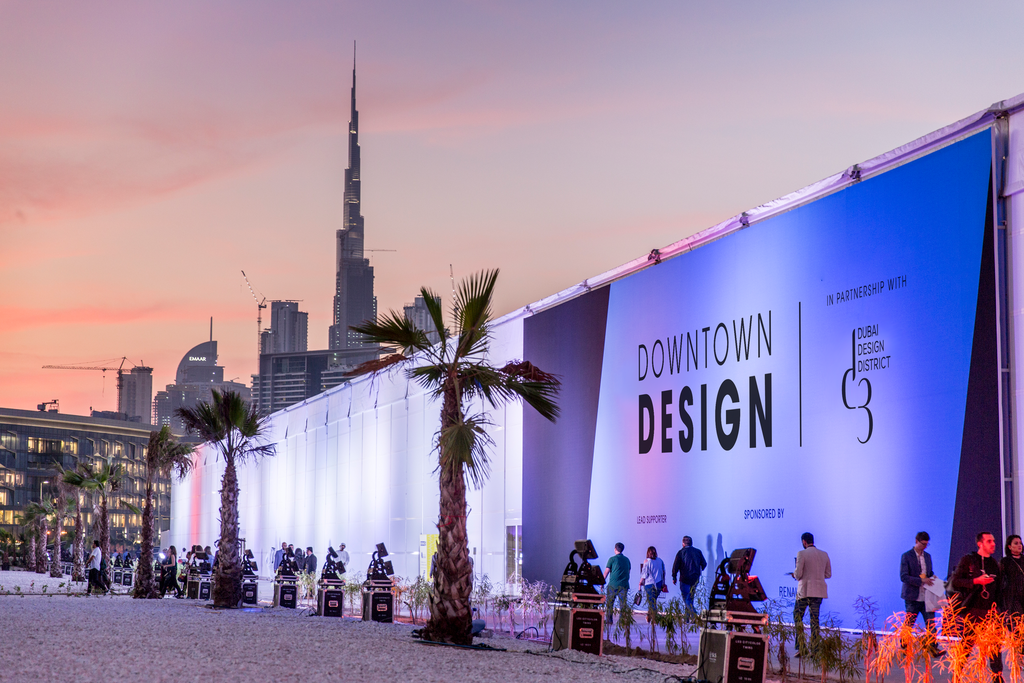
Every shift in taste needs proof, and in Dubai’s case that proof is Downtown Design. Now in its second decade as the event the rest of Dubai Design Week is built around, the fair returns to Dubai Design District from November 4 to 8, 2026, under the patronage of Her Highness Sheikha Latifa bint Mohammed bin Rashid Al Maktoum. Its 2025 edition brought in over 1,000 designers from more than 50 countries and an estimated 100,000 visitors — numbers that would have been unthinkable for a design-specific fair in the region a decade ago.
What’s notable isn’t just the turnout. It’s who’s turning out: international collectible-design galleries now treat Dubai as a standing stop on the calendar, not a detour from Milan, Basel, or Paris. A small wave of dedicated spaces has followed, each staking out its own corner of the category. Gallery Collectional, which opened inside Eden House in 2022, has built its name on artisan one-of-a-kind pieces. Da Terra, KOKET’s showroom partner in Dubai, works a wider brief — one-of-a-kind finds alongside custom, made-to-order home décor and art for collectors who want a piece built specifically for them. The Gulf isn’t importing the collectible-design conversation anymore. It’s hosting it, on its own terms.
“Who made it, how many exist, and what does it mean that you own one” has replaced “where did you buy it” as the real luxury question.
CRAFT AS THE NEW STATUS SYMBOL
What collectible design offers that mass luxury can’t is scarcity with a face attached to it. A piece that took an atelier months to hand-finish, that exists in a run of eight instead of eight thousand, tells a more interesting story than a monogram ever could — and in a region where interiors have long served as a stage for hospitality and standing, that story matters.
It’s part of why houses built on hand craftsmanship have found such a natural audience here. By KOKET, the Portuguese atelier behind Love Happens Magazine, is one of them — its pieces now in front of the region’s collectors through that same Da Terra showroom, rather than waiting for buyers to travel elsewhere for them. The instinct is the same one driving the galleries: treat the object as authored, not manufactured, whether it’s found as-is or made to order.
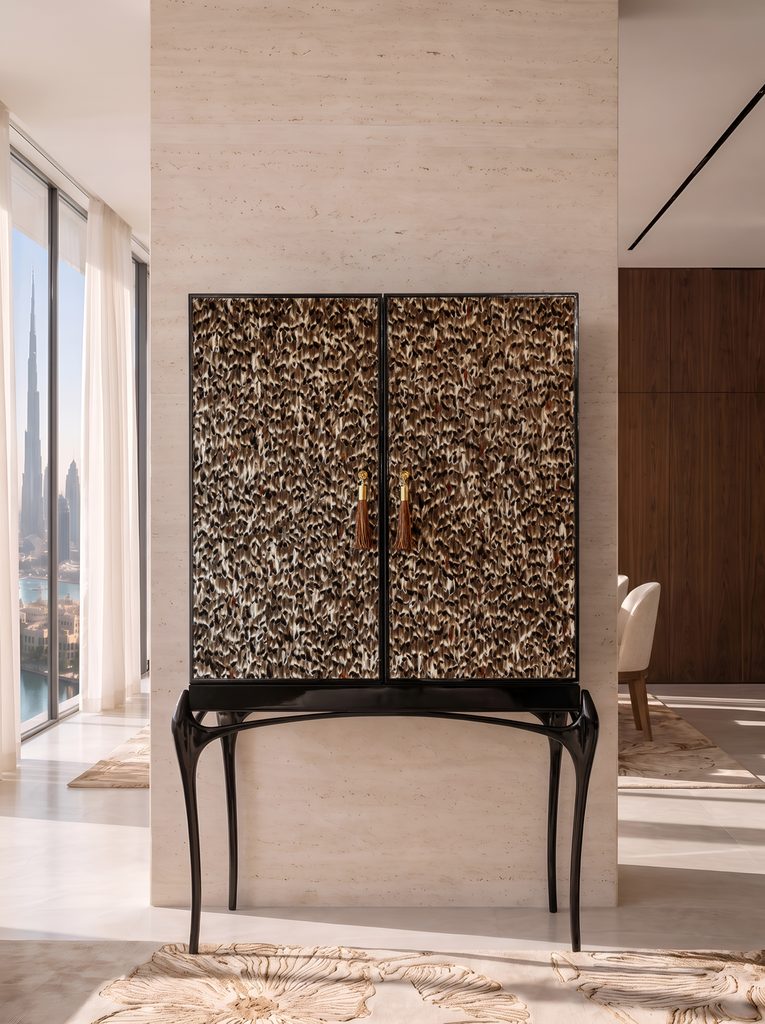
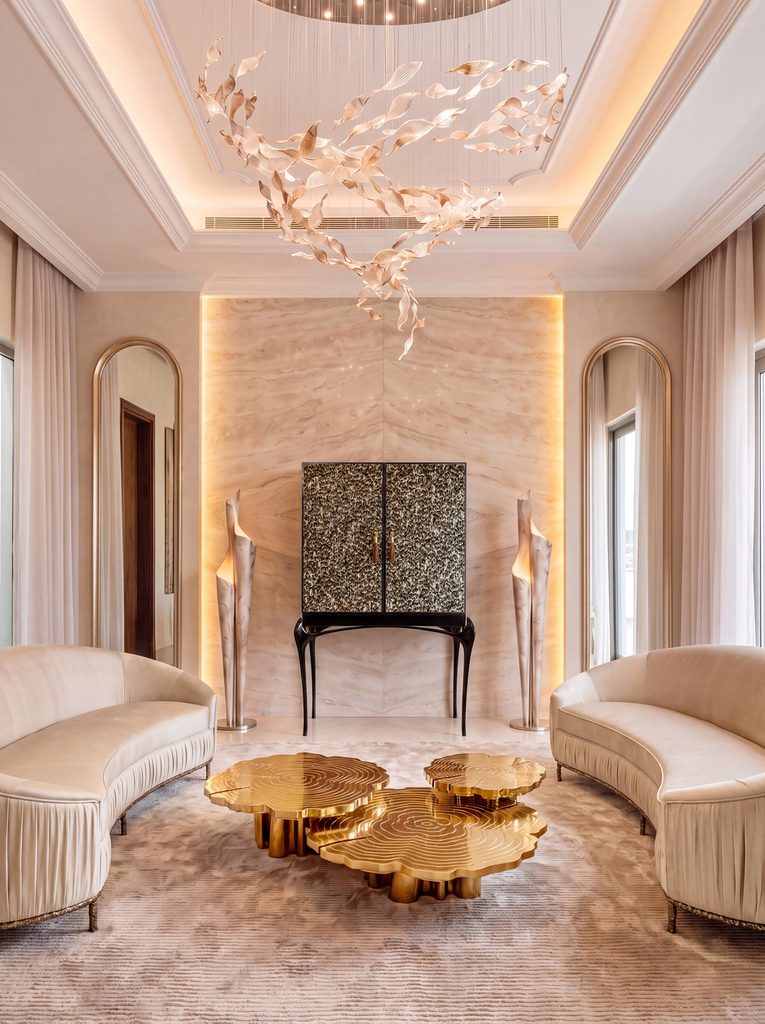
KOKET’s Temptation Folie Feather Bar Cabinet shown here is currently on view at Da Terra — a one-of-a-kind design, and the last of its kind the atelier will ever make. Book a private viewing at Da Terra Dubai →
WHY THE GULF, WHY NOW
None of this is arriving in a vacuum. The Gulf has spent the last two decades building the infrastructure of a serious art world — Louvre Abu Dhabi, a fast-expanding museum landscape, and an art-fair ecosystem now serious enough that Art Basel chose Qatar for its regional debut. Collectible design is simply the domestic, livable extension of that same cultural investment: object as artwork, furniture as authorship, in houses built for entertaining.
There’s also a generational shift underneath it. Younger Gulf collectors — many educated abroad, many building homes of their own for the first time — are less interested in luxury as a badge and more interested in luxury as a point of view. Collectible design lets them furnish a home that says something specific, in a market that, until recently, mostly offered them the same handful of global names everyone else was buying too.
THE NEW CANON
What’s happening in Dubai, Riyadh, and Doha right now isn’t just a shopping trend — it’s the early drafting of a canon. The galleries opening, the fairs expanding, the collectors asking sharper questions: all of it points toward a region that no longer just consumes global design, but is beginning to define what design means on its own terms. Luxury, in this new dialect, isn’t something you display. It’s something you can explain.
More to Love!
Dubai for Design Lovers, An LH Luxury City Guide
The Women Who Defined Art Deco Paris