SUBSCRIBE


How Artisan Outdoor Tiles Are Redefining Luxury Courtyard Design
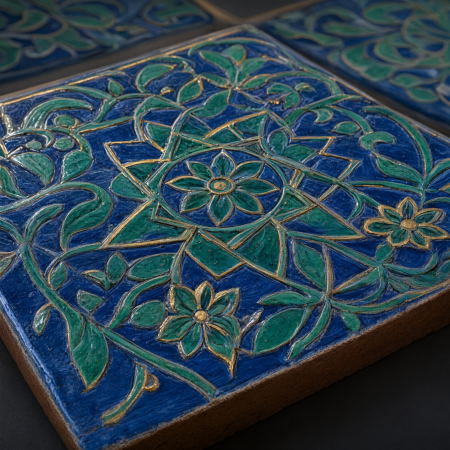
Late-afternoon light travels across a courtyard floor differently from the light in a living room. It catches an uneven edge, deepens a clay-colored surface, and shifts again as planting casts shadows over the paving. The ground becomes part of the atmosphere, even before anyone takes a seat.
Artisan tile gives designers a way to work with those changes. Color, texture, and the rhythm of joints can make a courtyard feel intimate, expressive, or quietly architectural.
The most convincing results bring that material character together with the practical demands of an outdoor room.
Let the Surface Establish the Mood
A courtyard often has fewer furnishings than an interior, leaving its permanent surfaces to do more of the visual work. A warm clay palette can soften pale walls; a restrained stone floor can give sculptural planting room to stand out. A patterned field can organize a seating area without adding another object.
Choose the mood before choosing individual tiles. Consider the surrounding architecture, the views from inside, and the hours when the courtyard will be used. A floor seen through glass all winter contributes to the home even when no one is sitting outside.
This approach to luxurious outdoor living begins with the relationship between the house and garden. Material choices should support that connection while allowing the courtyard an identity of its own.
Explore the Breadth of Artisan Materials
A courtyard’s character begins with its materials. Earthy paving, richly colored ceramic, or a geometric tile pattern can each suggest a different atmosphere, shaping how the space relates to its architecture and planting. Choosing a tile brand becomes part of that process: its collections should offer a clear design direction alongside the information needed to specify surfaces for outdoor use.
OUTERclé approaches outdoor design through materials and references to places, traditions, and architectural styles. Its “Scapes” draw inspiration from Moroccan courtyards, English country gardens, and mid-century outdoor living, giving designers a starting point for developing a personal scheme.
Within that broader approach, OUTERclé exterior tiles for patio include the brand’s Gather edit, spanning ceramic, terracotta, brick, stone, cement, and terrazzo. The range offers varied colors, formats, and finishes, allowing designers to explore anything from a restrained, earthy floor to a more expressive patterned surface.
Practical considerations sit alongside those choices. Filters for exterior-floor use, slip resistance, and freeze-thaw resistance help narrow the selection, with suitability confirmed against the specifications for the exact tile, finish, and intended application.
Make Variation Part of the Composition
Handcrafted tile can carry differences in shade, dimension, or surface character. The degree varies by collection, so review the manufacturer’s variation information rather than expecting every artisan surface to behave alike.
Ask for samples and a mock-up large enough to show several pieces with the proposed grout. A single tile cannot explain how a varied shipment will read across an entire courtyard. Review the layout in the actual setting, with samples placed horizontally for floors and vertically for walls.
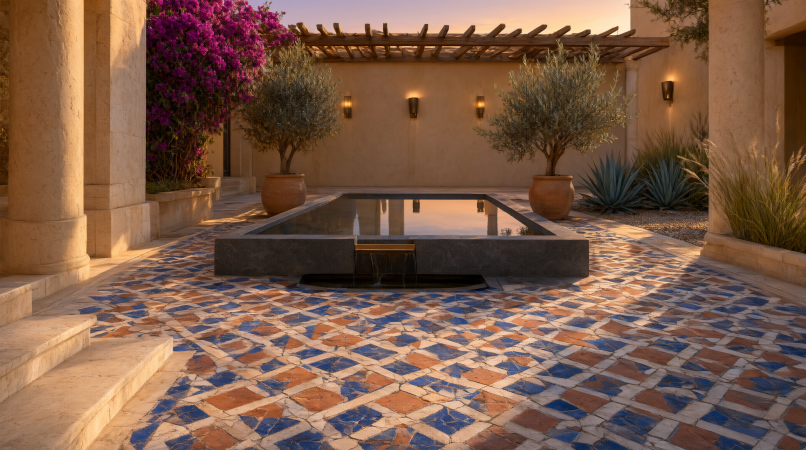
Before fixing begins, agree how the installer will blend pieces from different boxes and distribute stronger variations. Include border cuts, corners, and the approach to a central feature in that conversation.
The aim is a considered overall composition, with individual differences contributing to the field rather than clustering accidentally in one area.
Grout color can change the reading of the same tile. A related tone can let the field feel continuous, while contrast draws attention to each piece and the laying pattern.
Test both at the recommended joint width. Confirm the order quantity and collection-specific overage with the installer so cuts, breakage, and future repairs are considered before the material is purchased.
Use Pattern to Give the Courtyard Structure
Patterns can perform a spatial role. A tiled border might frame a dining table, while a change in laying direction can mark the route from the kitchen to a shaded seat. In a compact courtyard, one clear gesture is often enough.
Draw the layout with furniture in place. Check where chair legs meet joints and where small cuts would fall at doorways, steps, or built-in planters. A pattern centered on the empty room may lose its balance once the table and seating arrive.
The broader principles of luxury garden design still apply: planting, circulation, and places to pause need to work together. Let the tile reinforce those decisions. Avoid using a decorative change to disguise an unresolved level difference or awkward transition.

Specify for the Weather and the Way People Move
An exterior wall, a covered dining floor, and a wet route beside a fountain have different requirements. Confirm approval for the intended use and climate. A sheltered courtyard may still experience wind-driven rain or freezing temperatures.
The Tile Council of North America’s exterior guidance emphasizes suitable tile, setting materials, drainage, and accommodation for movement. The installation needs to manage water through the whole assembly. A tile’s appearance or material category cannot establish whether the proposed system will work.
For walking surfaces, discuss wet conditions, footwear, slope, and maintenance with the design and installation team. Request the manufacturer’s relevant slip-resistance information for the exact finish. A textured appearance alone is insufficient evidence, and no surface eliminates every slipping risk. Keep performance decisions specific to the site.
Treat Edges and Transitions as Design Details
The meeting points often determine how resolved a courtyard feels: tile beside a door track, paving against a planter, or the edge of a step. Plan these junctions before ordering materials, including the pieces needed to finish them.
Coordinate surface thickness with thresholds, drainage, and adjacent paving. The installation team should establish appropriate falls and movement joints, with their locations incorporated into the layout. Visual continuity between indoors and outdoors can come through related color or scale while each area receives a suitable assembly.
Lighting deserves an early trial too. Low light across the floor can emphasize texture and height differences that are less apparent at midday. Review a mock-up under the intended lighting before committing to the full scheme.
Choose a Surface You Will Enjoy Maintaining
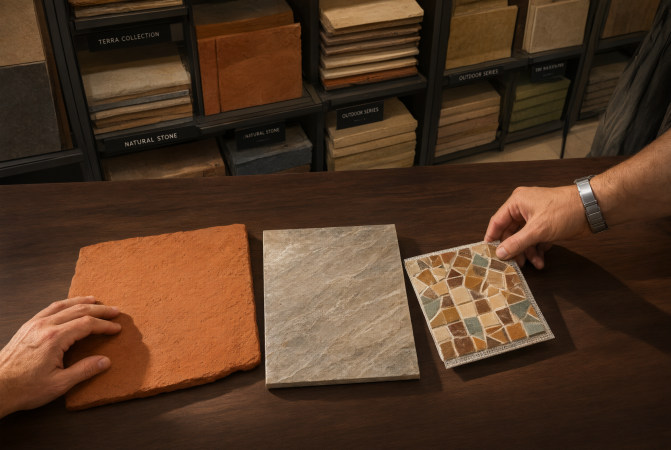
Material character continues to develop after installation. Decide which changes you welcome and which would become a concern. Ask about sealing, staining, cleaning products, and the expected appearance of the selected finish over time.
Care instructions should follow the material. For stone, the Natural Stone Institute explains why composition affects cleaning choices, including sensitivity to acids. Do not apply one cleaner or treatment across a mixed palette without checking compatibility.
Keep spare material from the original order where practical, together with product and maintenance records. A courtyard’s lasting appeal comes from enjoying its surfaces in use: chairs drawn up for dinner, shadows moving through leaves, and a floor whose texture remains part of the room.
More to Love!
Why Bathroom Mosaic Tiles Are One of the Most Versatile Choices for Modern Homes
Modern Art Deco Furniture: The New Rules of Decorating with Deco