SUBSCRIBE


The Evolution of Modern Medicine: Innovations Shaping Healthcare

If your knee has started limiting the golf, ski trips or city breaks you still want to enjoy, you may have already noticed how the evolution of modern medicine has so far given you only two choices:
Manage the decline or wait until it is serious enough for a major intervention.
Well, the good news is that this is beginning to change.
In fact, some of the most important innovations shaping modern medicine are moving healthcare away from waiting for failure and toward detecting problems earlier.
From regenerative therapies to continuous monitoring, here are the five innovations helping make healthcare more proactive, personalized and precise right now:
1. Stem Cell Therapy
For decades, degenerative problems such as joint damage have largely been approached through symptom management, rehabilitation and, eventually, surgery or replacement.
Regenerative medicine today asks a different question: can damaged tissue or function be repaired biologically rather than simply managed?
That is what makes the stem cell therapy process particularly interesting when you are still active, but can feel your options narrowing, or your orthopedist has started mentioning joint replacement as something that may eventually be necessary.
Stem cells can self-renew and develop into specialized cell types, making them central to research into tissue repair and regeneration.
On top of that, some applications, such as blood-forming stem-cell transplantation, are already established medicine, while many treatments promoted for orthopedic and other conditions remain investigational.
2. Precision Medicine
Traditionally, people with the same diagnosis have often been treated using the same general treatment approach, and that works remarkably well in many situations.
However, two people of the same age with the same condition can still have very different genetics, lifestyles, environmental exposures and responses to treatment.
And precision medicine is making those differences clinically useful.
Genomic information can already help diagnose certain diseases, estimate risk and guide treatment decisions. Pharmacogenomics can even help determine which medications or doses may suit an individual more closely.
So, for anyone tired of hearing what “usually happens” at a particular age, that is a meaningful evolution: your diagnosis may define the problem, but increasingly, your biology helps determine what happens next.
3. AI-Assisted Diagnostics
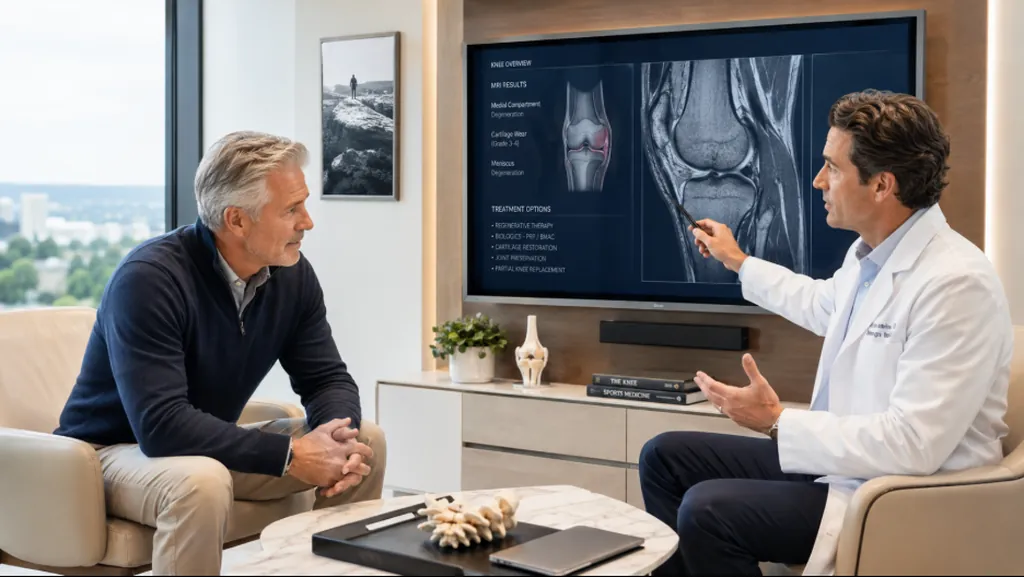
Medical imaging once depended almost entirely on what a trained clinician could identify on an X-ray, CT scan or MRI.
Early computer-assisted systems added predefined rules and pattern recognition but today, modern ML systems can analyze far larger datasets and identify complex patterns without relying solely on features programmers told them to seek.
Now, does that mean an algorithm replaces your radiologist? Quite the contrary, actually.
FDA-regulated AI imaging tools are, in fact, designed to assist clinicians with tasks. Particularly with analyzing images, identifying suspicious findings and prioritizing time-sensitive scans for human review.
The point is, if subtle but meaningful signals can be recognized sooner, clinicians gain an opportunity to investigate sooner. And when your priority is preserving the next ten active years rather than waiting until you are visibly “sick,” that movement from reactive diagnosis toward earlier recognition becomes particularly valuable.

4. Wearables
Think about the traditional annual physical:
Your blood pressure is measured, blood is drawn, maybe you receive an ECG and then your doctor gets a valuable snapshot of how your body behaved on one particular morning.
The thing about is that your health doesn’t happen once a year, so it’s great to see that modern wearable technology is changing what physicians and patients can potentially see between those snapshots.
Nowadays, wearable devices can continuously track measures such as heart rate, activity, sleep, temperature and blood oxygen, while emerging biosensors are being researched for biochemical markers found in sweat and interstitial fluid.
The future promise here is having enough longitudinal information to understand your normal baseline and recognize when your physiology begins moving away from it.
5. Robotic and Image-Guided Surgery
Of course, not every condition can be prevented or biologically repaired. Sometimes surgery remains the best available option.
But even the surgery itself is evolving.
Open procedures gave surgeons direct access to anatomy but often required larger incisions. Minimally invasive techniques reduced the physical disruption involved in reaching the surgical site.
Today, robotic and computer-guided systems are adding another layer to all this: enhanced visualization, articulated instruments, digital planning and highly controlled execution while the surgeon remains in command.
FDA classifications describe these systems as surgeon-controlled technologies rather than autonomous machines, but the broader direction is what matters.
Whether medicine is detecting disease, selecting treatment, continuously monitoring change, exploring biological repair or performing surgery, healthcare is becoming progressively less approximate—and increasingly designed around the individual in front of the doctor.
And for people who are not simply asking “How long can I live?” but “How long can I keep living like myself?”, that may be the most important evolution of all.
More to Love!
Why Strength Is Becoming the New Wellness Goal
Anti-Aging Trends 2026: What’s Really Coming Next in Aesthetic Medicine
Luxury Wellness Travel Is Becoming the New Personalised Beauty Ritual
The Joy of a Walking Vacation: Why Meaningful Travel Starts by Leaving the Vehicle Behind