SUBSCRIBE


Art Deco Style Never Left — It Just Went Neo Deco
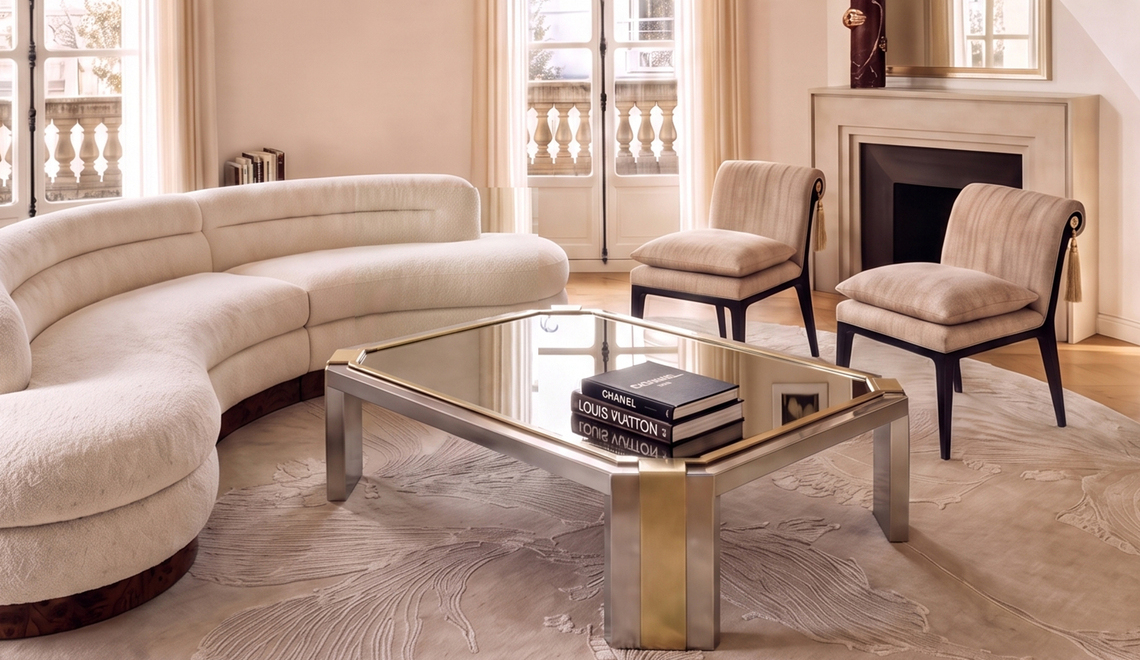
Art Deco style emerged in Paris in the early 1920s, its name borrowed from the 1925 Exposition Internationale des Arts Décoratifs et Industriels Modernes, and quickly became the visual language of a world done apologizing: sharp geometry, lacquer, and glamour built to move fast. The best design movements don’t stay in their decade. Every generation reaches back and reinterprets them, not out of nostalgia but because a strong design logic never really expires — it just waits for someone to pick it back up. Art Deco style proves that more than most. It’s been dressed in new materials and modern proportions again and again, yet it’s never actually left, because its core, discipline and desire treated as the same instinct, keeps solving a problem design keeps running into. That’s what neo deco — or neo art deco, if you want the full name — is doing: not reviving a movement, but recognizing one that never asked permission to stay.
A Movement Built on Nerve, Not Ornament
To understand why Art Deco style keeps resurfacing, go back to where it started: Paris, between the wars, a city that had decided to stop apologizing. Corsets came off. Hemlines rose. Women moved through cafés and ateliers and salons with a confidence the rest of the world was still catching up to. They didn’t decorate their world with geometry. They built it from geometry.
That’s the detail most retrospectives miss, and the reason so many “Art Deco” reproductions feel hollow. Chevron wallpaper and a sunburst mirror are iconography. They were never the point. The real point was a design logic: discipline and desire, treated as the same instinct. Glamour, understood as precision rather than excess. Ruhlmann didn’t just arrange lacquer and brass for effect. He calculated the emotional temperature of a room. Eileen Gray didn’t soften architecture with furniture. She proved furniture could be architecture.
What Actually Comes Back
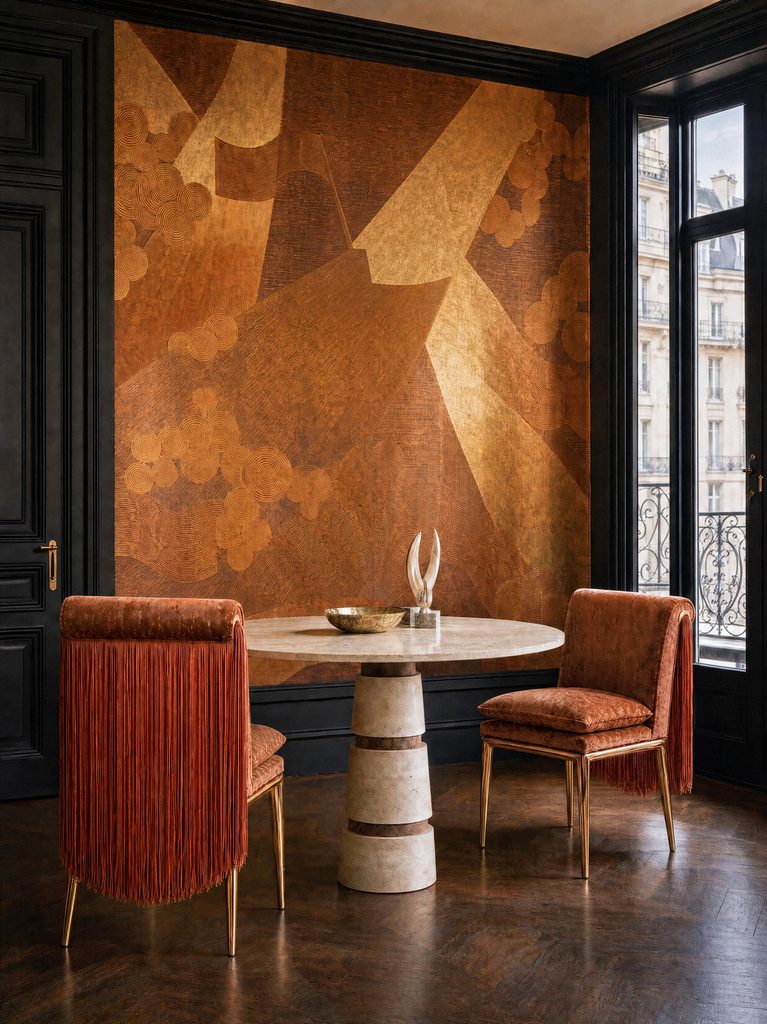
Every decade or so, interiors get tired of restraint. Minimalism does its job for a while, clearing the noise. Then a room with nothing left to say starts to feel less like taste and more like absence. That’s the moment Art Deco always finds its way back in — right now, under the name neo art deco interior design — because it offers what pared-back design can’t: presence. A cabinet that defines a room instead of just furnishing it. A silhouette with enough conviction that nothing else needs to be added.
It’s not a coincidence that neo deco interior design keeps gaining ground everywhere design lovers look. Homeowners and designers alike are circling back to the same instinct: geometry with intention, materials that catch light instead of absorbing it, art deco furniture chosen to anchor a room rather than blend into it.
The Women Who Made It Permanent
This durability was never accidental. The women who shaped the movement built it in, from the beginning. Eileen Gray reshaped furniture. Sonia Delaunay moved across painting, textiles, and fashion. Tamara de Lempicka captured it on canvas. Coco Chanel and Jeanne Lanvin brought it to couture, understanding decades before anyone coined the phrase “lifestyle brand” that fashion, interiors, and identity were never separate disciplines. They didn’t decorate an era. They engineered one, and engineering tends to outlast styling.
That same thread is still being pulled today — nowhere more directly than in KOKET’s Women of Art Deco furniture collection, which names each piece directly for the women who defined the movement. Each one carries the same instinct forward: a room, like a woman, can be precise and devastating in the same breath. Call it a tribute still being lived in, not one left in the past. Nothing about this era was ever meant to stay there.
Permanent, Not Nostalgic
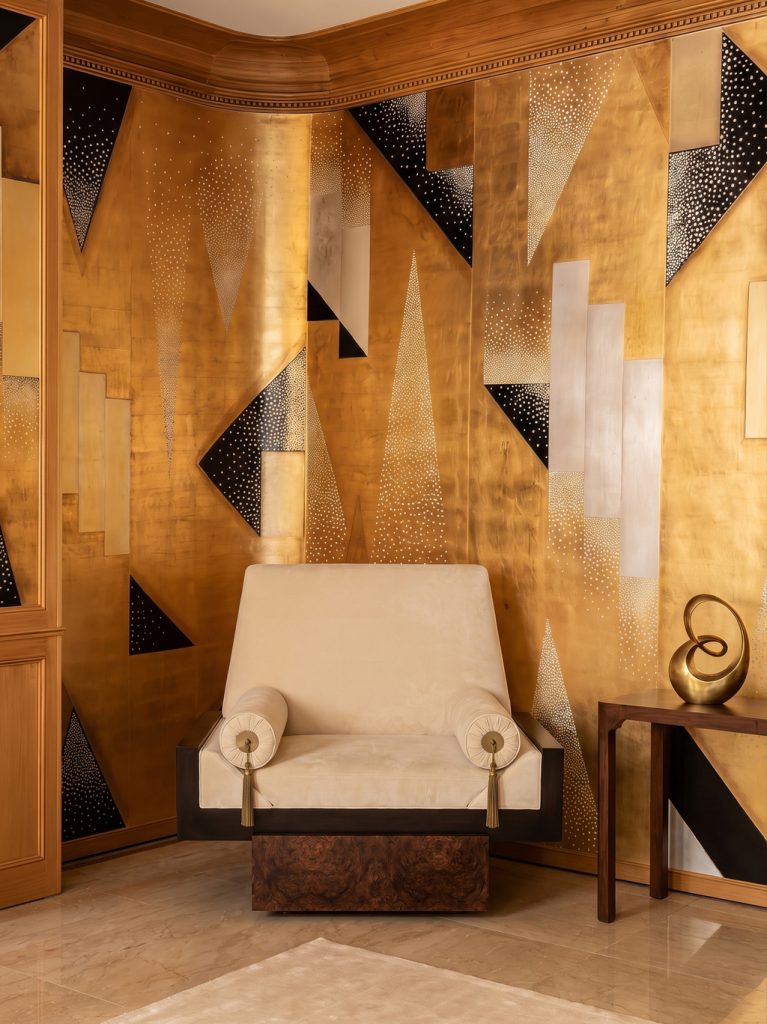
Art Deco style never really left, and it will keep coming back long after neo deco itself has a new name, because it was never a trend to begin with. It was a standard. Standards don’t cycle in and out of relevance. People just rediscover them when they’re paying attention.
So the next time an interior stops you — lacquer catching the light just right, a silhouette of art deco furniture that feels inevitable rather than assembled — don’t ask why Art Deco style is back. Ask why anyone thought it had gone anywhere at all.
Words by Maria Lotia
More to Love!
A Formal Yet Functional Art Deco Inspired Home by Carlyle Designs
5 Ways to Bring Art Deco Design Into the 21st Century